


Recommended training videos for beginner drummers. A summary of effective practice methods.

Have you just started playing the drums and find yourself wondering what kind of practice you should be doing? This time, we’re introducing a wide range of drum training videos recommended for those who want to learn effective practice methods and improve efficiently! We’ve picked everything from the absolute basics to practical exercises.
Use the videos listed here as a reference and take steady steps toward your goals, one at a time.
The content is also recommended for intermediate players who want to reinforce their fundamentals!
Recommended Training Videos for Beginner Drummers: A Summary of Effective Practice Methods (1–10)
Common traits of people who have a talent for drums
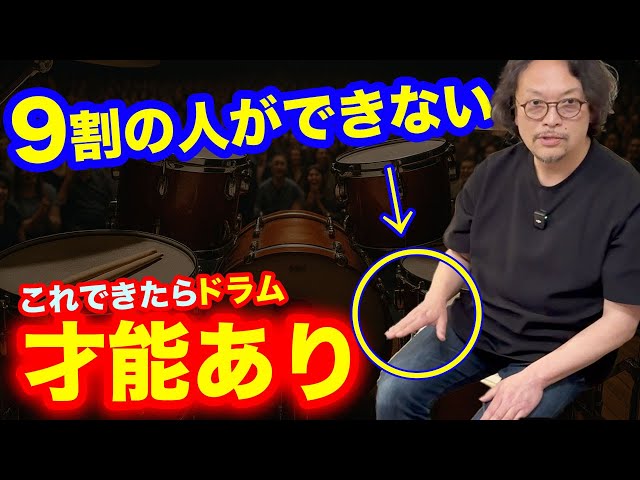
This video introduces what kind of people have a natural talent for drums.
It’s aimed not only at those about to start drumming, but also includes content for intermediate and advanced players.
So for beginners, mastering the points covered here should naturally lead to improvement.
Above all, Kungo Sadanari’s explanations are very easy to understand, making this a video that will definitely be useful for any drummer.

How to hold, position, and swing drumsticks

When you first pick up drumsticks, you might be unsure about everything: Where should I hold them? How do I hold them? How do I strike? And even among beginners and intermediate players who can already play, there are surprisingly many people who keep playing without really understanding how to hold, position, or strike with the sticks.
So, let’s make sure to nail the basics with this video! The instructor gives clear, detailed explanations with close-up shots of the hands as needed, making it very easy to follow.
They also share tips on what to focus on and what to avoid, which will definitely help you improve.
Once you get used to playing a certain way, it’s hard to correct your grip and stroke, so learn the proper method while you’re still a beginner!
10-minute basic routine for fundamental practice

A 10-minute basic training routine that’s perfect as a warm-up during solo drum practice.
You’ll work through quarter notes, eighth notes, and sixteenth notes in sequence—play while visualizing the notation.
Your hands will play various rhythms in different places, while the bass drum maintains a steady four-on-the-floor, helping you build solid footwork.
There are also moments where you strike multiple parts simultaneously, so it’s important to pay attention to timing in line with the score.

40 Drum Beats to Learn When You Start Drumming

This video introduces as many as 40 drum beats.
It starts with a simple 8-beat that’s perfect for beginners touching drums for the first time, and goes on to cover a wide range of beats—from ones that incorporate the essence of various music genres to beats in time signatures other than 4/4.
There’s no detailed instruction on techniques like stick control or how to use the drum pedal; it’s purely a showcase of beats.
That makes it recommended for beginners who can already play a few patterns.
It also seems like a useful resource later on, when you’ve improved and started making songs and feel the need for some fresh beat ideas.
Basic practice you should do every day from when you’re a beginner at drums

This training introduces how to move your wrists and fingers to master precise stick control.
Use a snare drum or a practice pad.
The exercise itself is very simple: without moving your elbows or arms, snap your wrist to strike the snare, then return your wrist while feeling the rebound from the head.
A key point is to open your fingers to catch the rebound from the head.
Once you can do this smoothly with both hands, you’ll be able to play fast 16th-note rolls more easily and cleanly.
Mastering how to catch the rebound and how to use your fingers also leads to more delicate stick control, so beginners should incorporate this into their basic practice.
5 Essential Drum Practice Routines for Beginners

This is training designed to help less-coordinated players catch up to more dexterous ones by learning the fundamental body movements for drumming.
A key point is that standard items like single strokes are deliberately left out; think of this as the practice that comes before those.
You’ll check each movement—bouncing the sticks and stopping the bounce, combining footwork, changing accents, and so on.
Since it’s not about playing phrases, it can be hard to feel your progress, but once you solidify these basics, it will lead to much faster improvement afterward.
It’s never too late at any age! How to start playing drums super easily

This video explains the 8-beat, which could be called the most fundamental beat in drumming.
Even within the umbrella of “8-beat,” there are many variations depending on the timing of the snare and bass drum, but the pattern introduced here is the simplest one.
It even shows a practice method using just your hands and feet without drumsticks at first, making it highly recommended for anyone who wants to start drumming.
As the video mentions, once you master the 8-beat, you can play drums along with your favorite songs, so definitely give it a try.
Once you can perform along with songs, it becomes more fun and your practice will progress quickly!