

![Songs that were popular in the early Showa era, hit songs [Japanese songs]](https://i.ytimg.com/vi/SWdaFdBVbB0/sddefault.jpg)
Songs that were popular in the early Showa era, hit songs [Japanese songs]

I want to know the early Showa-era songs! For those who feel the same, we’ve put together a list of hit songs from the early Showa period.
We’ve selected tracks from Showa Year 1 to Showa Year 20.
They have a different charm from the Showa kayō songs that became widely loved from the 1970s onward, even as the times changed.
Many of the pieces have a relaxed tempo and a solid, dignified atmosphere—songs that truly invite you to “listen to the singing.”
As you take it in, savor the profound resonance of the Japanese language, and please listen at your leisure.
Songs that were popular in the early Showa era, hit songs [Japanese songs] (1–10)
Farewell BluesNoriko Awaya

When it comes to classic songs from the Showa era, Noriko Awaya’s “Wakare no Blues” definitely stands out.
Released in 1937, the song reflects the social climate of the time, making it fascinating to listen to.
Awaya’s vocals are both powerful and heartrending—they really hit you.
There’s even a story from the recording process: she supposedly smoked all night to lower her voice.
That kind of dedication gave birth to this masterpiece.
It’s a track that lets you savor the atmosphere of a bygone era.
Why not sit back and listen at a leisurely pace?
Lakeside InnMieko Takamine
Kohan no Yado (Lakeside Inn) is a Showa-era popular song that became a hit in 1940 with vocals by actress and singer Mieko Takamine.
At the time of its release, Japan was at war, and the song’s sentimental, sorrowful lyrics and melody were deemed detrimental to morale, leading to it being banned.
Nevertheless, it was popular among soldiers on the front lines, and when Takamine visited the battlefields to entertain the troops, there were reportedly many requests for “the lakeside song.” Midway through the piece there is a spoken monologue by her, and its narration seems to have resonated deeply with soldiers who were departing on special attack missions.
Tokyo OndoKouta Katsutaro, Issei Mishima

The classic Bon Odori song “Tokyo Ondo” originated from “Marunouchi Ondo,” which was created in 1932 (Showa 7).
While reconstruction after the Great Kanto Earthquake was progressing, the global depression lingered, and restaurant owners in Marunouchi came up with the idea of holding a Bon dance in Hibiya Park to attract customers.
They asked a record company to produce an ondo, resulting in “Marunouchi Ondo,” with lyrics by Yaso Saijo and music by Shinpei Nakayama.
The song, which wove the names of areas around the park into its lyrics, became a hit at the Bon dance.
The following year, the record company released “Tokyo Ondo” as a new “parody version” incorporating place names from across Tokyo.
It’s also well known as a fight song for the professional baseball team, the Yakult Swallows.
transienceToshi Uehara

Singer Bin Uehara, who released hit songs like “Mekura Koi Dōchū” and “Uramachi Jinsei,” went missing during World War II.
His July 1937 release “Ruten” was used as the theme song for a Shochiku film and became a major hit.
The lyrics, imbued with a depth that evokes the impermanence of all things, may conjure images of the era’s scenery and atmosphere.
With his soaring vocals and lyrical melody that linger in the ear, it stands as one of Bin Uehara’s signature songs.

Yearning for the ShadowIchiro Fujiyama

This is a Showa-era popular song with lyrics and music by Masao Koga, a composer and guitarist who epitomized the Showa period.
It was released in 1931 as the B-side of a single sung by the then-popular Chiyako Sato, and the version sung by Ichiro Fujiyama, released the following year, became a major hit.
The wistful “Kage wo Shitaite” (“Yearning for a Shadow”) is said to have had its lyrics come to Koga in 1928, when, heartbroken, he visited a hot spring in Miyagi Prefecture and, upon seeing the Zao mountain range at sunset, found the words welling up.
The song has been covered by many artists, including Hibari Misora, Shinichi Mori, and Kiyoshi Hikawa.
The Night Wind of the JourneyNoboru Kirishima, Miss Columbia
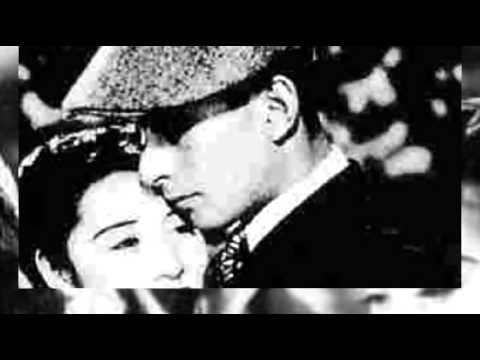
“Tabi no Yokaze” is a Showa-era popular song released in 1938.
It was composed as the theme song for the film Aizen Katsura, which was based on a novel depicting a quintessential ‘star-crossed’ romance, and it became a smash hit for the time, selling over 800,000 copies.
Even if people don’t know the song’s title, many will recognize it when the opening lyrics play and say, “That’s the song from Aizen Katsura, isn’t it?” The understated yet expressive vocal performance by Noboru Kirishima and Miss Columbia remains moving even today.
Tree-Lined Road of LifeDick Mine

A classic song representing the early Showa era, Dick Mine’s “Jinsei no Namikimichi” (“Tree-Lined Road of Life”).
Since its release in 1937, it has continued to be loved by many.
The moving lyrics by Sonosuke Sato and the richly expressive melody by Masao Koga blend beautifully in this piece.
Its unusual focus on the bond between siblings also captured the hearts of people at the time.
Dick Mine’s highly expressive singing brings the world of the lyrics to life even more vividly.
As one of Mine’s signature songs from the worlds of jazz and popular music, it continues to shine without losing its luster.
It’s a wonderful piece that conveys the depth of Japanese song.