

How many do you know? An earthquake trivia quiz: from general knowledge to fun facts


When an earthquake strikes, are you confident you can take the right actions? Information about earthquakes themselves and evacuation procedures is continually updated as new quakes occur over time, so many people still hold outdated or incorrect knowledge.
In this article, we present earthquake trivia and fun facts for the general public in a quiz format! You can enjoy learning useful knowledge for emergencies—such as what actions to take when an earthquake happens, the seismic intensity scale, and the number for the disaster message service.
To strengthen your disaster preparedness, why not take this opportunity to review the earthquake knowledge you “thought you knew”?
- Useful in emergencies! Learn disaster preparedness the fun way with a disaster-prevention trivia quiz
- Tsunami General Knowledge Quiz! Learn surprising facts and trivia through a quiz
- A trivia quiz about typhoons you might not know: questions range from general knowledge to disaster preparedness.
- How many can you answer? Trivia and fun facts quiz about rice
- Trivia quiz with useful tips to know: fun facts that come in handy at school or at home [for kids]
- How many can you solve? A surprising trivia and fun facts quiz about total lunar eclipses
- Recommended for elementary school students! Trivia quiz you'll want to share once you know it
- How many can you get right? Check your general knowledge with a heatstroke trivia and fun facts quiz.
- A three-choice quiz of useful trivia: a collection of questions you can use in everyday life
- [Killing Time] A Collection of Fun Trivia Quizzes You'll Want to Share with Someone
- A compilation of unsettling trivia and fun facts about Earth
- How many can you solve? Test your spring knowledge with a trivia quiz about March!
- How many can you solve? An Otsukimi trivia quiz from general knowledge to surprising fun facts
How many do you know? An earthquake trivia quiz: from general knowledge to fun facts (1–10)
If an earthquake occurs on a plate where a Nankai Trough earthquake is anticipated, which information might be announced?
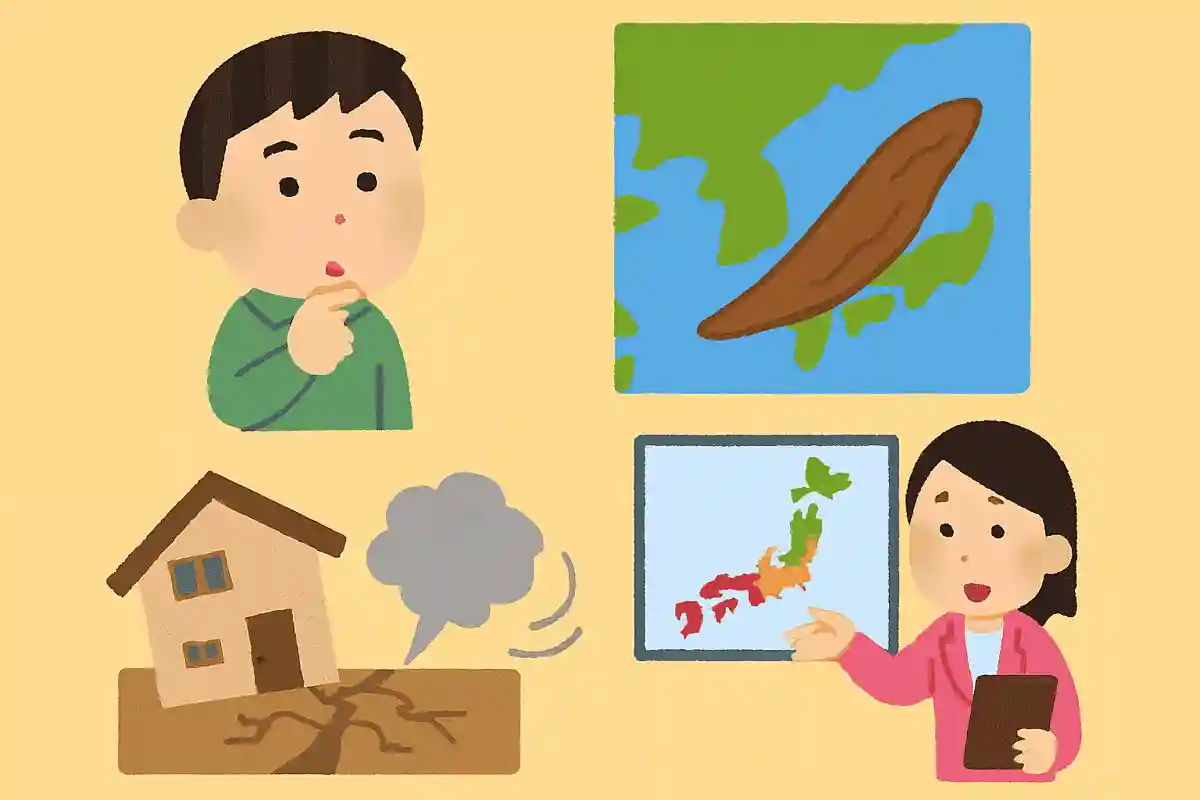
- Nankai Trough Earthquake Temporary Information
- Nankai Trough Earthquake Bulletin
- Nankai Trough Earthquake Evacuation Information
See the answer
Nankai Trough Earthquake Temporary Information
If an earthquake is likely to occur along the Nankai Trough, or if abnormal phenomena are observed, the Japan Meteorological Agency will issue a Nankai Trough Earthquake Temporary Information bulletin. Depending on the observation status and details, it will be announced as either “Under Investigation” or “Warning of a Great Earthquake,” so be sure to check carefully.

You need at least three days’ worth of food to prepare for earthquakes, but ideally, how much should you have ready?
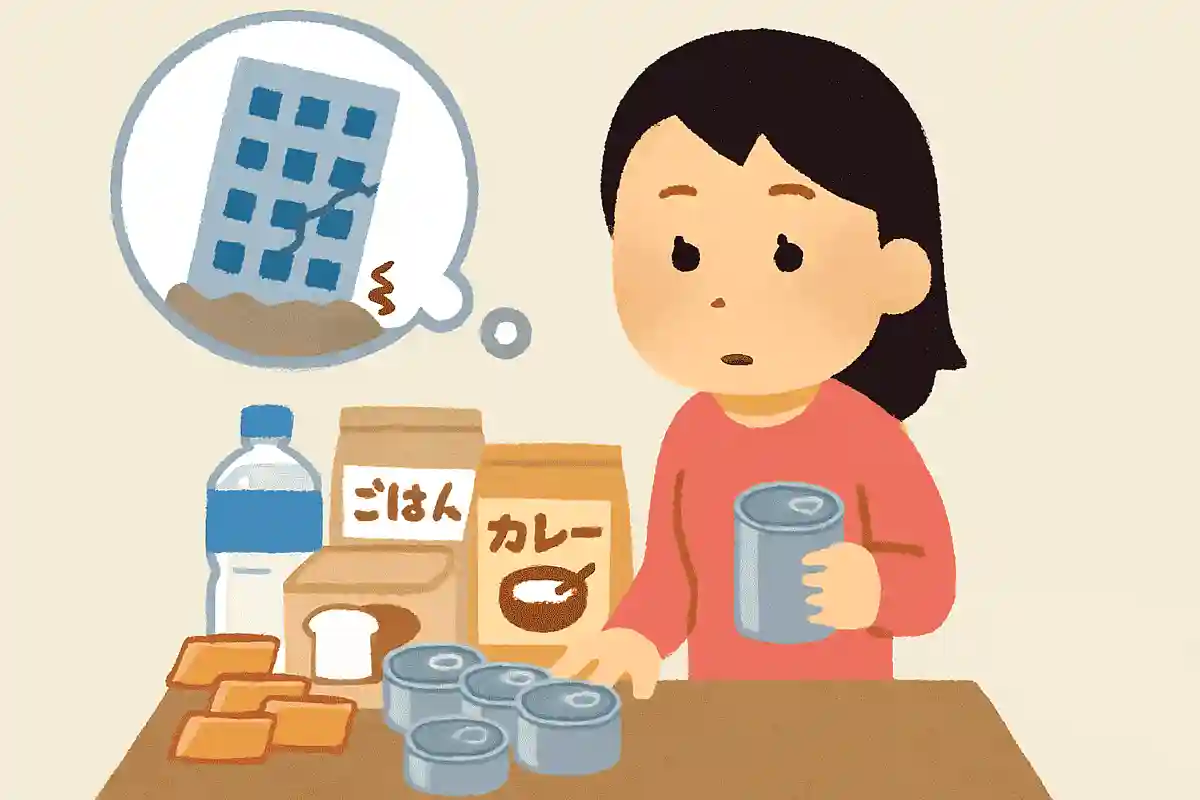
- five days’ worth
- one week's worth
- half a month’s worth
See the answer
one week's worth
In the event that lifelines are cut off by an earthquake, it often takes more than a week to restore them. With that in mind, it’s advisable to stockpile about a week’s worth of food. You can build up your stock just by buying a bit more of the instant foods you usually eat, so try to keep this in mind in your everyday life.
An earthquake has occurred and it is dangerous to stay indoors. Which of the following is the correct course of action?
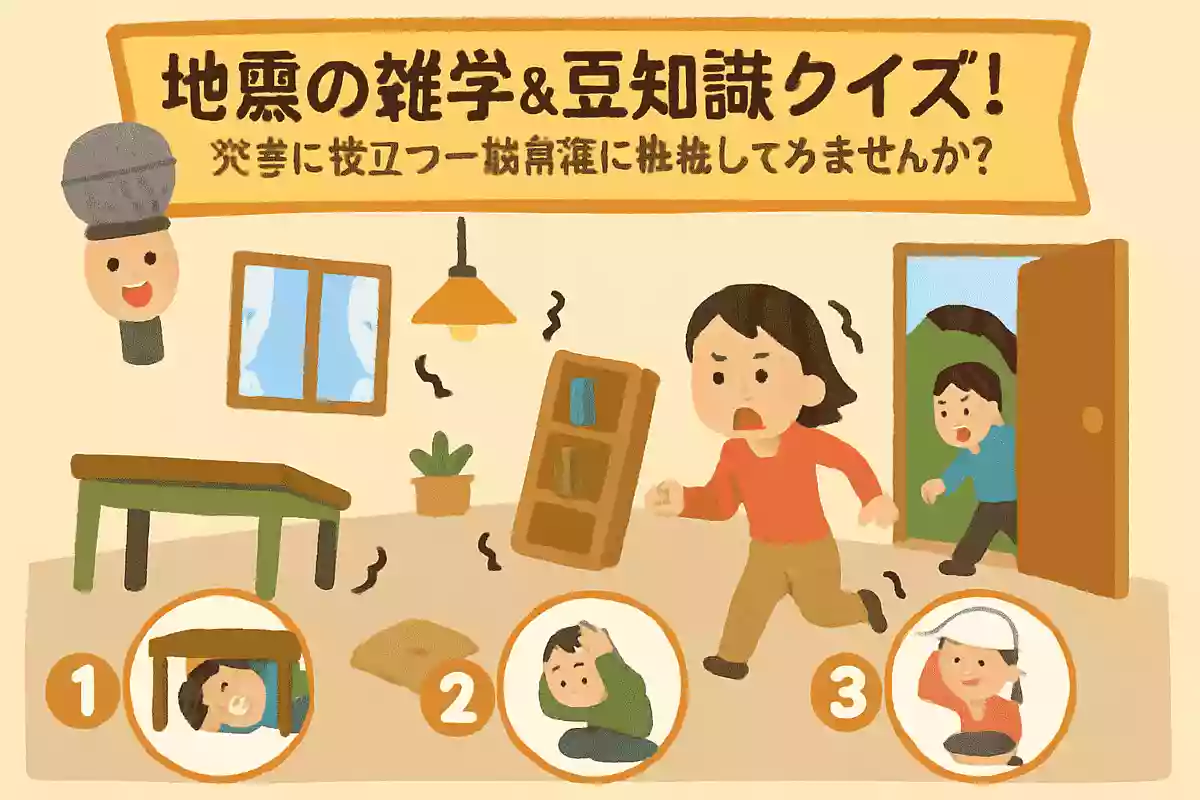
- Go outside immediately while it's shaking.
- Go outside after the initial strong shaking subsides.
- Wait for a while even after the shaking stops.
See the answer
Go outside after the initial strong shaking subsides.
If you rush outside while the shaking is happening, you may trip or get injured by falling objects, collapsing structures, or ground cracks. While it is shaking, take cover where you are—such as under a desk—to protect yourself. Once the shaking stops, check your surroundings and evacuate calmly.

How many do you know? Earthquake Trivia Quiz: From General Knowledge to Fun Facts (11–20)
When an earthquake occurs, which of the following is safe to use for evacuation?
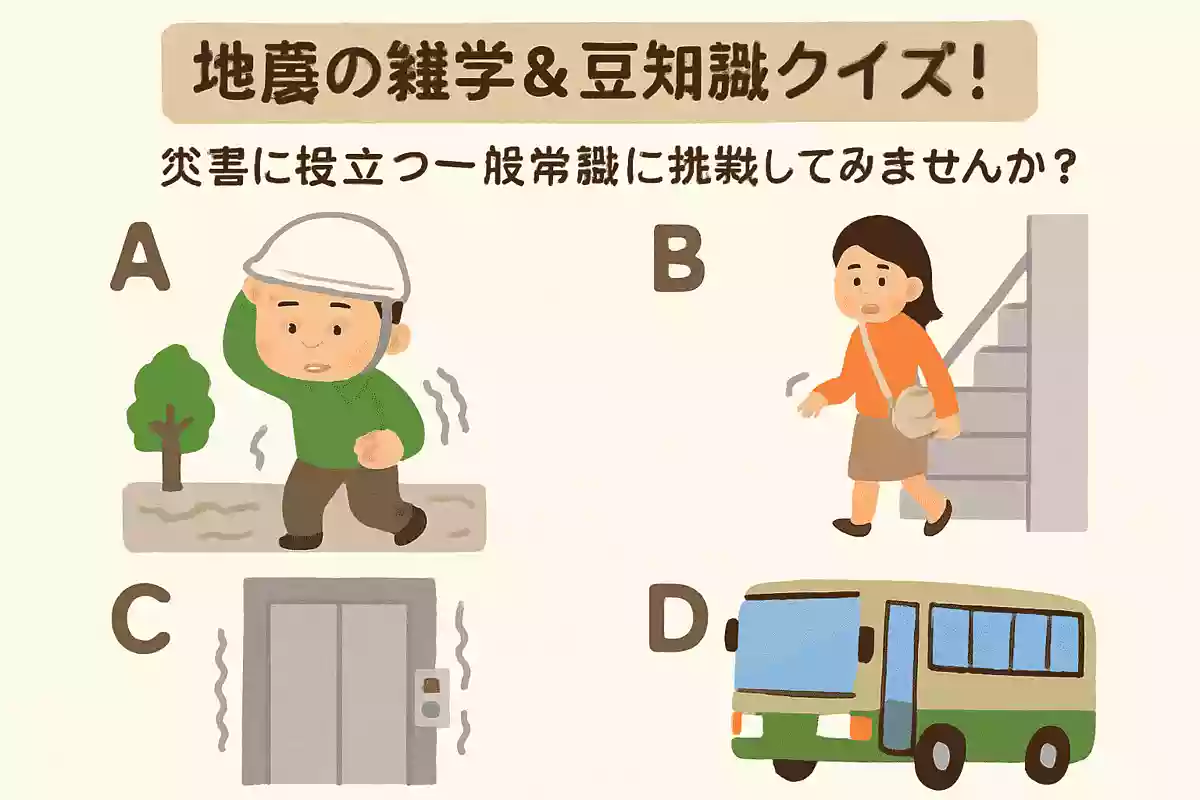
- Elevator
- escalator
- stairs
See the answer
stairs
It is recommended to evacuate using the stairs when an earthquake occurs. During earthquakes, there is a risk of power outages or malfunctions, which can cause elevators and escalators to stop and trap people, so it’s best not to use them. However, if you rush when using the stairs, there is also a risk of falling, so staying calm is most important.

When an earthquake occurs, what is the preferred way to gather information to obtain accurate details?
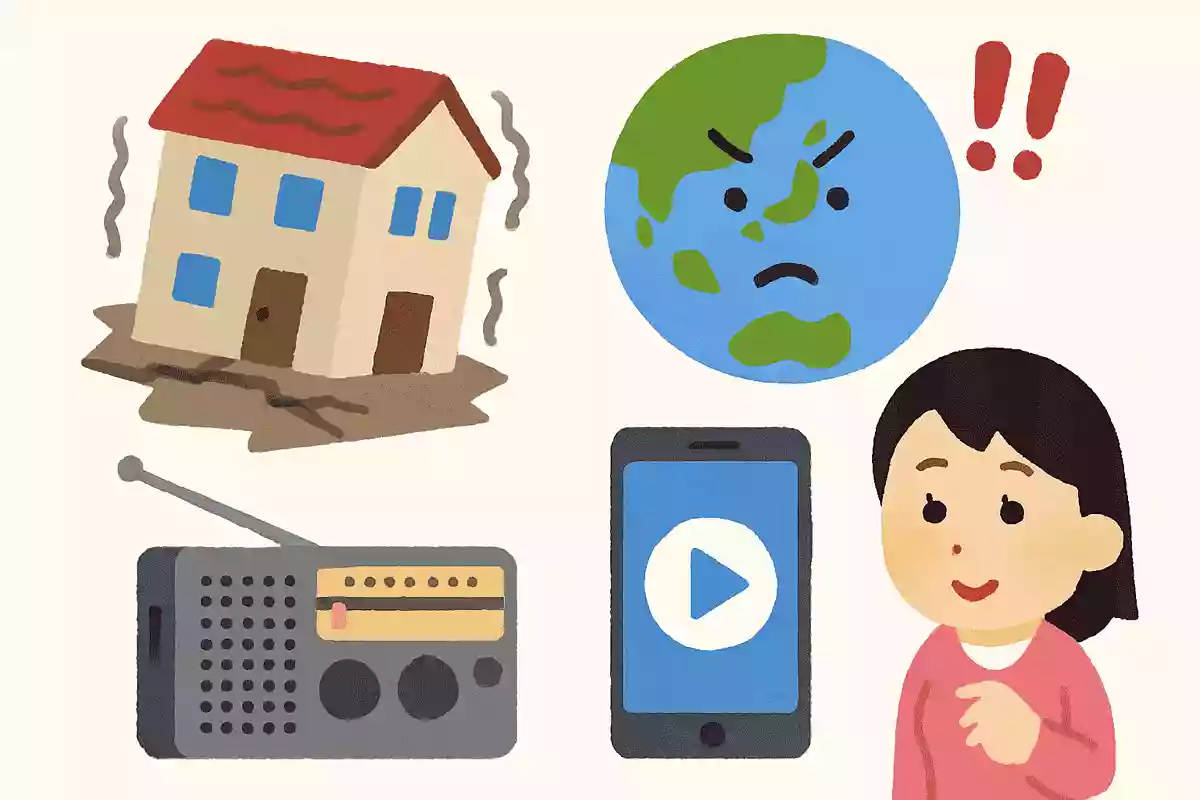
- Television and radio
- SNS
- Message from a friend
See the answer
Television and radio
In times of disaster, it is essential to obtain accurate and reliable information. Unlike social media or personal exchanges, television and radio quickly convey the latest information officially announced by the government, local authorities, and specialized agencies, making them the most trustworthy means during emergencies. However, some devices cannot be used during power outages, so it is also important to prepare for that in advance.
What is the best way to respond if you are in an elevator when an earthquake occurs?
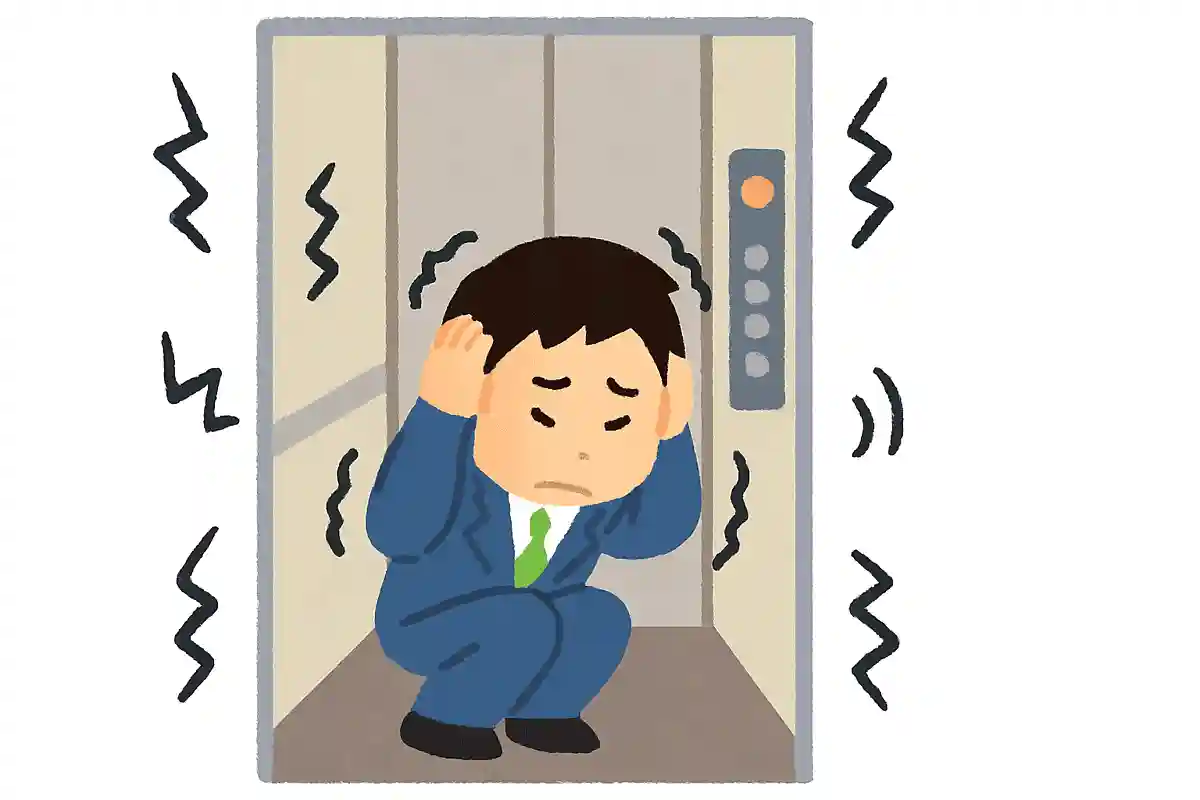
- Press the emergency stop button immediately to stop it.
- Endure it as is until you reach your destination floor.
- Press the button for every floor
See the answer
Press the button for every floor
If an earthquake occurs while you’re in an elevator, press all the floor buttons and get off immediately at the first floor where it stops. If it stops before you can press the buttons, press the emergency button to contact someone outside. When panicking, people tend to press the emergency button right away, but first focus on getting out of the elevator.
How many earthquakes are observed in Japan in a single day?
- more than about 100 times
- approximately 500 times
- Over about 1,000 times
See the answer
approximately 500 times
Japan is one of the most earthquake-prone countries in the world, with more than about 500 quakes per day according to data published by the Japan Meteorological Agency. While this figure includes tremors that cannot be felt, it clearly shows how closely Japan is tied to seismic activity. Let’s remember this high frequency not as a reason for complacency, but as a prompt to stay prepared.