

How many do you know? An earthquake trivia quiz: from general knowledge to fun facts


When an earthquake strikes, are you confident you can take the right actions? Information about earthquakes themselves and evacuation procedures is continually updated as new quakes occur over time, so many people still hold outdated or incorrect knowledge.
In this article, we present earthquake trivia and fun facts for the general public in a quiz format! You can enjoy learning useful knowledge for emergencies—such as what actions to take when an earthquake happens, the seismic intensity scale, and the number for the disaster message service.
To strengthen your disaster preparedness, why not take this opportunity to review the earthquake knowledge you “thought you knew”?
- Useful in emergencies! Learn disaster preparedness the fun way with a disaster-prevention trivia quiz
- Tsunami General Knowledge Quiz! Learn surprising facts and trivia through a quiz
- A trivia quiz about typhoons you might not know: questions range from general knowledge to disaster preparedness.
- How many can you answer? Trivia and fun facts quiz about rice
- Trivia quiz with useful tips to know: fun facts that come in handy at school or at home [for kids]
- How many can you solve? A surprising trivia and fun facts quiz about total lunar eclipses
- A three-choice quiz of useful trivia: a collection of questions you can use in everyday life
- Recommended for elementary school students! Trivia quiz you'll want to share once you know it
- How many can you get right? Check your general knowledge with a heatstroke trivia and fun facts quiz.
- A compilation of unsettling trivia and fun facts about Earth
- [Killing Time] A Collection of Fun Trivia Quizzes You'll Want to Share with Someone
- How many can you solve? Test your spring knowledge with a trivia quiz about March!
- A quiz of fun trivia: bite-sized knowledge that leads to new insights.
How many do you know? Earthquake Trivia Quiz: From General Knowledge to Fun Facts (11–20)
Which number is used for the Disaster Emergency Message Dial, a service used to share safety information during earthquakes and other disasters?
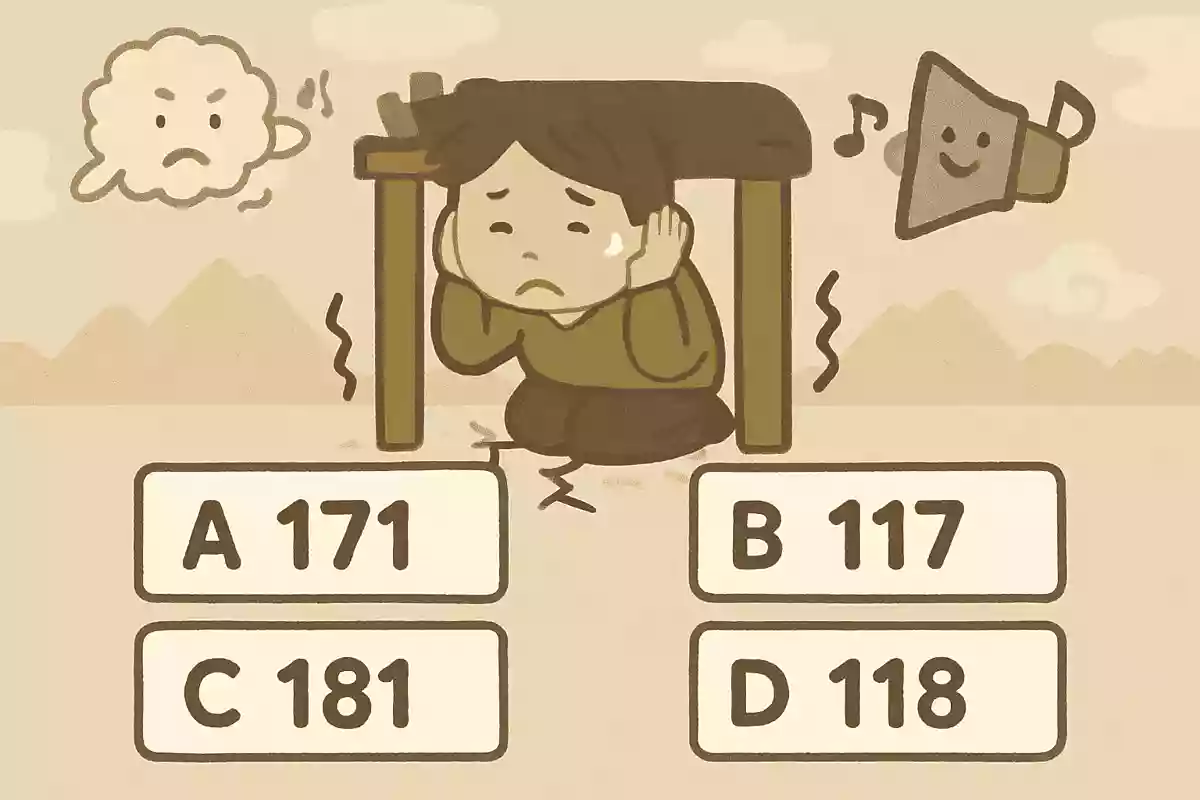
- 17
- 171
- 110
See the answer
171
The number for the Disaster Emergency Message Dial used to exchange safety information during earthquakes and other disasters is 171. When a major disaster such as an earthquake occurs and calls to the affected area are hard to connect, this service lets you record a voice message with your safety status so family and friends can check on you. It can be used from landlines, mobile phones, and public telephones.

When you feel an earthquake shaking, which areas should you especially protect to keep yourself safe?
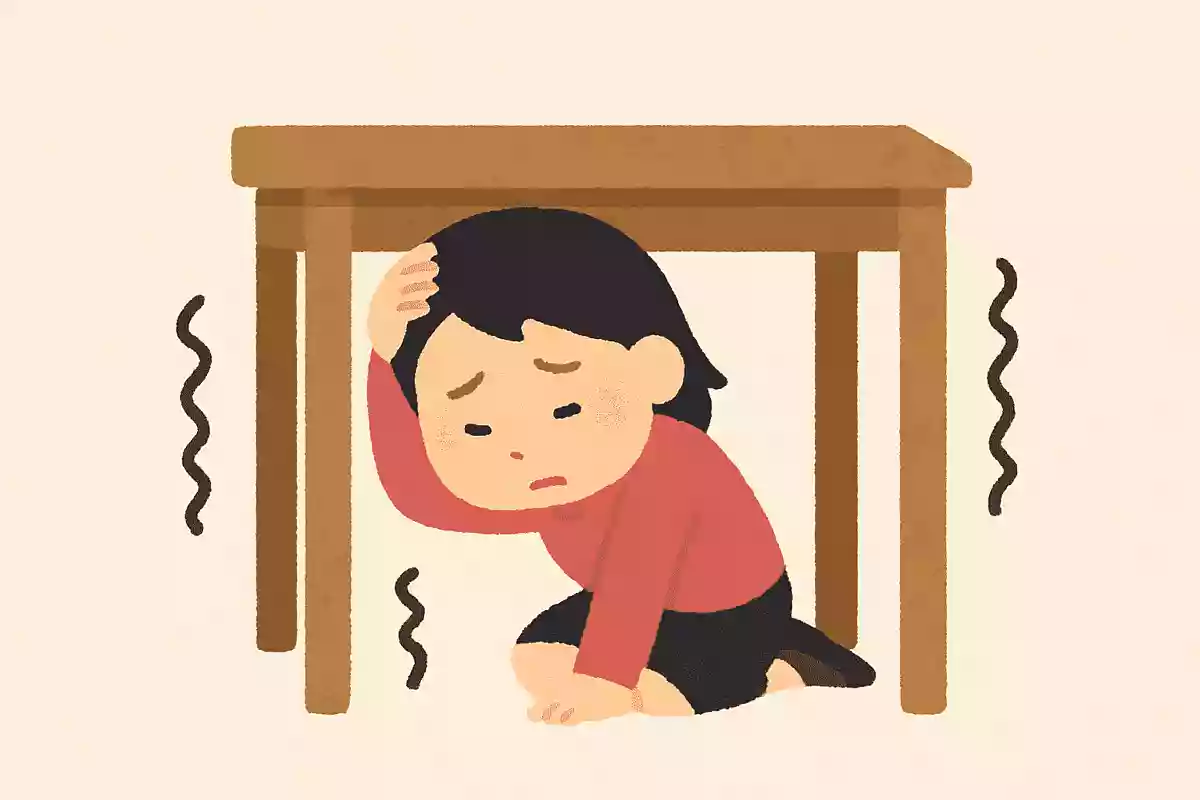
- head
- foot
- abdomen
See the answer
head
During an earthquake, the part of your body you should protect most is your head. A severe blow to the head from building collapses or falling objects can cause life-threatening injuries, so make it your top priority to protect it. If there’s nowhere to take cover nearby, even covering your head with both arms can help reduce the impact to your head.
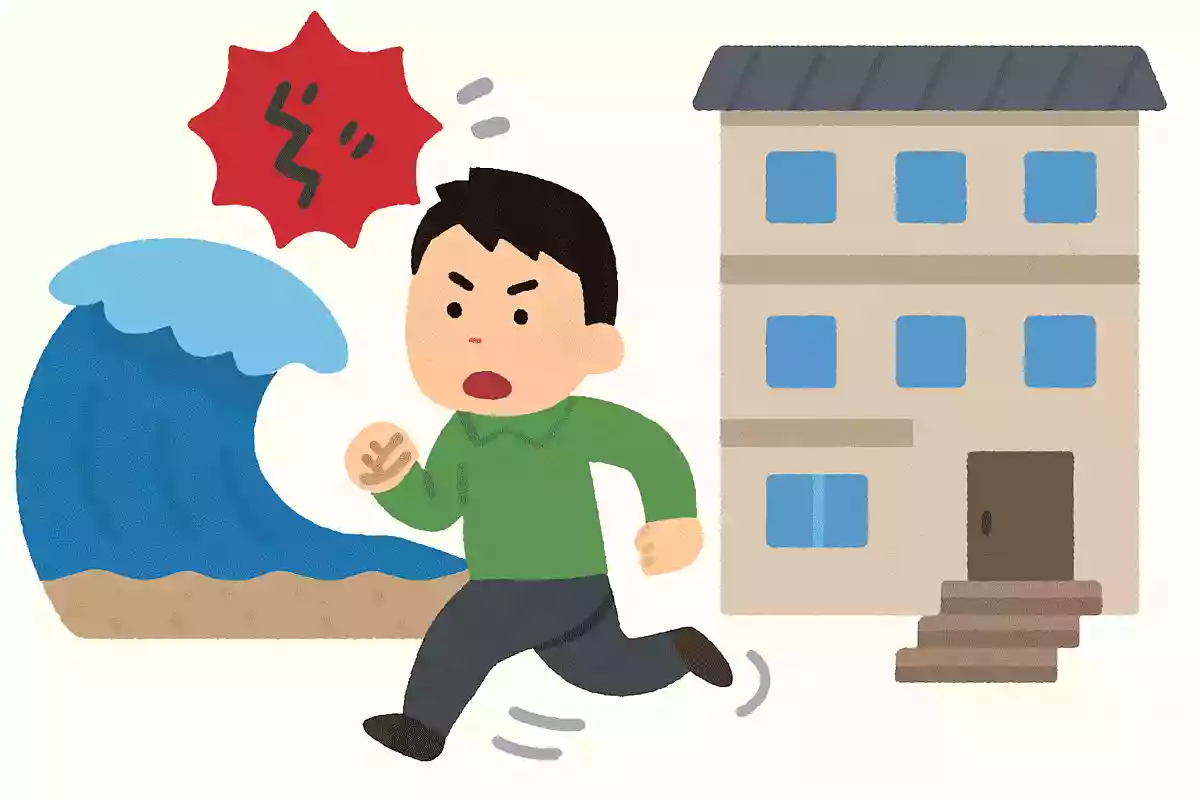
If you cannot evacuate outside the estimated tsunami inundation area, to what floor or higher of a building is it recommended to evacuate?
- 1st floor
- 2nd floor
- 3rd floor or above
See the answer
3rd floor or above
If there isn’t enough time to evacuate outside the areas designated as potential tsunami inundation zones, people are encouraged to evacuate to the third floor or higher of a building. This is because local governments require tsunami evacuation buildings to designate evacuation areas on the third floor or above.
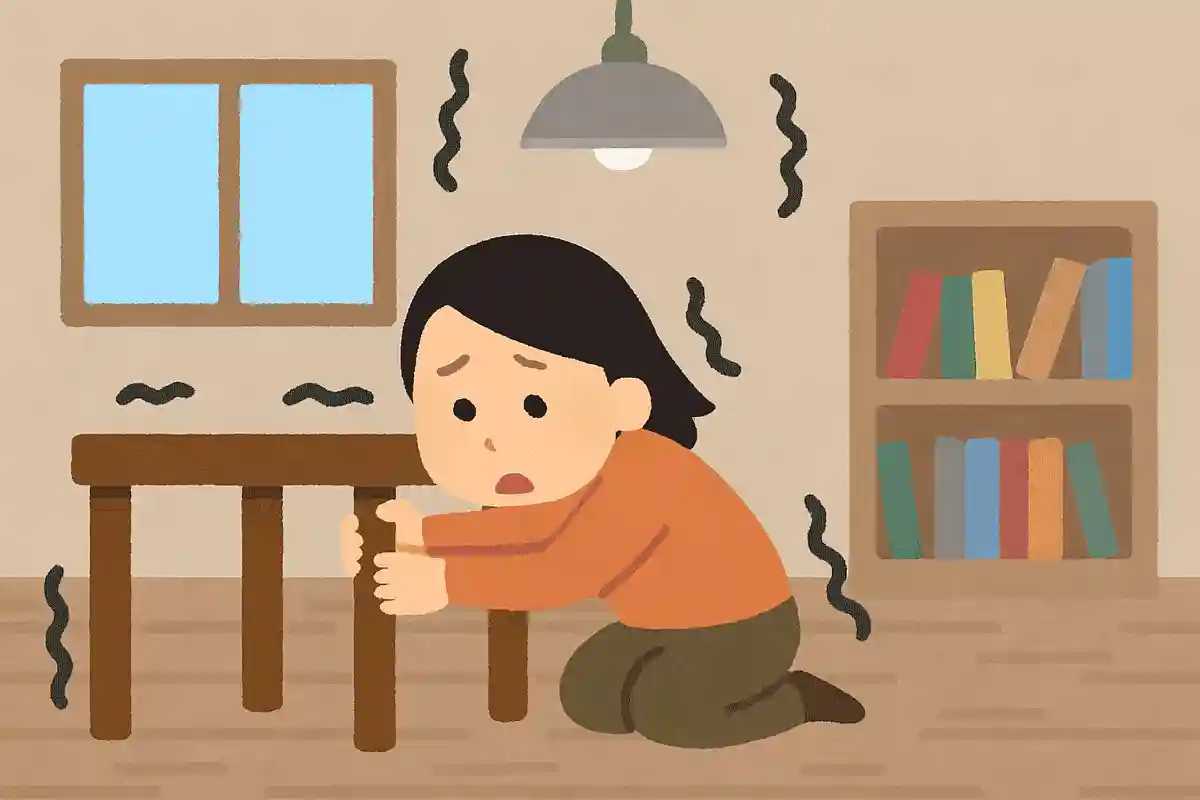
What’s the first thing you should do if you feel an earthquake shaking while inside a building?
- Open the window and look outside
- dash out immediately
- Ensure personal safety and secure an exit for evacuation.
See the answer
Ensure personal safety and secure an exit for evacuation.
When you feel an earthquake, your top priority is to protect your personal safety. Get under a sturdy table or desk and protect your head. It’s important to stay low and wait for the shaking to stop. If you move around unnecessarily, you risk being trapped under collapsed objects or getting injured by broken items.
When an earthquake occurs, where in the house is considered relatively safe?
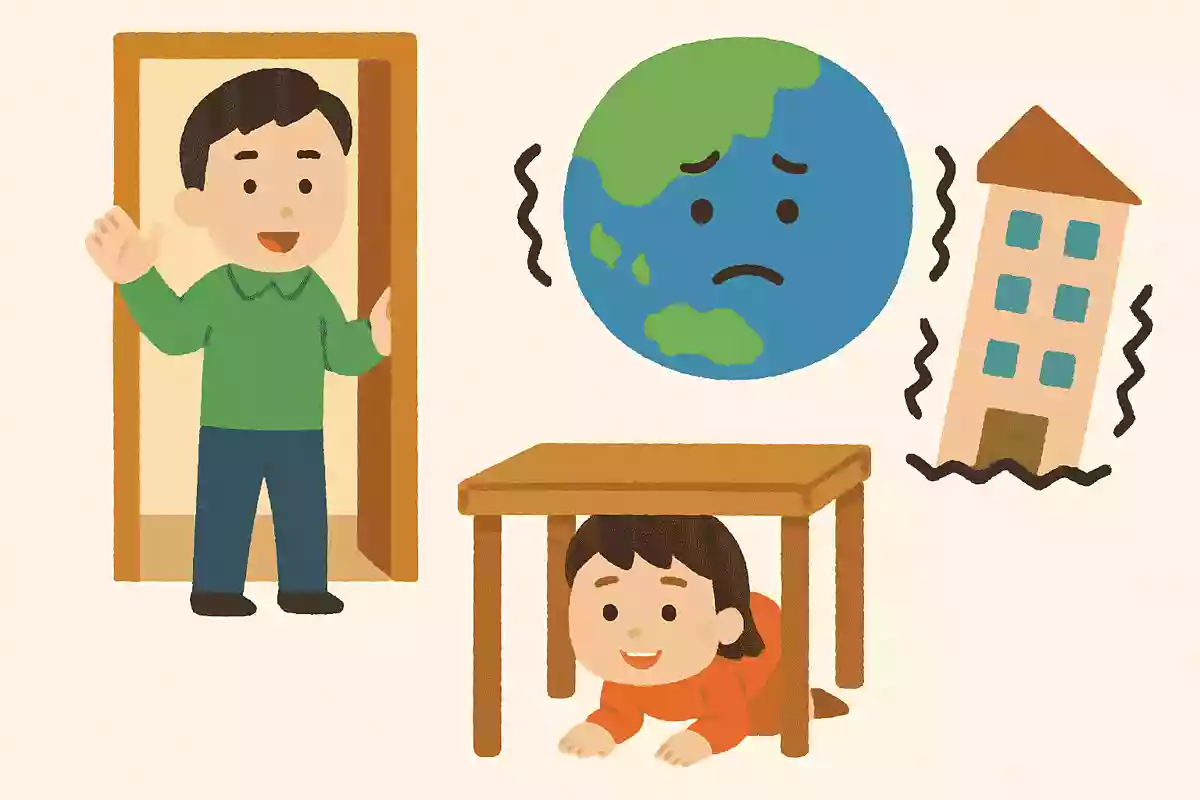
- entrance
- Bathroom
- by the window
See the answer
entrance
The entrance of a building, which serves as the point of entry and exit, is often enclosed by pillars or walls and is therefore frequently structurally robust. Another key point is that, compared to living rooms or bedrooms, there are usually fewer tall pieces of furniture or items that could fall. However, caution is necessary if there are pieces of furniture that might topple over or hanging light fixtures installed in the entrance area.
Up to what seismic intensity can buildings constructed under the new earthquake-resistant standards withstand?
- seismic intensity of around lower 5
- Seismic intensity of around upper 6 to 7 (on the Japanese scale)
- around Japan seismic intensity 6-lower (Shindo 6-)
See the answer
Seismic intensity of around upper 6 to 7 (on the Japanese scale)
Buildings that meet the new seismic standards are designed with the goal of avoiding collapse or failure even in earthquakes of around upper 6 to 7 on the Japanese seismic intensity scale. While a major earthquake may not leave a building completely undamaged, these standards prioritize protecting the lives of the occupants.
How many do you know? Earthquake Trivia Quiz: From General Knowledge to Fun Facts (21–30)
What is the English word for the tsunami that can occur after an earthquake?
- Strong Wave
- Crash Wave
- Tsunami
See the answer
Tsunami
A tsunami caused by an earthquake is called “tsunami” in English as well. The word originates from Japanese and is understood worldwide. Through media coverage of major tsunami disasters—such as the 2004 Indian Ocean earthquake and the 2011 Great East Japan Earthquake—it has become familiar to the general public.