

Piano Masterpieces: Surprisingly Easy Despite Sounding Difficult!? A Curated Selection Perfect for Recitals

Many people probably think, “It would be so cool and fun if I could play the piano!” I usually teach piano at home, and I have many adult students who come to me asking, “Is it still possible for me to learn to play from now?” So this time, I’ll introduce piano pieces that may look difficult but are surprisingly approachable on the piano, focusing on classical music! Perfectly pursuing the essence of a piece does require considerable technique, but in some cases there are published scores with simple arrangements that even beginners can play shortly after starting.
If you’re thinking about starting the piano, or if you’re hoping to perform at a recital someday, I hope you’ll find this helpful!
- [For Elementary School Students] Brilliant, Showy Masterpieces That Sound Impressive at Piano Recitals
- Beginner to Intermediate: Chopin pieces with relatively low difficulty. Recommended works by Chopin.
- [For Piano Recitals] Simple yet Cool Classical Pieces
- [For Adults] Recommended for Piano Recitals! A Curated Selection of Impressively Sounding Masterpieces
- [Intermediate Level] Cool Piano Pieces You Can Play [Great for Recitals Too]
- It’s so cool if you can play these on the piano! A selection of irresistibly charming masterpieces.
- [Beginner] Recommended Piano Pieces to Play at a Recital
- [For Advanced Players] A Curated Selection of Classical Masterpieces to Tackle at Piano Recitals
- For Beginners: Easy to Play and Sounds Impressive! Pieces That Shine at Piano Recitals
- [Intermediate Level] A curated selection of piano masterpieces featuring strikingly brilliant melodies!
- Recommended for piano beginners! 10 sheet music picks that adults can enjoy too
- [Piano Pieces] Easy for Children to Play! A Roundup of Simple Classical Works
- Lower difficulty: Not as hard as it sounds!? Debussy’s piano pieces
[Piano Masterpieces] Looks Hard but Surprisingly Easy!? Carefully Selected Pieces Also Recommended for Recitals (1–10)
Peer Gynt Suite No. 1, Op. 46: I. MorningEdvard Grieg

Peer Gynt, known as a masterpiece by Norwegian composer Edvard Grieg, was originally written as incidental music for a play.
The first movement of the suite excerpted from this work is a beautiful piece depicting the sun pouring over the earth at dawn.
Its alternating flute and oboe melodies are striking, and the distinctive sound created by the pentatonic scale is particularly appealing.
Though short, the buildup to the climax is masterfully crafted.
Composed in 1875, the piece is widely cherished as a symbol of Grieg’s Norwegian nationalist music.
Waltz No. 6 in D-flat major, Op. 64 No. 1 “Minute Waltz”Frederic Chopin

Familiarly known by the title “Minute Waltz,” the Waltz No.
6 in D-flat major, Op.
64-1 is said to have been composed by Frédéric Chopin as an impromptu musical depiction of George Sand’s little dog spinning in circles while chasing its tail.
With its charming character and lively tempo, it’s a big favorite among children learning the piano.
To achieve even, well-shaped notes, steady practice is essential, but so is choosing fingerings that allow the fingers to move smoothly.
By committing to correct fingerings from the score-reading stage, you’ll be able to raise the tempo naturally and without strain!

Prelude No. 15 in D-flat major, Op. 28-15 “Raindrop”Frederic Chopin

One of the pieces from composer Chopin’s 24 Preludes, Op.
28.
The title “Raindrop” is said to have been given by George Sand, the writer who was Chopin’s lover.
A distinctive feature is that from the very beginning the left hand steadily maintains the same rhythm, which is said to depict the patter of falling rain.
In the middle section, the mood changes dramatically and the music becomes powerful, so if you keep the opening restrained to highlight the contrast, I think you can create a wonderful performance!

Piano Masterpieces: Surprisingly Easy Pieces That Sound Difficult!? A Curated Selection Perfect for Recitals (11–20)
Adeline by the SeasideRichard Clayderman
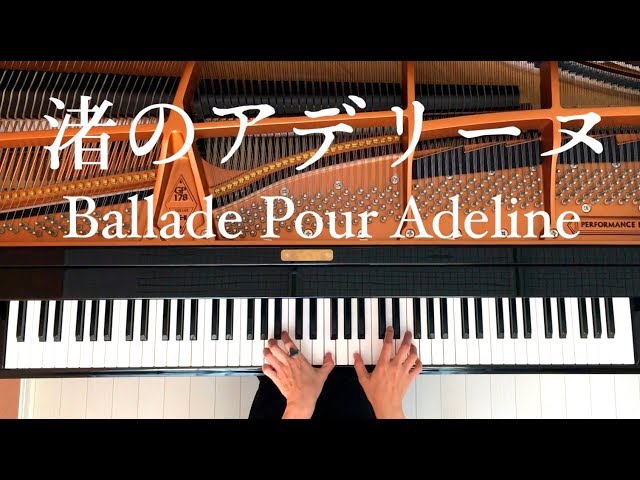
Richard Clayderman’s debut piece, Ballade pour Adeline, by the French pianist, is a famous piano work that became a massive hit, with records released in 38 countries and selling 22 million copies.
Many of you have probably heard it as background music on TV or in commercials, or as an auto-play song built into digital pianos.
As you relax into the performance, let the light, expectation-building introduction and the refreshing melody soothe you!
Two Arabesques No. 1 in E majorClaude Debussy

A composition by Debussy, a composer known for his charmingly light and beautiful melodies.
It consists of two pieces: No.
1 in E major and No.
2 in G major.
Clair de Lune, familiar from commercials and the like, is also famous, but in terms of technique, the Arabesques are likely more suitable for beginners.
Pay attention to dynamics—keep the calm parts restrained and build up the climactic sections—and try playing with that in mind.
The phrases where the right and left hands play different rhythms together can be tricky, but practicing in the air on a desk is a great option!
Piano Sonata No. 8 “Pathétique,” Second MovementLudwig van Beethoven
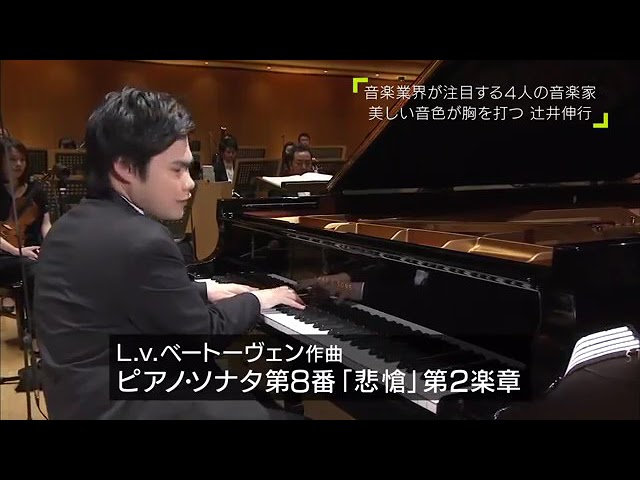
Beethoven’s Piano Sonata No.
8 “Pathétique” is a defining work from his early piano compositions.
Among its movements, the second is often said to be one of the most beautiful melodies Beethoven ever wrote, and it has been used frequently in films and television dramas.
While the melody is simple and the range not particularly wide, the accompanying parts are sonically rich, so the melody can easily get buried unless you listen carefully and balance the voices during performance.
Aim to play gently, being mindful of the gracefully flowing, soothing melody that warmly envelops the listener, as well as the weighty chords that support it.
Pachelbel’s CanonJohann Pachelbel

Pachelbel’s Canon, beloved for its beautiful melody that makes you feel happy as you play, is officially titled “Canon and Gigue in D major for three violins and basso continuo.” Composed as church music, it maintains a gentle character throughout, with the beauty of its harmonic shifts standing out.
The key to this piece is to value the horizontal flow and connect the notes smoothly.
Imagine music resonating in a quiet church, and try to align each note evenly as you play!