

Piano Masterpieces: Surprisingly Easy Despite Sounding Difficult!? A Curated Selection Perfect for Recitals

Many people probably think, “It would be so cool and fun if I could play the piano!” I usually teach piano at home, and I have many adult students who come to me asking, “Is it still possible for me to learn to play from now?” So this time, I’ll introduce piano pieces that may look difficult but are surprisingly approachable on the piano, focusing on classical music! Perfectly pursuing the essence of a piece does require considerable technique, but in some cases there are published scores with simple arrangements that even beginners can play shortly after starting.
If you’re thinking about starting the piano, or if you’re hoping to perform at a recital someday, I hope you’ll find this helpful!
- [For Elementary School Students] Brilliant, Showy Masterpieces That Sound Impressive at Piano Recitals
- Beginner to Intermediate: Chopin pieces with relatively low difficulty. Recommended works by Chopin.
- [For Piano Recitals] Simple yet Cool Classical Pieces
- [For Adults] Recommended for Piano Recitals! A Curated Selection of Impressively Sounding Masterpieces
- [Intermediate Level] Cool Piano Pieces You Can Play [Great for Recitals Too]
- It’s so cool if you can play these on the piano! A selection of irresistibly charming masterpieces.
- [Beginner] Recommended Piano Pieces to Play at a Recital
- [For Advanced Players] A Curated Selection of Classical Masterpieces to Tackle at Piano Recitals
- For Beginners: Easy to Play and Sounds Impressive! Pieces That Shine at Piano Recitals
- [Intermediate Level] A curated selection of piano masterpieces featuring strikingly brilliant melodies!
- Recommended for piano beginners! 10 sheet music picks that adults can enjoy too
- [Piano Pieces] Easy for Children to Play! A Roundup of Simple Classical Works
- Lower difficulty: Not as hard as it sounds!? Debussy’s piano pieces
Piano Masterpieces: Surprisingly Easy Despite Sounding Difficult!? A Curated Selection Perfect for Recitals (51–60)
Bergamasque Suite No. 4: PassepiedClaude Debussy

This piece features a light, graceful melody that resonates pleasantly, and while it is based on the French Baroque dance “Passepied,” it incorporates a distinctive interpretive approach.
Written in 4/4 time, the left-hand accompaniment conveys a steady sense of liveliness, while the right-hand melody employs abundant syncopation to achieve a flowing elegance.
Composed around 1890 and published in 1905, the work has an overall antique character, yet it creates a striking effect through constantly shifting harmonic colors.
For piano students, it offers an excellent opportunity to pursue refined musicality by focusing on crisp, buoyant staccato and smooth legato.
Piano Sonata No. 25, Op. 79, Second MovementLudwig van Beethoven

In the richly colored second movement, an elegant and gentle Russian-style melody flows, unfolding beautifully as if weaving a quiet tale.
The melody, played at a relaxed Andante tempo, carries a deeply affecting expressiveness that brings a sense of peace.
Even so, it does not require excessive virtuosity, making it a piece that readily draws out the piano’s expressive power.
Composed in 1809, this work, though brief, is filled with Beethoven’s lyrical musicality.
It is a masterpiece I highly recommend to those who prefer calm and approachable music, as well as to anyone who wishes to savor the wonders of classical music.
Children’s Corner No. 1: “Doctor Gradus ad Parnassum”Claude Debussy

Doctor Gradus ad Parnassum, the first piece of Claude Debussy’s suite Children’s Corner, was composed with the aim of letting adults bask in a childlike mood.
It is said to portray his beloved daughter Emma as she tackles piano exercises.
Her earnest practice mirrors the determination of children facing a recital stage.
Parents will surely feel a great sense of growth when they see their child perform this piece confidently from start to finish.
You might even suggest to your child, “There’s a really cool piece—want to give it a try?”

golden wedding anniversaryGabriel Marie

The second piece from Two Pieces for Cello and Piano by the French composer Gabriel Marie.
It’s often performed on violin instead of cello, and there are arrangements for orchestra and solo piano, so it may be a tune you’ve heard somewhere before.
As a piece written to celebrate a golden wedding anniversary, it has an elegant and resplendent character.
It features a right-hand melody with light staccato and a simple left-hand bass line, so with some practice even beginners will certainly be able to play it!

Piano Masterpieces: Surprisingly Easy Despite Sounding Hard!? A Curated Selection Perfect for Recitals (61–70)
ParadeMaurice Ravel
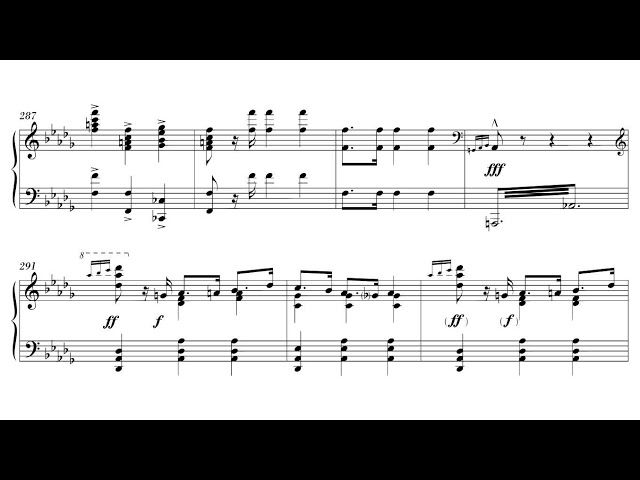
A piece whose powerful, dramatic sound stirs the listener’s heart, as if heralding the beginning of a grand tale.
It is a work by Toshio Horiuchi, who teaches in Hiroshima Prefecture and has composed numerous band pieces.
From the delicate interplay of sounds in the quiet sections to the breathtaking build toward a climax where the full ensemble charges forward as one, the piece offers a deeply immersive experience—like living through the prologue of a legend in music.
Composed in 2006 as a set piece for the All Japan Band Competition, it is featured in the album “Reference Performances of Set Pieces for the All Japan Band Competition 2005‑2008.” Demanding not only individual technique but the expressive power of the entire band, this masterpiece is one you’ll want to perform when you and your ensemble wish to weave a single, sweeping story together.
Waltz No. 9 in A-flat major, Op. 69 No. 1 “Farewell”Frederic Chopin

Also known by the titles “Farewell Waltz” and “Adieu,” the Waltz No.
9 in A-flat major, Op.
69, No.
1 was composed in 1835 and, after Chopin’s death, was expanded and published by his friend Julian Fontana.
With its serene character that seems to look back on happy memories of a parted lover and its very gentle tempo, it is one of the Chopin waltzes recommended for beginners.
Some editions include both Chopin’s surviving manuscript and Fontana’s augmented version, so it can be enjoyable to compare them at the keyboard.
Barcarolle No. 4 in E-flat major, Op. 36Gabriel Fauré

This is a beautiful work in which warm harmonies and Fauré’s distinctive melodies blend exquisitely within a gently flowing atmosphere.
Published in 1884 by the French publisher Hamelle, the piece was dedicated to his friend, the Countess of Mercy-Argenteau.
The descending perfect fourth that evokes the sound of bells is striking, and the serene mood is superbly fused with lyrical expression.
The middle section introduces a minor-key episode, creating a pronounced contrast with the tranquil opening.
Technically, its relaxed tempo makes it approachable, allowing performers to explore Fauré’s sound world while practicing.
Highly recommended for those who wish to experience the elegance and delicacy of French music.