

[For Seniors] Association Game with 3 Hints: A Satisfying List of Topics When You Get It


Word association games are one type of recreation that can help stimulate the brains of older adults.
Not only does carefully thinking through prompts serve as brain training, but arriving at the answer also gives a sense of accomplishment.
The word association game we’re introducing here involves deriving the answer from three clues.
Start with the most difficult clue, and save the hint that’s most likely to lead to the answer for last.
If you’re a care worker who finds that coming up with prompts really works your brain, please use this as a reference when preparing your word association games.
- For seniors: Fun, crowd-pleasing word association game ideas
- [For Seniors] Fun and Lively! Recommended Quiz Questions
- [For Seniors] Lively Wordplay Game: Fun Recreation for Elderly Care
- [For Seniors] Brain Training! Recall Quiz Collection!
- [For Seniors] Great for Brain Training! Question Card Ideas
- [For Seniors] Lateral Thinking Game! Brain Training
- [For Seniors] Challenging but Exciting! Kanji Quiz
- [For Seniors] Fun Brain Training! Lively Whiteboard Activities
- [For Seniors] Fun Brain Training! Prefecture Quiz
- [For Seniors] Simple Recreational Activities You Can Enjoy While Seated
- [Brain Training] Lively Word Quiz for Seniors
- Hand games that liven things up for seniors—also great brain training
- [For Seniors] Have Fun with Wordplay Characters! A Collection of Funny Puzzles
[For Seniors] Word Association Game with Three Hints: Satisfying When You Get It — List of Topics (21–30)
Association Quiz ~Food Edition~

Let me introduce a game called “Association Quiz,” where you guess the food in question using three hints.
As the hints are revealed, the identity of the food gradually becomes clearer, but those with sharp intuition might reach the answer before the final hint.
You can write the questions on a whiteboard or read them aloud so anyone can join, and it works well for both small and large groups.
It’s also great fun to play while chatting with the person next to you—saying things like, “What could it be?”—so I highly recommend it.

Botchan, a thousand-yen bill, a cat
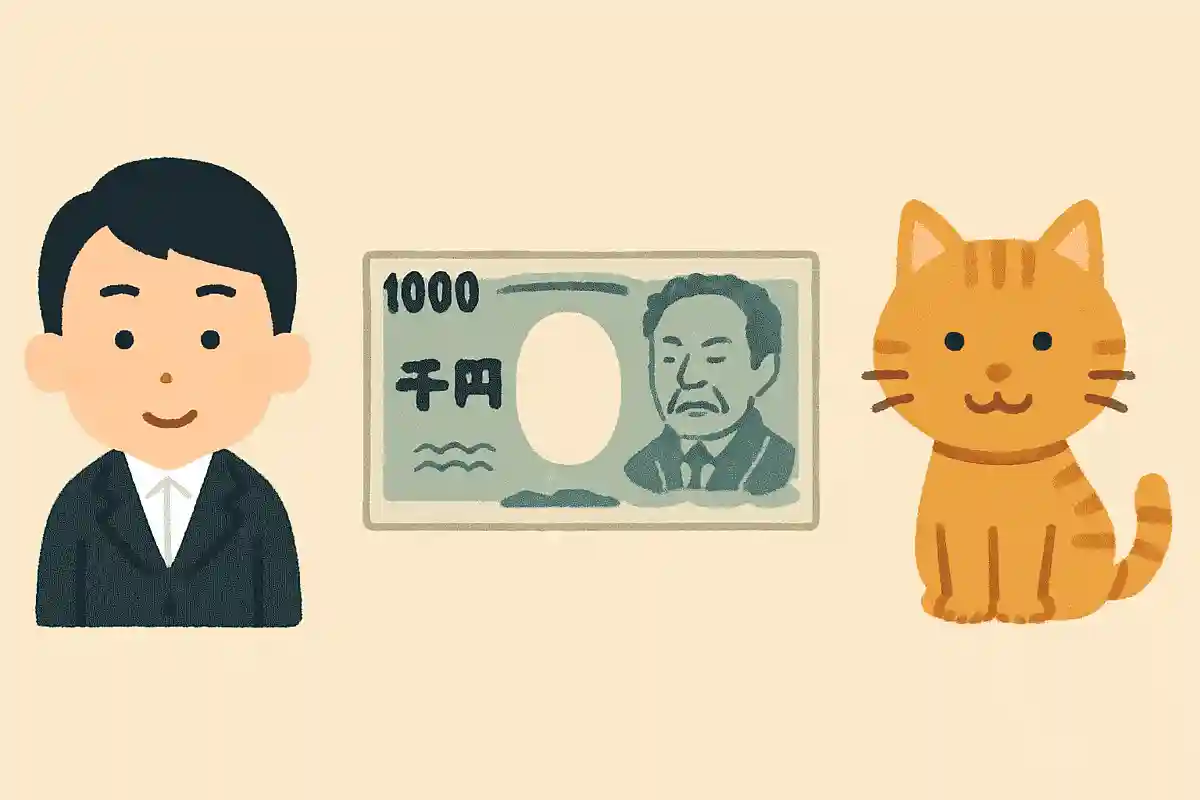
Which novel from your school textbooks has stayed with you? I think works like Osamu Dazai’s “Run, Melos!”, Ryunosuke Akutagawa’s “Rashomon,” and Kenji Miyazawa’s “Night on the Galactic Railroad” are also popular, but according to one ranking, the top spot goes to Hermann Hesse’s “Beneath the Wheel” (also known as “Unterm Rad”).
Since it’s included in many textbooks, I imagine many people are familiar with it.
Of course, some would cast their vote for Natsume Soseki’s “Kokoro.” Speaking personally, textbooks were my gateway to literature.
They’ve made me want to revisit Soseki’s works again.
[For Seniors] Association Game with 3 Hints: Refreshing When You Get It – List of Topics (31–40)
Electric guitar, Young General, “Forever with You”
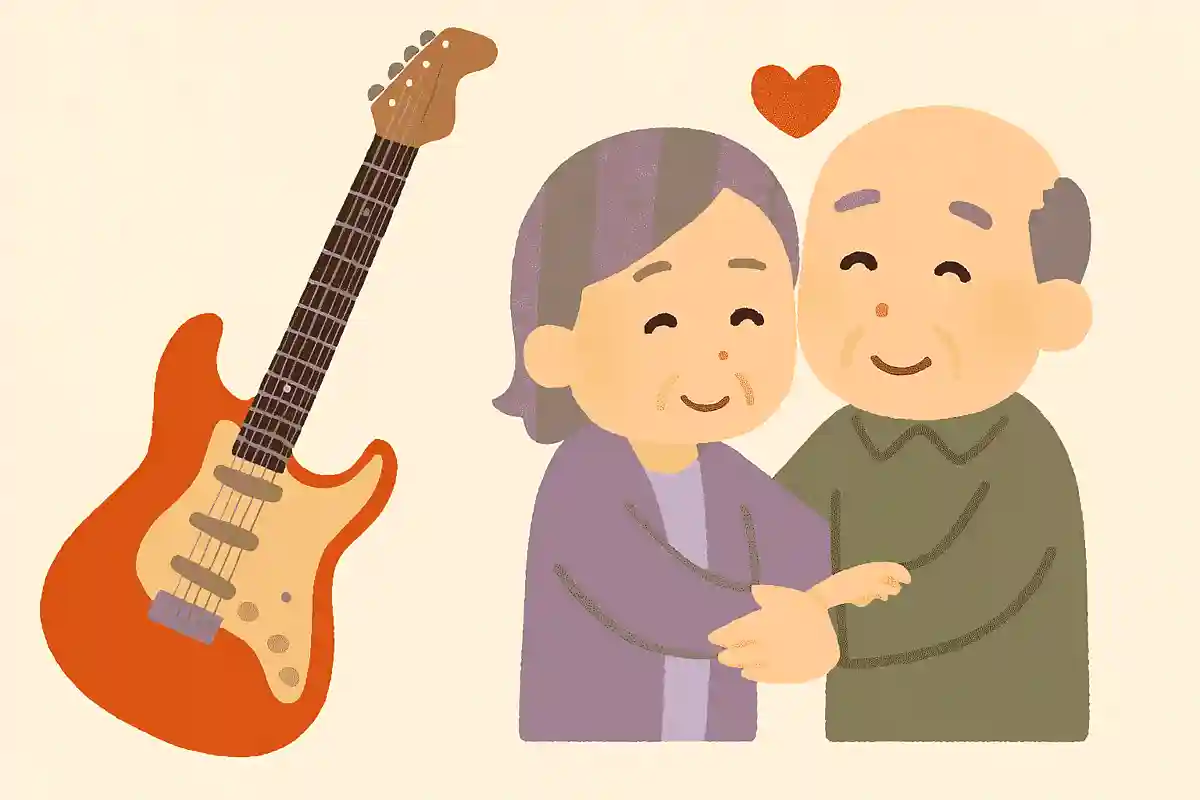
Because both “Wakadaishō” and “Kimi to Itsumademo” are close to the answer, many people might catch on as soon as they see either one.
The term “electric guitar” has a wide range—do you picture an object or a person?—so it might be good to have people guess the answer from that word as well.
Expanding the image in various directions and then having the next word make things sharply clearer is a fun point where you can feel your brain at work.
A person called the young leader who sings with an electric guitar in hand, with a signature song titled “Kimi to Itsumademo,” leads us to the answer: Yūzō Kayama.

Propeller, cool breeze, summer
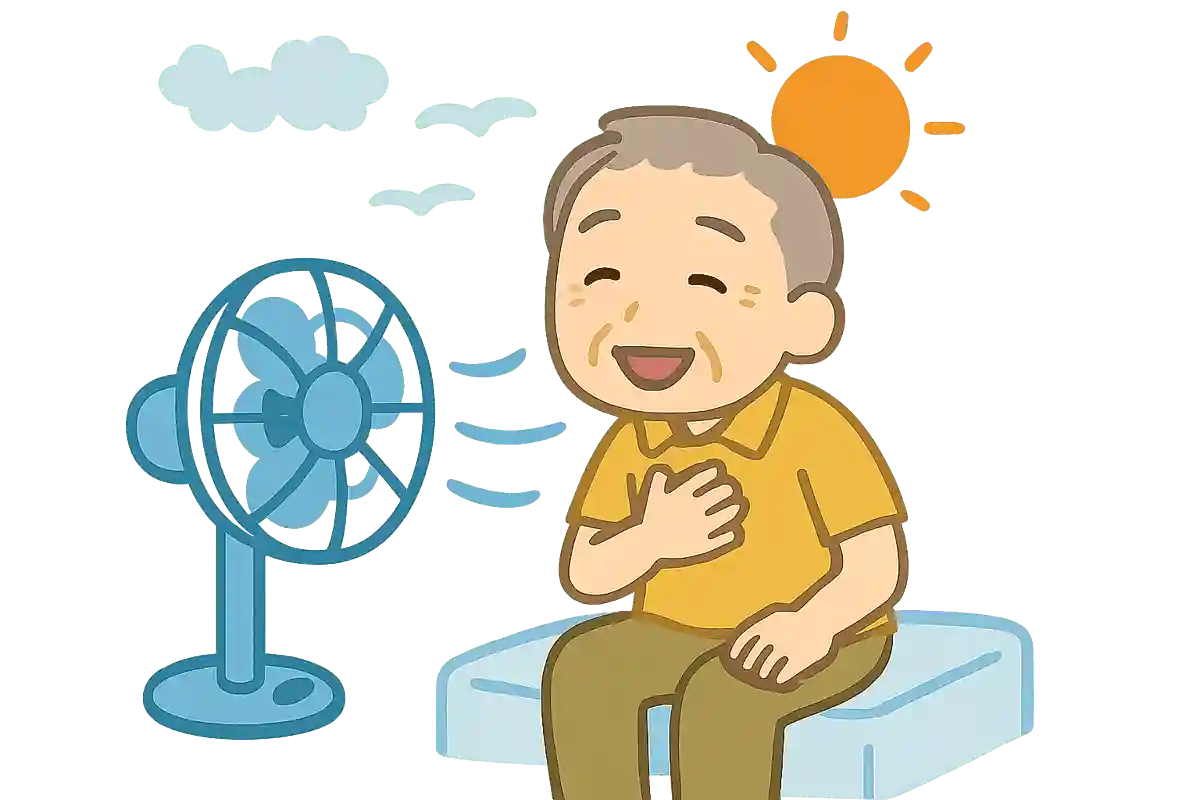
The hint of ‘propeller’ might make you think of airplanes or fighter jets.
The electric fan, which is also a summer seasonal word—when did you first use one? Speaking of fans, there’s that phenomenon where you want to go “ahhh” in front of one; I think everyone tried it at least once as a child.
They say the voice that hits the blades and bounces back and the voice that passes through to the other side without hitting the blades, combined with the high-speed rotation, makes it sound slightly resonant.
Knowing the trick only makes you want to try it even more.
autumn leaves, reading, appetite
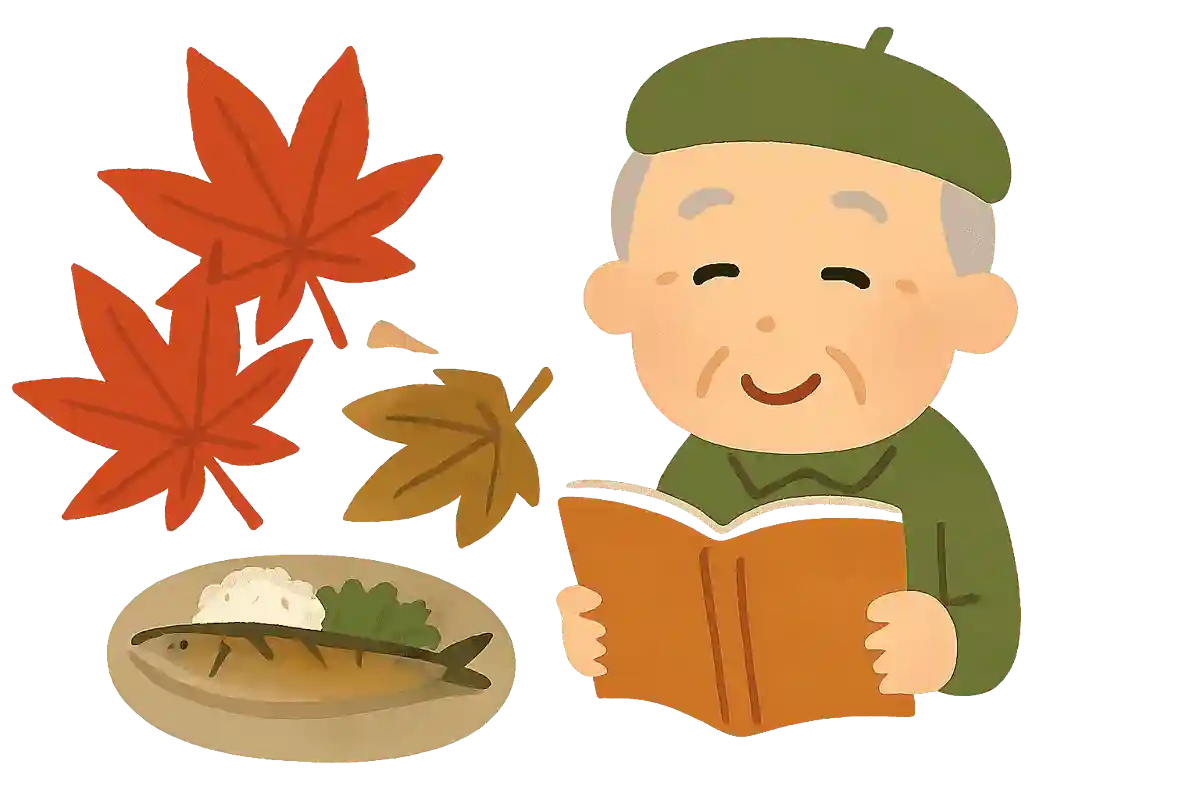
The most popular season among Japanese people used to be overwhelmingly spring, but it seems that autumn has been steadily gaining popularity lately.
Maybe that’s partly because so many people suffer from hay fever in spring? In any case, autumn is a season when you can actively engage your mind and body.
When you hear “Autumn is the season for ___,” what comes to mind? As for quizzes, the hint “autumn leaves” might be too definitive, so it’s probably better to use it in the latter half.
Including “sports” as one of the hints is a good idea, too.
lotus spoon, soup, food stall
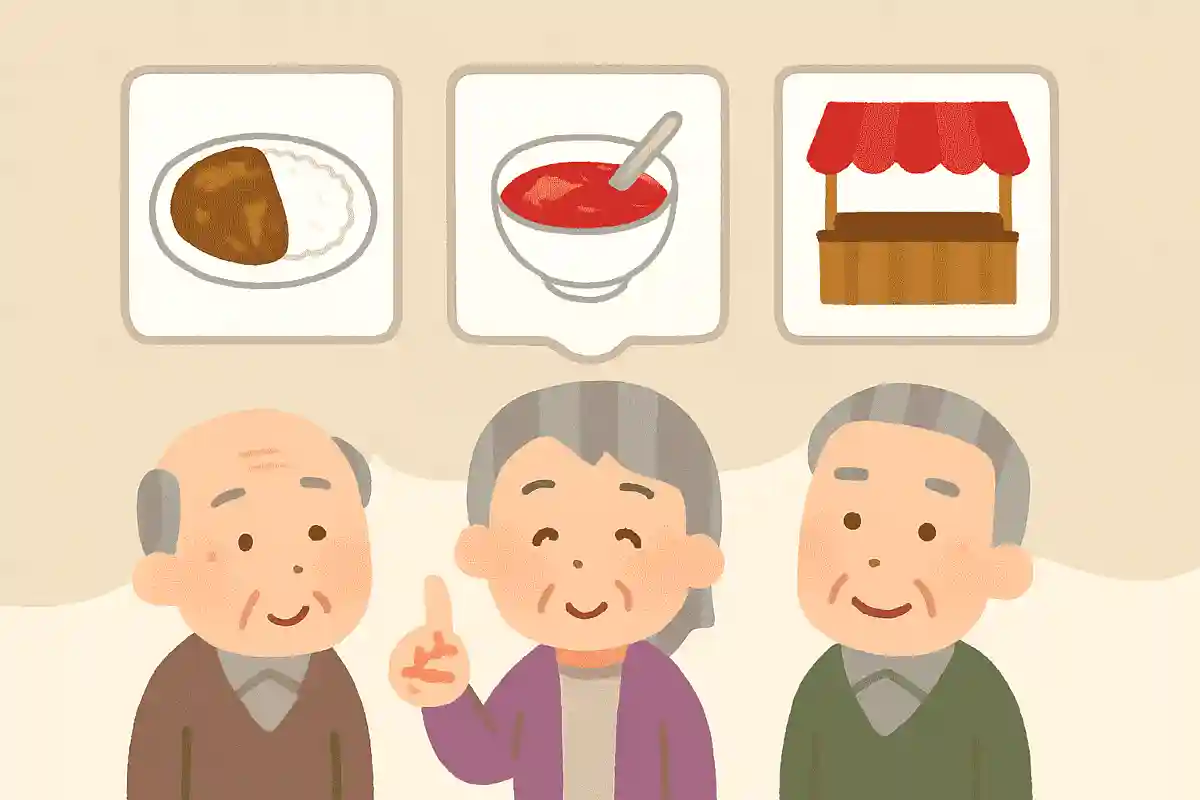
Ramen is one of the most popular foods, isn’t it? Since it’s easy to make, some older people might eat it often.
These days, it’s become rare to see ramen food stalls that sell from a truck loaded with a stove, ingredients, and dishes, but it seems there are still some shops that sell ramen from stalls.
The theme this time is “renge” (soup spoon), “soup,” and “yatai” (food stall), but there are other words like “menma,” “naruto,” “tonkotsu,” “shio,” and “shoyu” that might lead you to the answer, so give them a try.

Medals, once every four years, sports
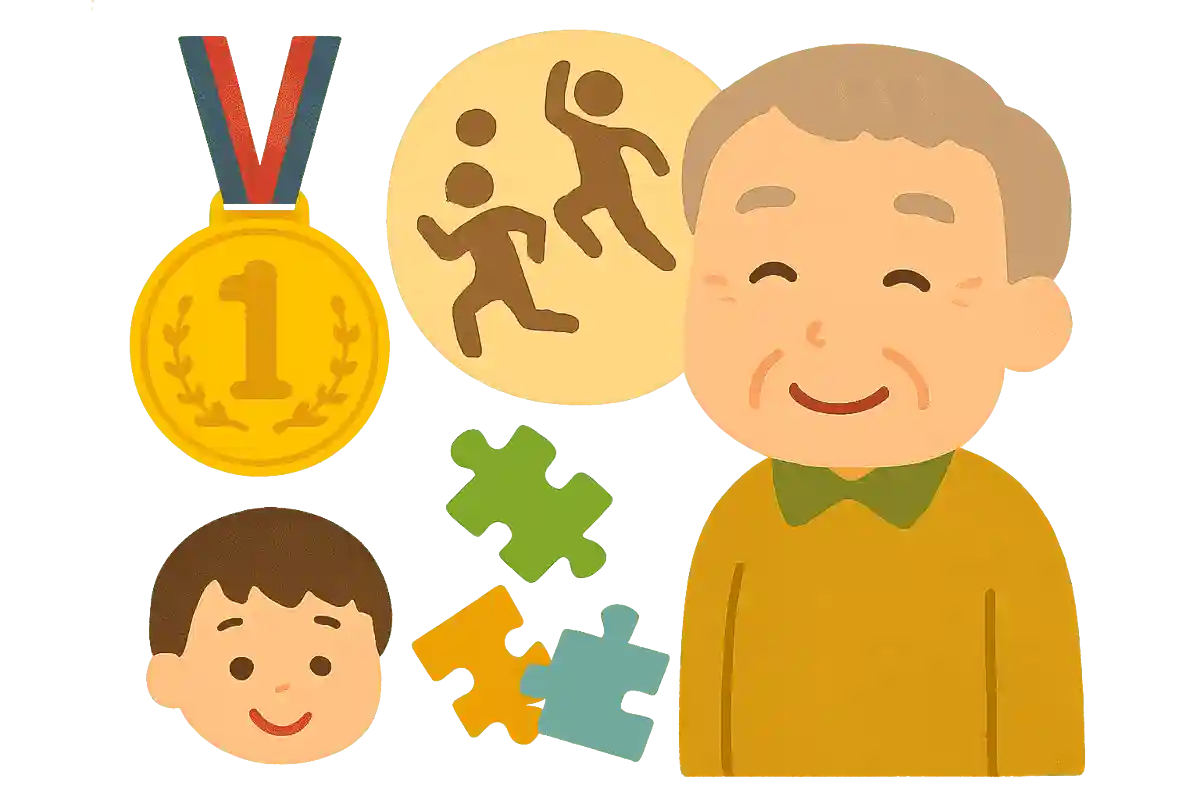
Do the word “medal” and its hint make many of you think of digital games or arcades? I was reminded of the medal I got as a child for a New Year’s calligraphy contest.
Perfect attendance awards, marathon races, fishing tournaments, mahjong tournaments—you’ve probably received lots of medals yourselves.
It can be a bit embarrassing to wear one around your neck in front of everyone, but when time passes and you look at the medals you still have, they each carry their own charm and atmosphere.
The Olympics, held in Japan about every fifty years or so—this time, I hope to see a Tokyo Olympics packed with spectators!