

![[For Seniors] Try this ultra-difficult trick quiz! How many questions can you solve?](https://media.ragnet.co.jp/img/1200__png__https://www.studiorag.com/files/2025/10/636e8e25f629af3997785fe6b90241ce.webp)

We’ve gathered a bunch of trick questions that’ll make you chuckle and say, “No way!” or “Ohhh, that’s what it was!” once you see the answer.
These are super-tough brain teasers that even older adults can enjoy—perfect for loosening up both the mind and the heart.
From everyday situations to problems that demand a surprising shift in perspective, only those who think all the way through will arrive at those satisfying “I get it now!” answers.
Try these ideal brain-training quizzes with your friends and family.
So, how many can you solve?
- [For Seniors] Challenge Your Brain with Super-Hard Quizzes! A Collection of Tough Questions That Feels Great Once You Know the Answer
- [For Seniors] Tricky quiz with annoying answers: a collection of questions guaranteed to get everyone excited once they hear the answers
- [For Seniors] A guaranteed crowd-pleaser: the Say-Anything Quiz. Brain-training questions that won’t be fooled by trick questions.
- [For Seniors] Liven Things Up with Trick Riddles You Answer!
- [For Seniors] Recommended for Brain Training! Ultra-Difficult Quizzes and Riddles
- [For Seniors] Fun Brain Training! A Collection of Tricky Quizzes You’ll Definitely Get Stumped By
- [For Seniors] Get Excited by Knowing the Answers! Tricky Quiz
- [For Seniors] Laugh-Out-Loud, Crowd-Pleasing! Fun Quiz
- [For Seniors] Take on the World's Hardest Riddles! A Collection of Ultra-Challenging Wordplay Puzzles to Twist Your Brain
- [For Seniors] Fun and Lively! Recommended Quiz Questions
- [For Seniors] Think and Have Fun: Introducing Brain-Stimulating Logic Puzzles
- [Riddle Quiz for Seniors] Brain Training Perfect for Mental Exercise
- [For Seniors] Super Amazing Trivia Quiz! Introducing Practical Tips for Everyday Life
[For Seniors] Try This Super-Tricky Gotcha Quiz! How many can you solve? (1–10)
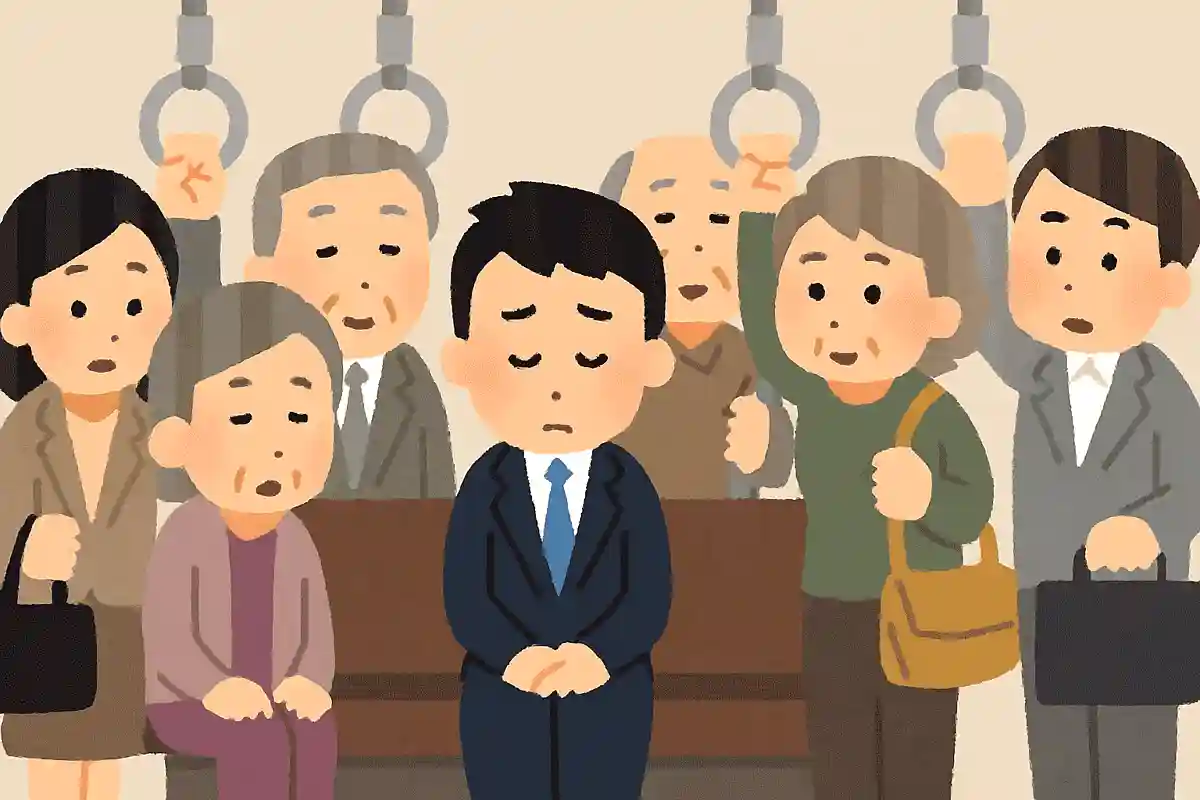
What’s the reason I can always get a seat every day, despite the packed trains during rush hour?
See the answer
Because (I'm) a driver (or a conductor)
This quiz is a trick question that makes you picture ordinary passengers when you hear the term “packed commuter train.” But the people who really get to sit every day are the train driver and the conductor. No matter how crowded it is, they can sit in the driver’s seat or the conductor’s seat. It’s not obvious from a typical perspective, but because their jobs guarantee them a seat, they can always sit even on a packed train every day.

Even though I did the laundry using a detergent that can remove any stain, the clothes stayed pitch black. Why is that?

See the answer
Because the clothes were originally pure black.
This puzzle is a trick question that requires a shift in perspective. The problem statement draws attention to the idea of a detergent that can remove any stain, but it actually leaves out information about the color of the clothing itself. Detergent removes stains, but it doesn’t remove the color of the fabric. In other words, if the clothing was originally jet black, no matter how much you wash it, it will remain jet black. This shows the importance of letting go of assumptions and approaching problems with flexibility.
Momotaro made the animals he met his retainers and set out to defeat the ogres. Who was the first one he met?

See the answer
Grandfather and grandmother
Many people tend to think of animals like the monkey, the dog, and the pheasant, but at the beginning of the story Momotaro is born from a peach that floated down the river and first meets the old man and the old woman. He encounters the animal retainers during his journey, but considering the overall flow of the tale, the old man and the old woman are the first ones Momotaro meets. It’s a trick question that tests whether you remember the details of the story.
There are seven months with 31 days in a year. So, how many months have 28 days?
See the answer
12
This is a trick question. People tend to misread it as “How many months have only 28 days?” but the question is “How many months have 28 days?” February usually has 28 days, but all the other months also have a 28th day, so the answer is 12. Every month qualifies.
This is a trivial question. The elevator currently stopped on the third floor—will it go up or down next?

See the answer
up; above; on; over; top
This riddle uses a wordplay on “kudaranai,” which can also be written as ‘下らない’ (literally, ‘not going down’). Since the expression relates to ‘down,’ the trick is that instead of going ‘down,’ you go ‘up.’ Normally, the destination wouldn’t be clear, but because ‘kudaranai = 下らない,’ meaning ‘not going down,’ the answer is ‘up.’ Puzzles that play with meanings and sounds like this have a humorous twist that can make you laugh.
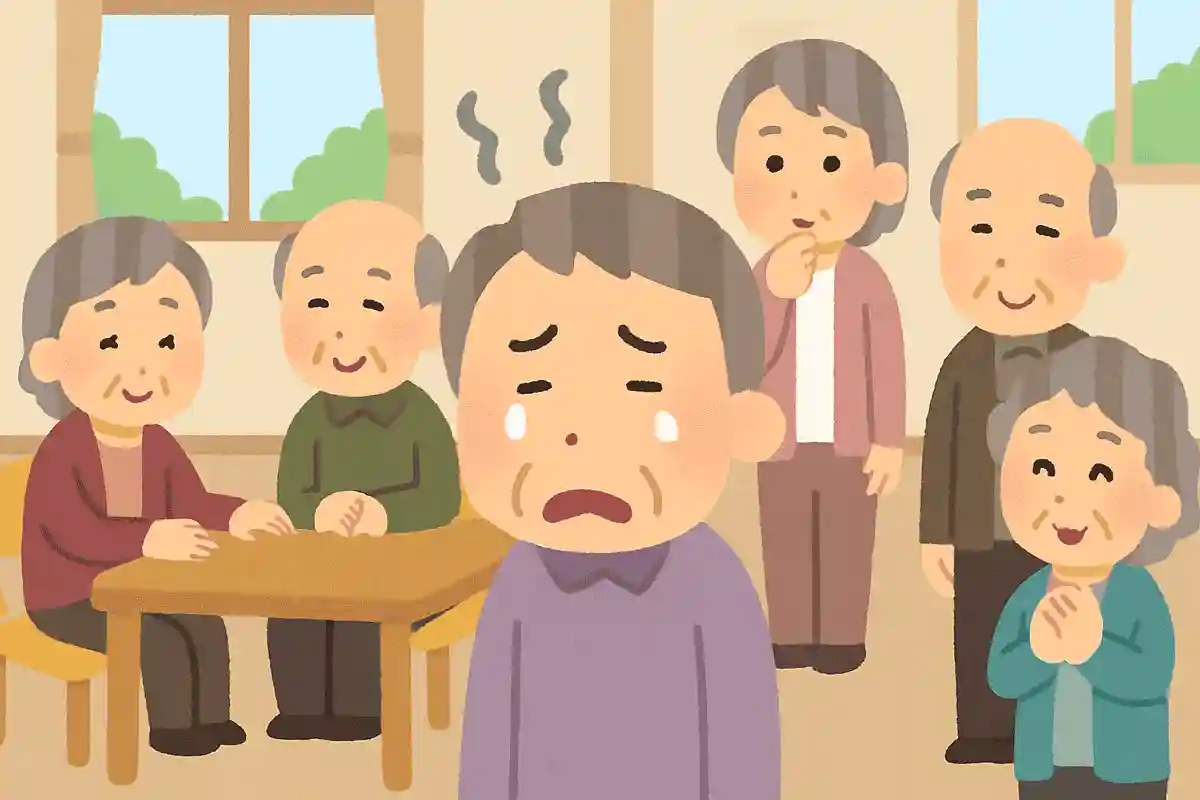
There’s someone who looks like they’re about to burst into tears. Where might that person be?
See the answer
living room
This quiz is a trick question aimed at older adults who enjoy humor and wordplay. In Japanese, the phrase “imanimo” in “imanimo nakidasōna hito” (a person who looks like they’re about to cry) sounds the same as “ima” (living room) plus “nimo” (also/too). Reading it as “ima nimo” can be reinterpreted as “also in the living room,” thereby referring to an actual place. It’s a quiz that uses puns and double meanings, and people who tend to interpret phrases intuitively are more likely to be tripped up by it.
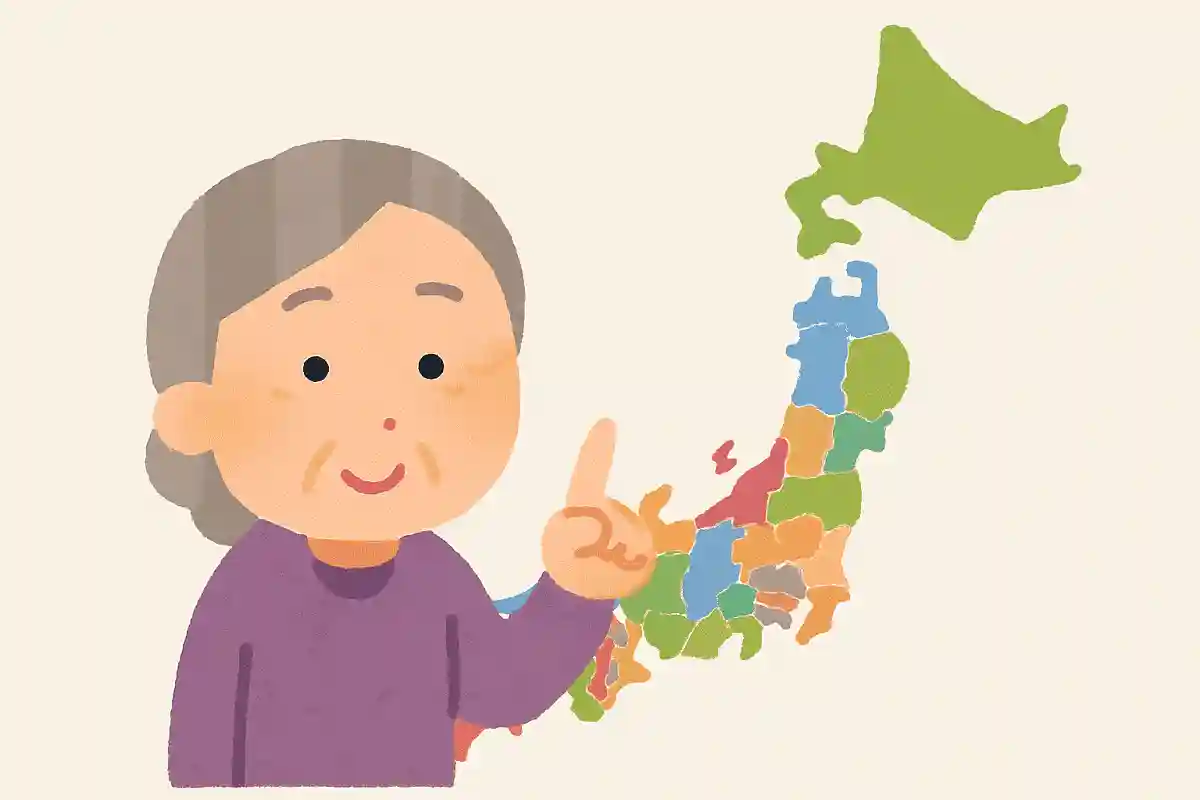
Which prefecture borders the most other prefectures?
See the answer
sea
At first glance, you might assume the answer is a prefecture name (like Nagano or Saitama), but the answer is actually “the sea.” Japan is an island nation, and many prefectures face the sea. In other words, the sea can be said to be the entity that borders the most prefectures. Looking at a map, more than 20 prefectures have coastlines, so the sea “touches” more prefectures than any single prefecture does.