

[For Seniors] Let’s Have Fun Together! Introducing Uplifting, Energizing Songs


We’d like to introduce some wonderful, uplifting songs recommended for seniors.
Listening to music not only enriches your emotions, but it’s also said to help you relax both body and mind.
Among the songs we’re about to introduce, there are many familiar tunes for seniors that will make you want to hum along.
We’ve carefully selected bright, cheerful songs and soothing pieces, based on nostalgic hits from years past.
They may even spark lively conversations about memories from those days.
Since they’re all lovely songs, be sure to use them for karaoke or exercise activities.
- [For Seniors] Songs Everyone Can Sing Together! A Roundup of Recommended Crowd-Pleasers
- Ranking of popular songs for senior citizens
- [For Seniors] Popular Karaoke Songs That Everyone Can Enjoy Together
- [Sing for your health!] Popular songs among seniors. Also recommended for recreational activities.
- [For Seniors] Recommended Songs for Care Activities and Events! Crowd-Pleasers That Bring Joy
- [For Seniors] Spring Songs You'll Want to Hum: Feel the Season with Nostalgic Classics
- [For Seniors] Beloved songs to sing in December: heartwarming moments with nostalgic kayōkyoku and children’s songs
- [For Seniors] Crowd-Pleasers! A Collection of Classic Karaoke Songs
- [For Seniors] Winter songs you'll want to hum along to. A collection of classic tunes recommended for BGM and recreational activities
- [Grandpa & Grandma] Timeless Songs to Gift to Seniors
- A collection of cheerful, uplifting songs recommended for women in their 80s—fun, bright tunes to sing along to
- Recommended Songs for Nursing Home Recreation [Fun Exercise, Soothing Songs]
- [For Seniors] Have Fun and Relieve Stress! Introducing Dances Everyone Can Enjoy Together
[For Seniors] Let’s All Have Fun Together! Introducing Uplifting Songs (91–100)
Over the hillFujiyama Ichirō

Ichiro Fujiyama’s “Over the Hills” is a lovely song that makes you feel a refreshing breeze.
The lyrics “a crystal-clear sky” and “radiantly clear” conjure up the image of Fujiyama’s resounding voice.
Ever since it was released in 1931 as the theme song for the film “Older Sister,” it has been a beloved classic.
The phrase “Now, onward—over the distant hills of hope” carries a powerful message to face forward and move ahead.
How about humming it together with older adults while enjoying some gentle movement? It will surely lift both body and spirit.
Dreamy TokyoFujiyama Ichirō

Ichiro Fujiyama’s “Yume Awaki Tokyo” is a deeply moving masterpiece for older listeners.
Set in postwar Tokyo, it beautifully portrays people’s melancholy and hope.
The flow of the river and scenes on street corners may evoke fond memories.
Fujiyama’s dignified, refined vocals are another part of its charm.
Born in 1947 (Showa 22), this timeless classic is perfect to enjoy with seniors while reminiscing about the past.
It’s a lovely song that brings a sense of calm.
Season of LovePinkī to Kirāzu

This song is distinguished by a bossa nova rhythm that heralds the start of summer.
Riding on a melody that captures the joy of new love, it’s become a classic summer tune brimming with lightness and nostalgia.
The fresh vocals and performance by Pinky & The Killers gently wrap youthful memories in warmth.
Released in July 1968, the song spent 17 consecutive weeks at number one on the Oricon charts.
It was also featured in the 2009 film Evangelion: 2.0 You Can (Not) Advance, making it beloved across generations.
On a hot summer day, why not hum along with older adults while reminiscing in a cool room? You can also expand the fun by doing light exercises or clapping along to the beat.
The season the sun gave usaoi sankakujougi

With its warm sound and heartwarming message about cherishing bonds with friends, this song shines as a theme for a coming-of-age drama.
Featuring the gentle tone characteristic of folk music, it resonates deeply alongside precious memories.
Released in February 1972, it is known as the theme song for the Nippon TV drama “Tobidase! Seishun” and stands as a signature work of Aoi Sankaku Jōgi.
It was later included in music textbooks and has become widely beloved as a school choral piece.
It’s a song that naturally brings smiles when everyone sings along together, sure to revive nostalgic memories.
It’s also perfect for summer recreation or for enjoying while doing exercises.
I look up as I walkSakamoto Kyu

It is a timeless masterpiece in the history of Japanese popular music, released by Kyu Sakamoto in 1961.
The song was written and composed by Rokusūke Ei and Hachidai Nakamura, who also created pieces like “Tooku e Ikitai” and “Tasogare no Begin,” and it became a huge hit in the United States under the title “SUKIYAKI.” Kyu Sakamoto’s distinctive, buoyant vocal style is striking.
When this song was being sung, Japan was heading into the postwar period of rapid economic growth, and many people likely projected their own feelings onto the song as they each walked their own path.
Sūdara-bushiHana Hajime to Kureēji Kyattsu
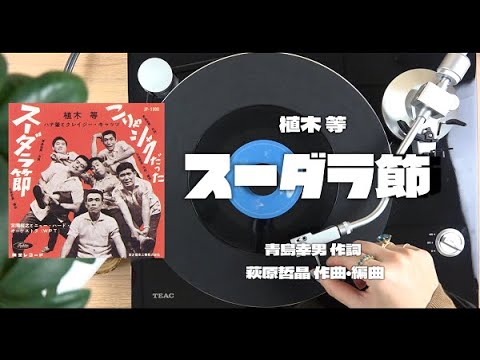
“Sūdara-bushi” is a song by Hachijō Hana and the Crazy Cats.
Released on August 20, 1961, it’s a quintessential pop hit of the Showa era.
Ueki Hitoshi’s distinctive vocals and the humor-filled lyrics are memorable.
The lyrics comically depict everyday failures and setbacks, sure to bring a smile.
While the song highlights the human weakness of “I know I shouldn’t, but I just can’t stop,” it treats it in a positive light, which is lovely.
It’s enjoyable in many situations—from singing it at karaoke to listening at home while relaxing.
How about spending some wonderful time through music?
A rose has bloomed.Maiku Maki

Mike Maki, a folk singer representative of the Showa era.
The song that led to his first appearance on NHK’s Kohaku Uta Gassen was “Bara ga Saita” (Roses Bloomed).
It’s a piece that depicts roses.
Because the lyrics don’t delve too deeply, listeners can project various meanings onto the roses and empathize in different ways.
The melody is simple—just guitar—so it’s also recommended for anyone wanting to try singing with self-accompaniment.
By the way, an English version of the song has also been released, making it perfect for language study.
