

[For Seniors] Gluteus medius strengthening exercises: simple training you can do lying down, seated, and standing

The gluteus medius is important for maintaining walking stability and balance.To keep walking on your own for years to come, it’s a muscle you’ll want to train well starting now.However, the idea of strength training can sometimes feel a bit intimidating.In this article, we introduce strength training methods, stretches, and exercises that even older adults can do safely and comfortably.There are many you can do while lying down or seated in a chair at your own pace.By gradually incorporating them into your daily routine, you’ll find even more enjoyment in walking.Adopt them at a pace that suits you, and enjoy a healthy everyday life.
- [With Video] Lower-limb strength training for seniors that can be done in bed
- [For Seniors] Simple pelvic floor exercises: various trainings in standing, sitting, and supine positions
- Summary of exercises for seniors: introducing preventative care movements by body part.
- For Seniors: Back-Strengthening Exercises, Calisthenics, and Stretches—Workouts Women Can Do Without Strain
- [For Seniors] Rehabilitation exercises targeting each body part: Introducing easy routines you can incorporate without strain
- Grip strength training for seniors: Introducing gentle exercises, stretches, and strength workouts you can stick with
- [For Seniors] Recommended Easy Strength Training
- For Seniors: How to Strengthen Your Inner Muscles. Fall Prevention
- [Seated] Fun Health Exercises for Older Adults and Seniors
- [For Seniors] Easy-to-adopt foot exercises for daily life: A healthy habit to keep walking on your own
- For seniors: Leg-strengthening exercises you can do without overexertion.
- [For Seniors] Recommended Muscle Training Gear. Simple and Easy
- [For Seniors] Exercises to maintain and improve lower-limb strength. Ideas that can be enjoyed by both large and small groups
[For Seniors] Gluteus Medius Strength Training: Easy Exercises to Do Lying Down, Seated, or Standing (1–10)
Side plank while lying down

You can train just by lying on your side, lifting your body, and holding the position.
But as it’s labeled intermediate, keeping the hold is pretty tough.
Here’s how: lie on your side and prop yourself up by placing your elbow on the floor on the lower side to lift your body.
The key point is to keep your body in a straight line.
You’ll realize how hard it is once you try, so start with a duration that isn’t too demanding.
It’s also effective if you want to tighten your waistline! Try doing it while watching TV.

Side leg raise in a standing position
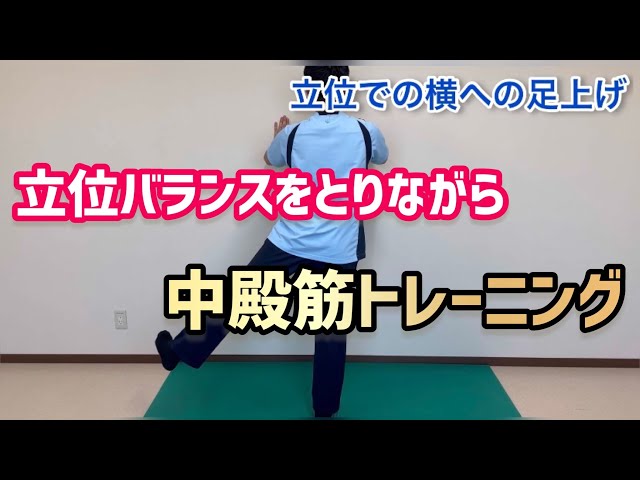
Stand with both hands on the wall and open one leg to the side at a time.
Be careful not to let your toes point outward when you open your leg, and avoid leaning your body to the opposite side.
Aim for 3 sets of 10 reps, but start within a comfortable range until you get used to it.
Because falling can be dangerous, be sure to do this where you have something to hold onto.
By practicing a little every day, you can strengthen the gluteus medius.
The gluteus medius is important for stable walking, so take this opportunity to give it a try.
Exercises to activate the gluteus medius

Your walking pattern will change! Activate your gluteus medius to improve posture and enhance walking stability.
In this exercise, start in a kneeling position with your arms raised overhead, then step one foot forward at a time and place the sole on the floor.
Do this 10 times on each side.
To increase effectiveness, raise the arm opposite to the stepping leg.
If your pelvis wobbles when you walk or you find it hard to bring your leg forward, try doing this a little every day.
[For Seniors] Gluteus Medius Strength Training: Simple Exercises to Do Lying Down, Seated, and Standing (11–20)
Gluteus medius exercises in standing and sitting positions

This is an exercise that strengthens the gluteus medius on the side of the hips and can be easily done while seated.
The key is to sit shallowly on the chair; from there, the leg movements lead into training the gluteus medius.
The motion is simple: repeatedly move your leg out to the side and bring it back, paying attention to how you engage your muscles.
Instead of sliding your leg outward, lift it and place it down to the side—this is important.
Focus on activating the muscles from the thigh through to the buttocks.

Gluteus medius exercises while lying down and standing

This is a gluteus medius training routine that you can start from relaxed positions, such as lying on your back on the floor or leaning against a wall.
When lying on your back, use a movement that folds one leg back; when standing, bend the leg backward and then press it against the wall to engage the muscles.
In both positions, there is knee flexion involved, so it’s important to keep the movement within a range that doesn’t cause pain.
Maintain good balance and stay aware of where you’re engaging the muscles as you proceed.
Gluteus medius training using a wall and a ball

This is a training exercise that strengthens the gluteus medius in particular by placing a large ball between the wall and your body, using the ball’s rebound to help you move.
Take a posture where you lean lightly against the ball, then lift one leg while keeping your balance in mind.
While maintaining the lifted-leg position, move your hips; as you work to hold the posture, your muscles will activate.
By maintaining an awareness of balance throughout the exercise to avoid tipping over, it also seems likely to improve your everyday posture.
Gluteus medius training at the wall

This is a training exercise aimed at strengthening the gluteus medius by placing your hands on a wall while in a squat and opening and closing your legs.
Keeping the unstable squatting posture while moving your legs effectively stimulates the glute muscles.
The deeper you squat, the more the gluteus medius engages, but if you’re concerned about bending your knees, it’s recommended to start with a shallow squat.
By paying attention to the angle at which you use the wall for support, you may find a more efficient movement that suits you.