

![[For Seniors] Trivia Quiz & Fun Facts About Neptune](https://media.ragnet.co.jp/img/1200__png__https://www.studiorag.com/files/2025/06/3df989c796d9944a0a4d739b0d720124.webp)

Neptune is one of the planets in the solar system.
Many of you may remember the sequence as “Mercury, Venus, Earth, Mars, Jupiter, Saturn, Uranus, Neptune, Pluto.” Since Pluto was reclassified and is no longer considered a planet, Neptune is now the planet farthest from the Sun in the solar system.
How much do you know about Neptune? Let’s deepen our knowledge of Neptune—its color, size, temperature, and the length of its day—which differ from Earth.
Thinking through quiz answers and acquiring new knowledge are recommended brain-training activities for older adults.
Have fun with these bite-sized Neptune trivia questions that you’ll want to share with others!
- [For Seniors] Introducing Trivia Quizzes & Fun Facts About Space!
- [For Seniors] Enjoy Learning the Wonders of Mars! Trivia Quiz & Fun Facts to Exercise Your Brain
- [For Seniors] Enjoyable Brain Training! Trivia Quiz & Fun Facts about Venus
- [For Seniors] Trivia Quiz & Fun Facts about Stars. Brain Training
- [For Seniors] Take on Summer! A Collection of Ocean Trivia Quizzes & Fun Facts
- [For Seniors] Trivia Quiz & Fun Facts About Earth
- [For Seniors] Trivia Quiz & Fun Facts About the Weather
- [For Seniors] Trivia Quiz & Fun Facts for Everyday Life
- For Seniors: Useful Trivia Questions! Introducing Fun Facts Quizzes You'll Want to Share
- [For Seniors] Summer-Themed Trivia Quiz & Fun Facts Collection
- [For Seniors] Enjoy Brain Training with English Trivia Quizzes and Fun Facts
- [For Seniors] Horse Trivia Quiz: Have fun with surprising facts about their behavior and little-known tidbits
- [For Seniors] Boost Your Knowledge! Fun Trivia Quiz
[For Seniors] Trivia Quiz & Fun Facts about Neptune (1–10)
What color is Neptune?

- red
- blue
- yellow
See the answer
blue
Neptune is covered by layers of gases such as methane, hydrogen, and helium. Methane absorbs red light and has the property of scattering blue light. Sunlight contains both red and blue light, but because the red light is absorbed and only the blue light is reflected back, Neptune appears a deep blue when viewed from the outside.
Dark areas called “dark spots” have been found on Neptune. What exactly are they?
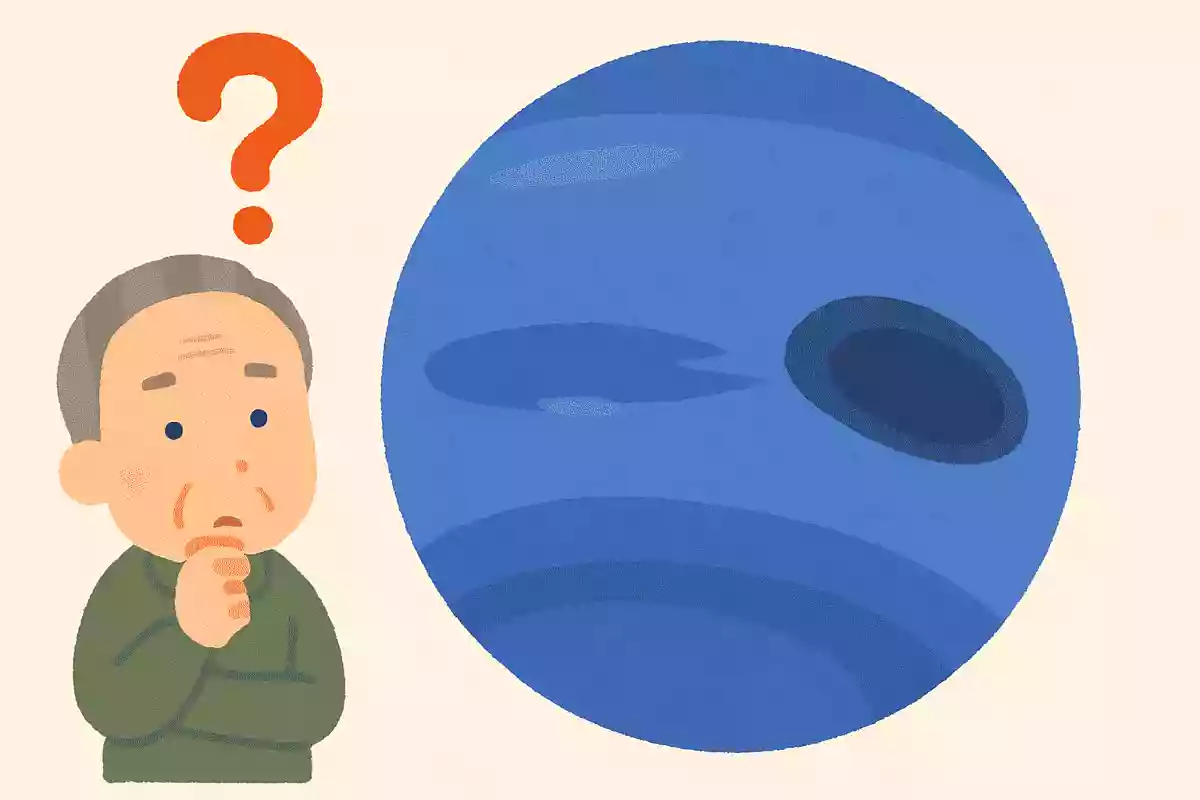
- a gigantic rock
- A swirling storm
- Mountain range of ice
See the answer
A swirling storm
The dark, vortex-like “dark spots” seen on Neptune’s surface appear due to massive storms (high-pressure systems) that occur in its atmosphere. They are similar to typhoons on Earth and are considered phenomena characteristic of gas giants. Their size is said to be roughly comparable to that of Earth.
How long is a day on Neptune?
- about 8 hours
- about 16 hours
- about 24 hours
See the answer
about 16 hours
It completes one rotation in about 16 hours due to Neptune’s rotation. Since Neptune spins faster than Earth, its day is shorter than a day on Earth.
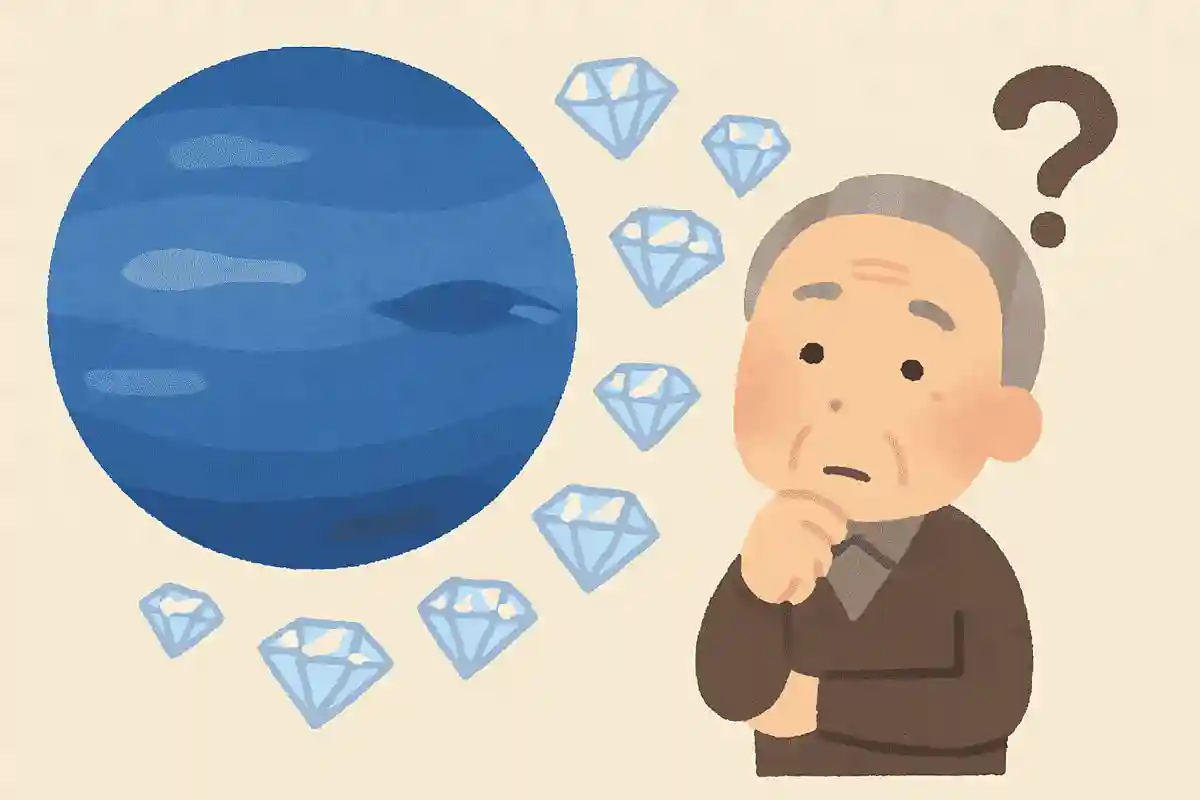
On Neptune, it is believed that due to unique weather conditions, a certain precious gemstone rains down like rain. What is that gemstone?
- Ruby
- Diamond
- Emerald
See the answer
Diamond
In Neptune’s atmosphere, methane is thought to break down under high pressure and temperature, causing carbon to crystallize into diamonds that fall like rain. This phenomenon is not seen on Earth and is a unique marvel of the cosmos.
What is Neptune called in English?

- Venus
- Mars
- Neptune
See the answer
Neptune
The English name for 海王星 is “Neptune.” It is said to derive from the name of the Roman god of the sea (Neptunus).
In what year was Neptune officially discovered?

- the year 1781
- the year 1846
- the year 1930
See the answer
the year 1846
Neptune was discovered on September 23, 1846, by Germany’s Johann Gottfried Galle based on calculations by French astronomer Urbain Le Verrier and British astronomer John Couch Adams. Two hundred thirty-four years earlier, in 1612, Galileo Galilei observed Neptune and recorded it, but it was not recognized as a planet at the time.
Can humans live on Neptune?

- habitable; livable; can live (there)
- Uninhabitable
- We might be able to live there in the future.
See the answer
Uninhabitable
Neptune is composed of ice and gas and has no solid surface. Because it is located far from the Sun, it experiences extremely cold temperatures and strong winds. Therefore, humans cannot live there, and it will likely remain difficult to inhabit in the future.