

[For Seniors] Think and Have Fun: Introducing Brain-Stimulating Logic Puzzles


This time, we’re introducing logic puzzles designed for older adults.
A logic puzzle is one where you think about why something happens or consider the methods and steps involved.
Making use of your own knowledge and finding hints or trick points in the problem statement are key to solving the puzzles.
Thoughtfully working through logic puzzles helps activate the brain and can also improve concentration and creativity.
Why not incorporate them into quiz activities at senior care facilities? We’ve prepared everything from shorter puzzles with fewer clues in the text to longer ones with more to read.
Try using paper or a whiteboard to make things clearer with drawings and diagrams, and offer hints as needed to make it engaging!
- [For Seniors] Fun Brain Training! A Collection of Tricky Quizzes You’ll Definitely Get Stumped By
- [For Seniors] Exercise Your Brain with Fun Logic Puzzles!
- [For Seniors] Have Fun with Wordplay Characters! A Collection of Funny Puzzles
- Take on the challenge like a puzzle! A collection of logic quizzes that also work as brain teasers.
- [For Seniors] Who Am I? Quiz: A Fun Set of Questions with Exciting Hints
- [For Seniors] Recommended for Brain Training! Ultra-Difficult Quizzes and Riddles
- [For Seniors] Laugh-Out-Loud, Crowd-Pleasing! Fun Quiz
- [For Seniors] Today’s recommended quiz. Daily brain-training quiz!
- [For Seniors] Liven Things Up with Trick Riddles You Answer!
- [For Seniors] Sports Trivia Quiz & Fun Facts. Easy and Entertaining
- [For Seniors] Fun! Let’s Get Excited with Japan’s Number One Quiz
- [For Seniors] Lateral Thinking Game! Brain Training
- [For Seniors] Find daily brain training. Today’s recommended brain workout.
[For Seniors] Think and Have Fun: Introducing Brain-Stimulating Logic Riddles (21–30)
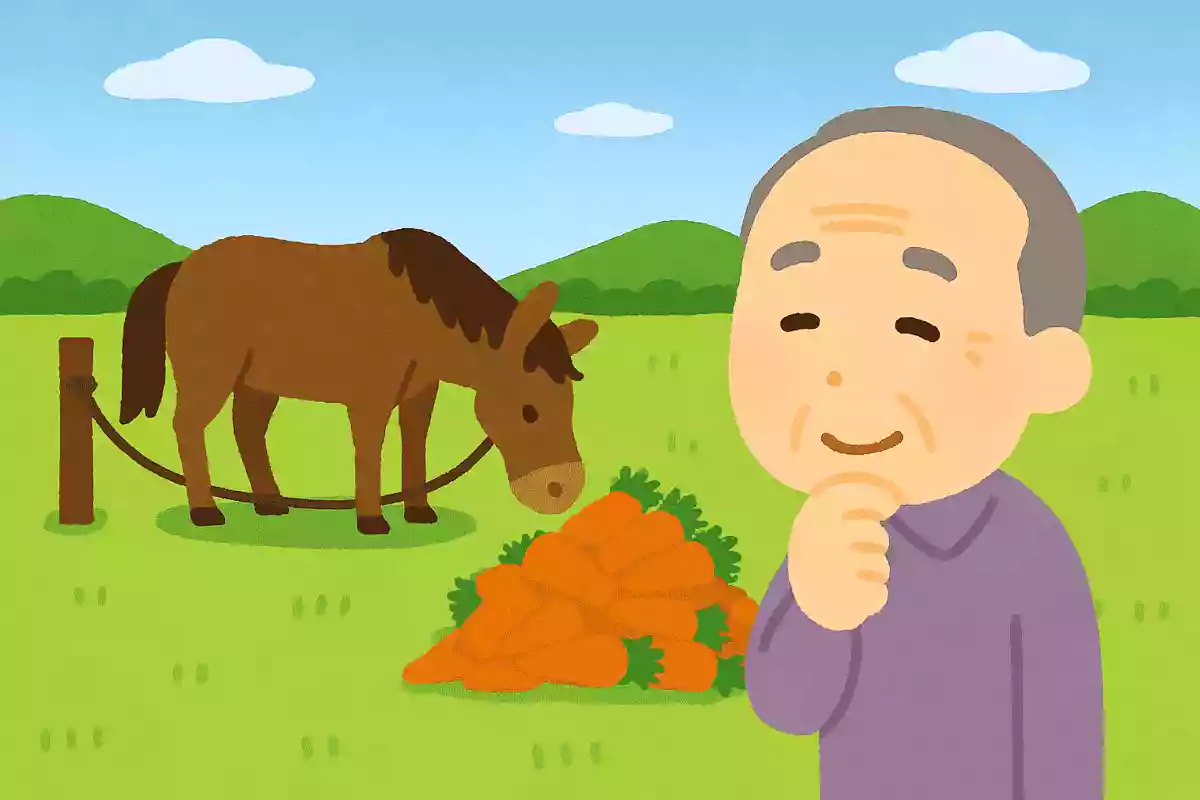
A hungry horse was tied with a 4-meter rope. About 15 meters away, there was a pile of carrots. The hungry horse tied with the rope ate the carrots. How was the horse able to get to the carrots?
See the answer
The rope tied to the horse wasn't secured, so...
If you focus only on the two elements—“a horse tied to a 4-meter rope” and “a carrot about 15 meters away”—you might be led away from the answer. The horse is tied to a rope, yes. But it doesn’t say the rope is fixed, does it? Since the rope wasn’t secured, the horse was free to move.

If three people eat three rice crackers, it takes three minutes. How many people are needed to eat 100 rice crackers? Note that the rice crackers cannot be broken and shared among multiple people.

See the answer
4 people
Let’s reason from the problem statement. If it takes three people three minutes to finish three rice crackers, then it takes one person three minutes to eat one cracker. When you divide 100 crackers equally among three people, you get 33 crackers each with 1 cracker left over. It’s incorrect to think, “Three people will eat the remaining one, so it’s still three people,” so let’s think more carefully. The time it takes three people to finish 33 crackers is 3 minutes × 33 crackers = 99 minutes. Since you can’t split the last cracker and have several people eat it, nor can one person finish it in the remaining one minute, you need one more person.
[For Seniors] Think and Have Fun: Introducing Brain-Stimulating Logic Puzzles (31–40)
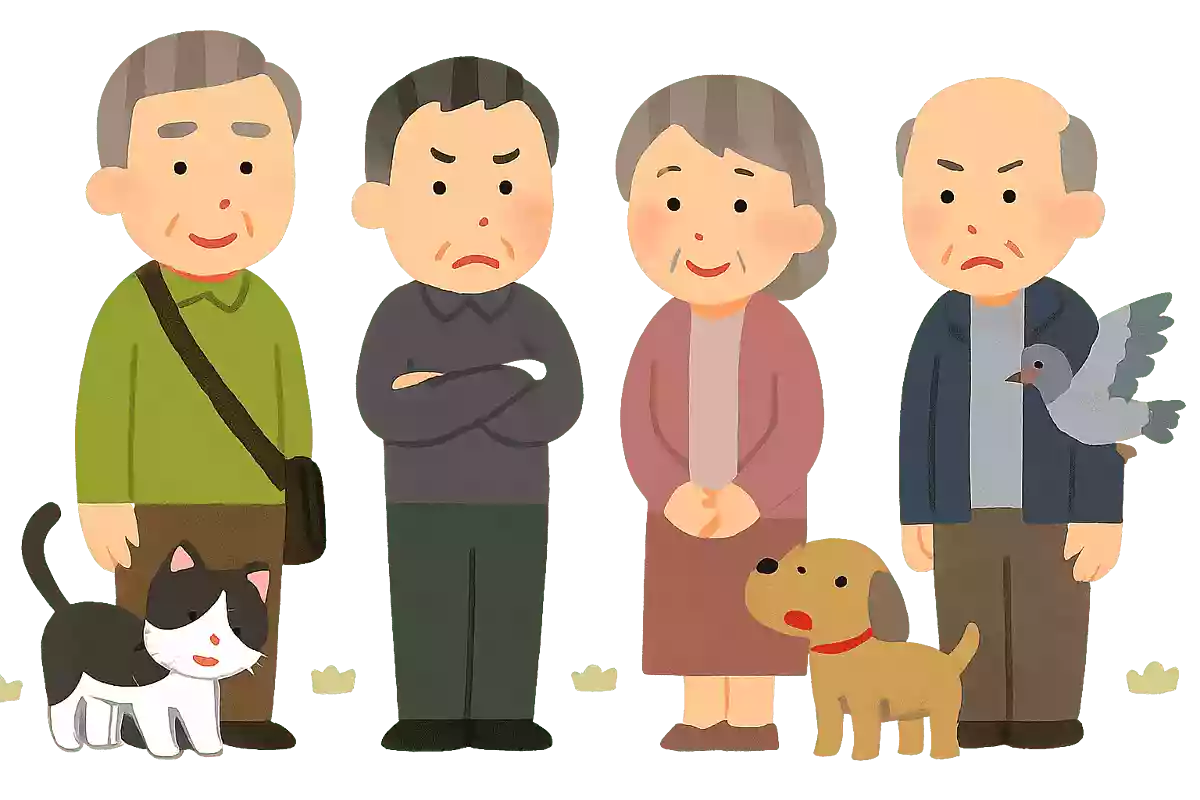
Among the four—Mr. Nakamura, Mr. Ueno, Ms. Sanae, and Mr. Naitō—who is disliked by animals?
See the answer
Mr./Ms. Ueno
Rephrasing “being disliked by animals” as another expression gives us “not getting attached” (animals not becoming attached to you). If we take “not getting attached” as “without ‘na’,” and look at the four people’s surnames or given names mentioned in the problem, the person whose name doesn’t include “na” is Mr./Ms. Ueno. If Mr./Ms. Ueno likes animals, it would be sad if the animals didn’t get attached to them.
Saburō received a three-color ballpoint pen—red, blue, and black—from his mother. He was so happy that he wrote a lot, but it seems the pen broke. The red and blue tips would no longer come out, so he couldn’t write with them. When Saburō cried, saying he wanted to write in red and blue, his mother apparently solved the problem with a certain method. How did she make it possible for him to write?

See the answer
You should write the 'red text' and the 'blue text' with the black ballpoint pen tip.
It may seem like a trick question, but let’s think of a way for Saburō to do what he wants. If you read the problem statement carefully, it doesn’t say “write letters in red or blue.” Saburō wants to write “red letters and blue letters,” so he writes in black using the black ink of the three-color pen that isn’t broken.
A friend, A, who runs a bento shop in Hokkaido called B, who lives in Tokyo. A said, “Would it be okay if I came to your home in Tokyo in about 30 minutes from now?” Would it be possible to get from Hokkaido to B’s home in Tokyo in 30 minutes?

See the answer
It’s possible depending on where Person A is currently located.
The shortest time by public transportation from Hokkaido to Tokyo is about 1 hour and 30 minutes by plane. That shortest time refers to the time between airports, not to Mr. B’s home, so it will take a bit longer. It would be possible if, when Mr. A calls, you are at a place where you can arrive from Mr. B’s home in 30 minutes, rather than in Hokkaido.
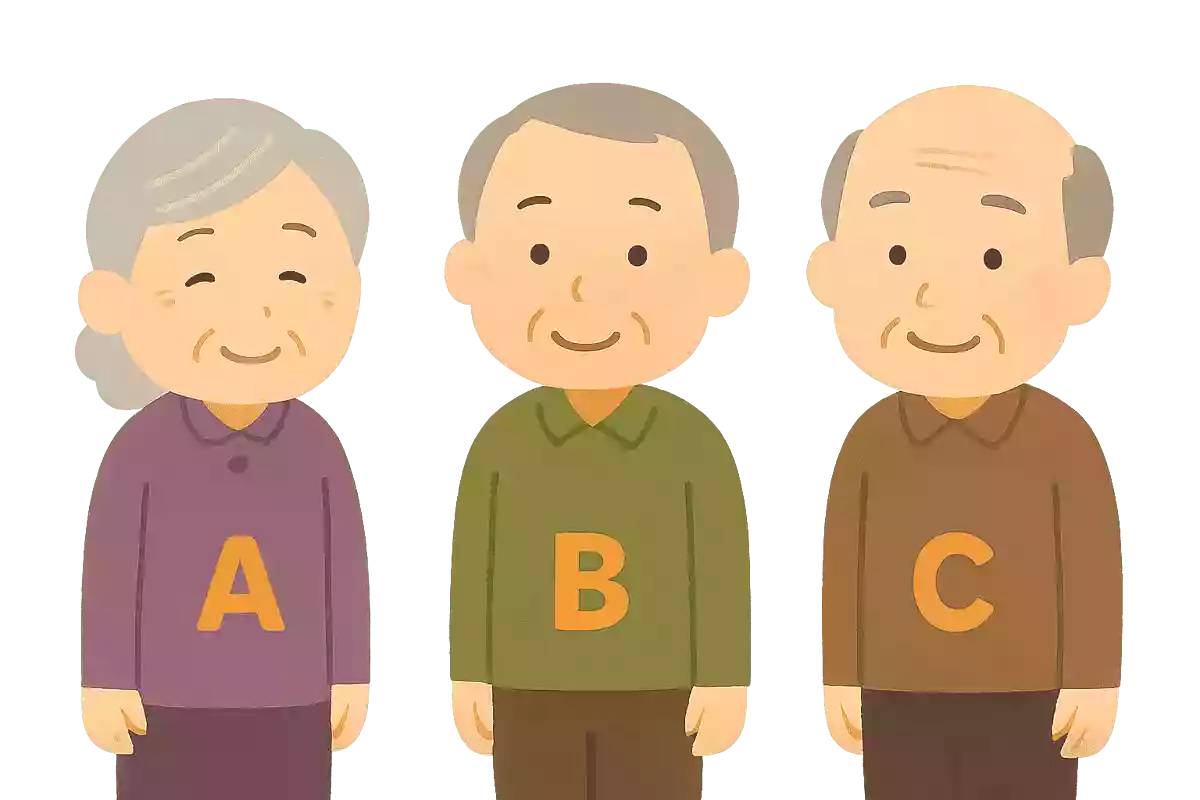
We gave a test to three people: A, B, and C. As a result, one person scored 100 points, and the other two scored 50 points. When we spoke to the three, the person who got 100 points told the truth, and the two who got 50 points lied. Based on what they said, determine who scored 100 points. A: “I scored 100.” B: “C did not score 100.” C: “A scored 0.”
See the answer
Mr./Ms. C
Let's consider each person's statement one by one. If we assume Person A scores 100 points, then Person B's statement becomes a lie, and Person C scores 100 points. However, since only one person can have 100 points, this creates a contradiction among the three statements. If Person B has 100 points, then Persons A and C each get 50 points, and we assume their statements are lies. However, there is a discrepancy between the two statements, leading to a contradiction. If Person C has 100 points, then the statements of the other two are consistent.
In conclusion
There was a wide variety of questions, including number puzzles and riddles. Let’s invite seniors to reason things out and answer in a relaxed, casual way. Please make use of these enjoyable brain-stimulating logic quizzes for recreation and more.