

[For Seniors] Take on Summer! A Collection of Ocean Trivia Quizzes & Fun Facts

Summer is the perfect season for enjoying the beach.
Some older adults may remember playing in the ocean until it got dark.
Others might have grown up in landlocked prefectures and have memories of the sea from their travels.
In this article, we’ve gathered quizzes and fun trivia about the ocean to try in summer.
It’s packed with questions you might think you know but actually don’t—like why waves form, why seawater is salty, and why the sea looks blue.
The questions are easy multiple-choice, so feel free to join in.
Please make use of them during recreation time!
- [For Seniors] Summer-Themed Trivia Quiz & Fun Facts Collection
- [For Seniors] Summer-Themed Quiz: A Collection of Fun Questions to Liven Up Recreational Activities
- [For Seniors] Summer Festival Trivia Quiz & Fun Facts. Enjoyable Quizzes That Boost Your Knowledge
- For Seniors: Lively! Trivia and Fun Facts Quiz for August
- [For Seniors] Trivia Multiple-Choice Quiz
- For Seniors: Useful Trivia Questions! Introducing Fun Facts Quizzes You'll Want to Share
- [For Seniors] Trivia Quiz & Fun Facts About the Weather
- [For Seniors] Lively two-choice trivia quiz. Handy to know and tidbits you'll want to share with others
- [For Seniors] July Trivia Quiz & Fun Facts. Easy and Engaging
- [For Seniors] Trivia Quiz & Fun Facts About Earth
- [For Seniors] Trivia Quiz & Fun Facts for Everyday Life
- [For Seniors] Fun and Informative! Health Trivia Quiz
- [For Seniors] Fun and Informative! Trivia and Quizzes Introduced
[For Seniors] Summer Challenge! Sea Trivia Quiz & Fun Facts Collection (1–10)
Which of the following is the emergency phone number to call in the event of an incident or accident at sea?

- 110
- 119
- 118
See the answer
118
The emergency phone number for incidents and accidents at sea is 118. Dial 110 for the police and 119 for fire and ambulance, but for trouble at sea you should call the Japan Coast Guard at 118.

Seawater is about equally salty everywhere in the world, but why is that?

- Because the creatures of the sea are adjusting it
- Because the salt content in rivers and rain is kept in balance.
- Because the sunlight evens out the salt
See the answer
Because the salt content in rivers and rain is kept in balance.
Rivers and rain carry various minerals and salts into the ocean, and because their amounts even out over long periods, the saltiness of seawater is kept at nearly the same level worldwide. Even if the amount of salt or seawater decreases, there is always a replenishing effect, so the salinity of seawater does not change. However, there do seem to be slight differences depending on the location.
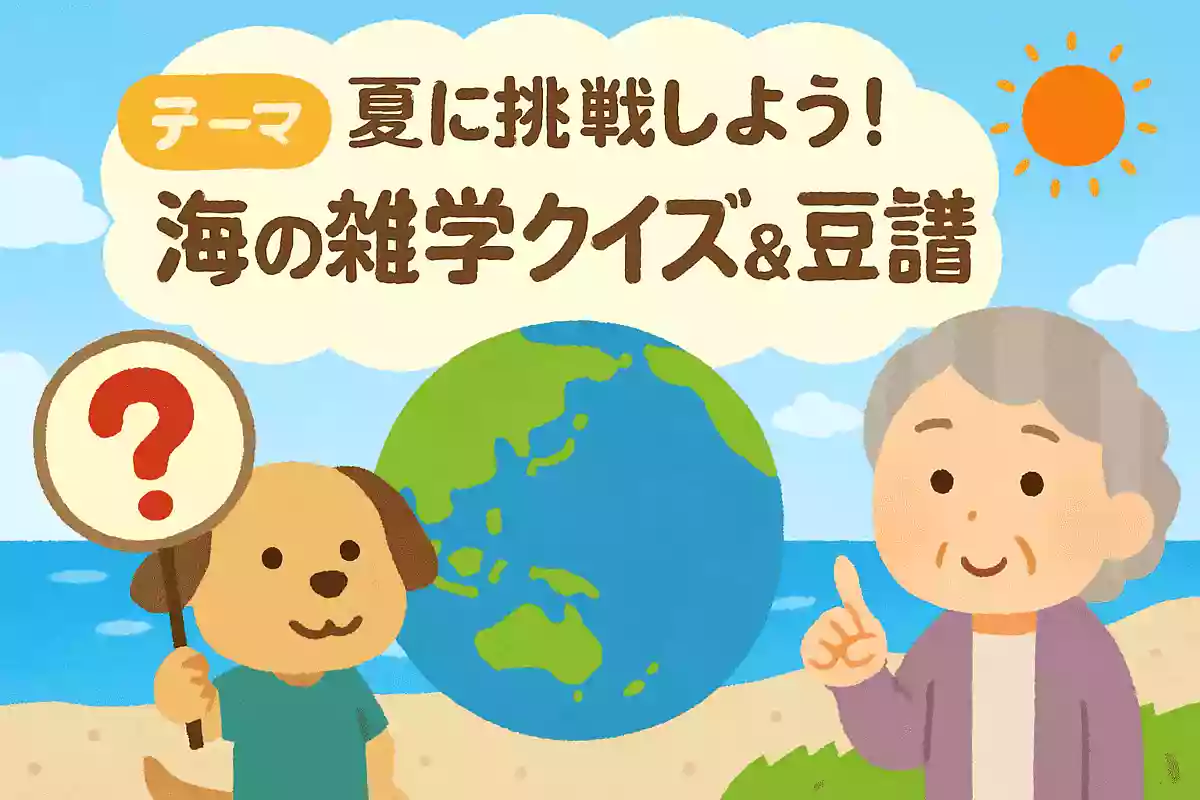
What percentage of the Earth’s surface is covered by oceans?
- About 30%
- About 50%
- about 70%
See the answer
about 70%
About 70% of Earth’s surface is covered by oceans, totaling approximately 361.06 million square kilometers. Land makes up only about 30%. For this reason, Earth is also called the “Blue Planet.” The words of the astronaut Yuri Alekseyevich Gagarin—“The Earth was blue”—are especially memorable.
[For Seniors] Summer Challenge! Ocean Trivia Quiz & Fun Facts Collection (11–20)
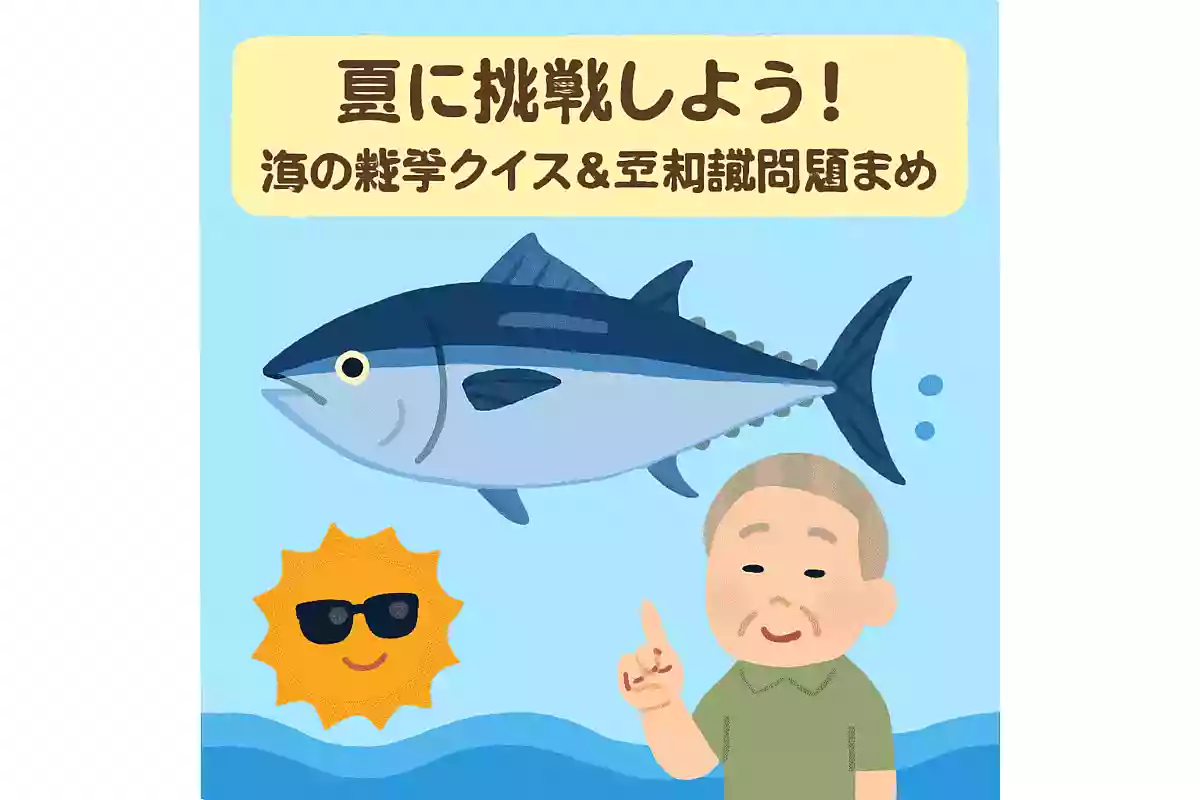
Tuna are fish that keep swimming all day long. Why do they keep swimming even when they are sleeping?
- to keep searching for food
- To escape from the enemy
- To take in oxygen
Unlike other fish, tuna use a breathing method called ram ventilation. In this method, they swim with their mouths open so that seawater flows into the body, and as it passes over the gills, they continuously take in dissolved oxygen from the water. Therefore, if they stop swimming, they suffer oxygen deprivation and die, so they keep swimming even while sleeping.
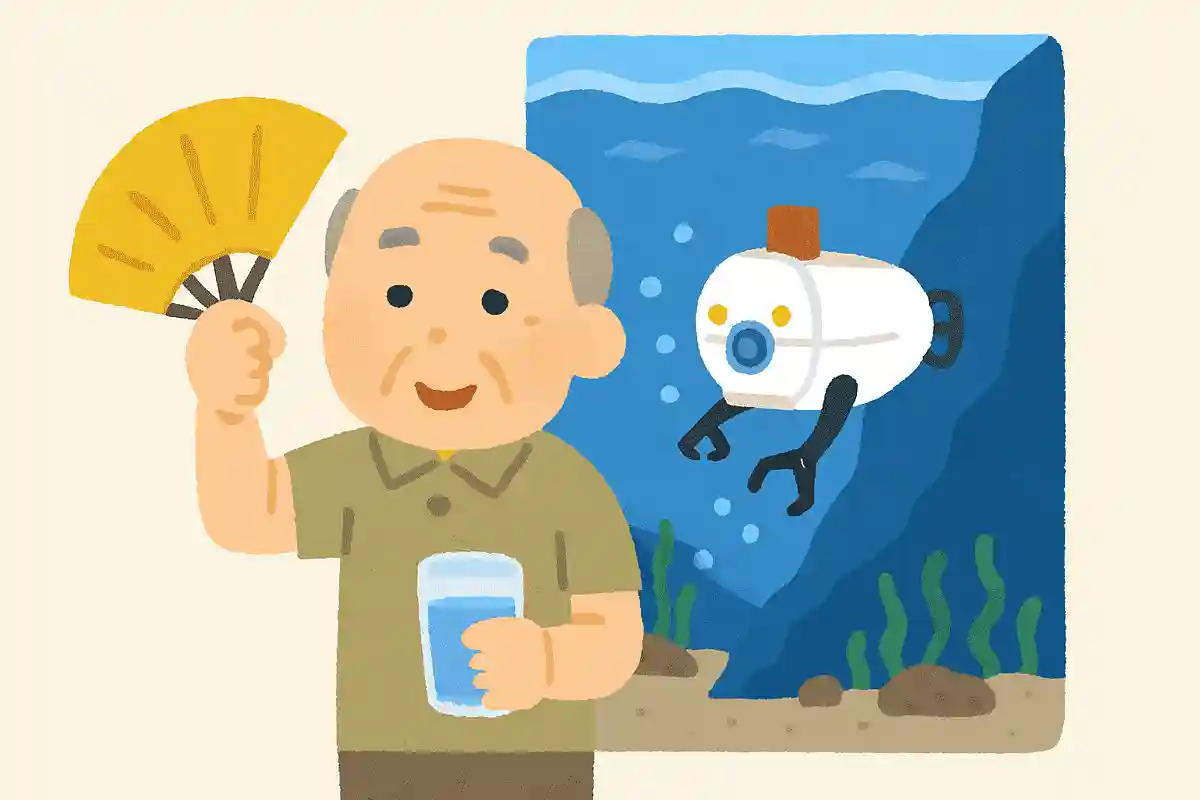
The Challenger Deep in the Mariana Trench is known as the deepest place on Earth. About how deep is it?
- about 4,000 meters
- about 7,000 meters
- about 11,000 meters
See the answer
about 11,000 meters
The place in the Mariana Trench known as the Challenger Deep is about 10,924 meters (around 11,000 meters) at its deepest point. This is much deeper than Mount Everest is tall.
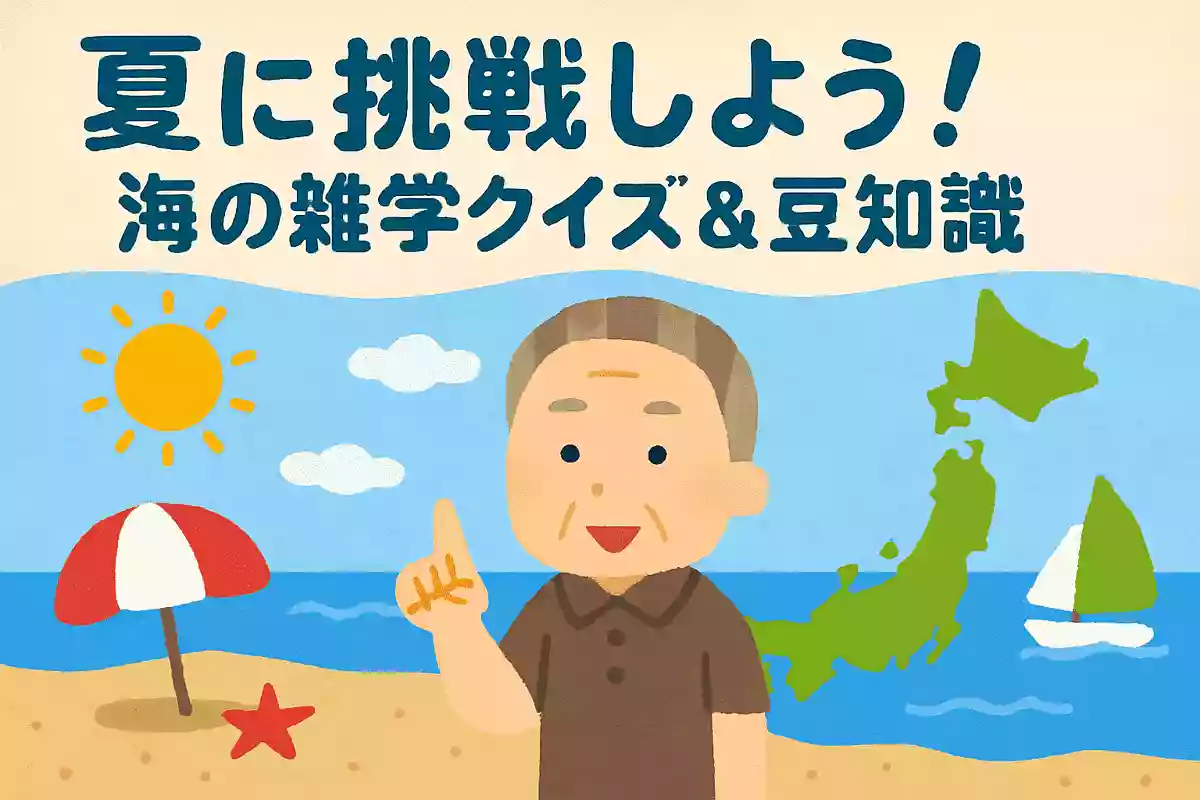
What is the name of the island located at the northernmost part of Japan?
- Rishiri Island
- Sado Island
- Etorofu Island
See the answer
Etorofu Island
Etorofu Island (Etorofu-tō) is a volcanic island located in the southern part of the Kuril Islands off Hokkaido, at Japan’s northernmost extremity, and it contains multiple active volcanoes. It is currently under de facto Russian control, but is officially claimed as Japanese territory.
The Japanese spider crab, one of the largest crabs in the world living in the deep waters off Japan—how long are its legs?

- about 50 centimeters
- about 1 meter
- about 3 meters
See the answer
about 3 meters
The Japanese spider crab has ten legs, and when spread, they can reach a length of up to about three meters. It inhabits the deep waters near Japan and is considered the largest crab in the world due to its size. Its body weight can reach up to 19 kilograms.