

[For Seniors] Liven Things Up with Trick Riddles You Answer!

Riddles are a type of recreation that can help stimulate the brain.
They’re easy to enjoy regardless of age, so many older adults can have fun with them.
Because they’re so simple to pick up, though, you might start to run into the problem of monotony if similar questions keep coming up.
So, let’s add a “trick” element to riddles for seniors!
Trick riddles are questions designed to deliberately lead you to the wrong answer.
In addition to the mental workout of solving them, you can also enjoy the surprise and sense of the unexpected when you learn the correct answer.
Give them a try in an environment where it’s okay to come up with the wrong answer!
- [For Seniors] Fun Brain Training! A Collection of Tricky Quizzes You’ll Definitely Get Stumped By
- [For Seniors] Laugh-Out-Loud, Crowd-Pleasing! Fun Quiz
- [For Seniors] Fun and Lively! Recommended Quiz Questions
- [For Seniors] Get Excited by Knowing the Answers! Tricky Quiz
- [For Seniors] Have Fun with Wordplay Characters! A Collection of Funny Puzzles
- [For Seniors] Who Am I? Quiz: A Fun Set of Questions with Exciting Hints
- [For Seniors] Lively two-choice trivia quiz. Handy to know and tidbits you'll want to share with others
- [For Seniors] Find daily brain training. Today’s recommended brain workout.
- [For Seniors] Fun! Let’s Get Excited with Japan’s Number One Quiz
- [For Seniors] Recommended for Brain Training! Ultra-Difficult Quizzes and Riddles
- [For Seniors] Recommended Brain Training! Classic Riddles
- [For Seniors] Fun and Informative! Trivia and Quizzes Introduced
- [For Seniors] Lively Wordplay Game: Fun Recreation for Elderly Care
[For Seniors] Lively Brain-Teasers You Can Answer! Trick Riddles (21–30)
Who is the biggest among the doctor, the teacher, and the detective?

Here’s a riddle that challenges you to think in terms of rephrasing! Among a doctor, a teacher, and a detective, who is the biggest? If you think simply, many would say, “It depends on the person, so we can’t know.” But if you consider rewording, you might find the answer.
The answer is the detective.
In Japanese, a detective can be rephrased as “deka,” which also sounds like “big”! Once you get it, it’s a humorous riddle that makes you go, “Ah, I see.” And when you know the answer, you’ll want to share it with someone!
What is something you can’t write with your hands, but you can put on with your feet?

Let’s try a riddle about actions.
What is something you can’t “kaku” with your hands but can “kaku” with your feet? Many people might imagine letters, but the key is that it’s about an action! The answer is sitting cross-legged (agura).
In Japanese, we say “agura o kaku” to mean sitting comfortably with legs crossed.
You’re not writing letters or drawing pictures, but we still use the verb “kaku,” which is part of the fun of Japanese.
It’s a playful riddle where the same-sounding word changes meaning depending on how you interpret it.
What is the “comb” that pokes its head out of the soil sprout by sprout when spring comes?
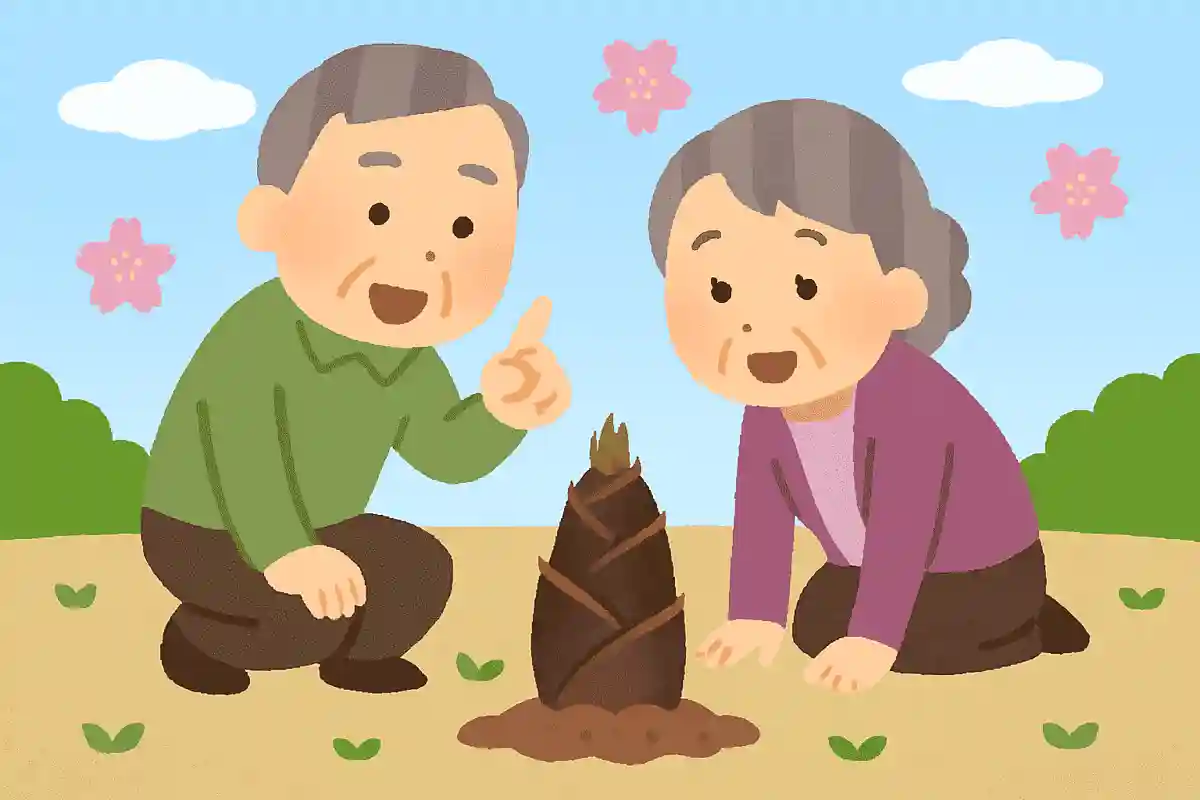
Alright, let’s take on a riddle that feels satisfying once you know the answer.
What is the “comb” that sprouts up from the soil in the spring? You can see many kinds of plants in spring, but the key here is the word “comb.” The onomatopoeia “nyoki-nyoki” (meaning something sprouting or popping up one after another) is also a clue.
The answer is tsukushi (field horsetail).
Tsukushi is a type of plant seen in spring and is the young shoot of horsetail (sugina).
It’s a classic sign of spring, so many of you may have guessed it right away.
A submarine is carrying a certain fruit. What fruit is it?

Let’s try a riddle where the answer is hidden in the question! A submarine is carrying a certain fruit.
What fruit is it? The key is “submarine” (in Japanese: sensuikan).
If you say it slowly out loud, you might figure it out.
The answer is “watermelon” (suika).
The word “suika” is contained within “sensuikan”! Many people have an aha moment when they say it out loud or write it down, so if you’re stuck on a riddle, give that a try!
A dog won a soba noodle eating contest. What kind of soba do you think it was?

Many people might figure it out right after reading the riddle: A dog wins a soba-eating contest.
What kind of soba was it? The answer is “wanko soba.” We arrive at this because “wanko” is an affectionate way to refer to a dog.
Wanko soba is a soba dish that’s a specialty of Iwate Prefecture, where bite-sized portions of soba are served one after another into your bowl.
The lively calls of “Hai, jan-jan! Hai, don-don!” are charming, too!
What is the fish that has five holes?
This time, I’d like to introduce a riddle about fish.
What fish has five holes? If you slowly read the question out loud, you might figure out the answer.
The answer is hidden in the question, so don’t give up and think it through! The answer is “anago” (conger eel).
The phrase “five holes” (ana ga go) contains the answer! Anago is a type of marine fish in the eel family, and it’s a familiar ingredient in Japanese cuisine.
It’s also highly nutritious, so it’s a great food to include in your diet!
A mosquito falls into a pond and transforms into a certain vegetable. What vegetable is it?

Here’s a riddle about mosquitoes that show up when it gets warm.
A mosquito falls into a pond and turns into a certain vegetable.
What vegetable is it? Of course, in reality a mosquito wouldn’t instantly turn into a vegetable just by falling into a pond, but since it’s a riddle, let’s think flexibly to find the answer! The hint is the sound it makes when it falls into the pond.
The correct answer is “pumpkin.” It’s a playful riddle based on the Japanese wordplay: a mosquito (ka) goes “bocha” (splash) into the pond—ka + bocha = kabocha (pumpkin).
Did you arrive at the answer cleanly?