

Enka that gets the karaoke crowd going! A collection of easy-to-sing classics


I want to get the party going at karaoke with close friends! But I feel a bit embarrassed singing enka… have you ever felt the same? The truth is, there are lots of enka songs with familiar melodies that are easy to sing and perfect for warming up the room.
In this article, we’ll introduce classic enka tunes you can try casually at karaoke.
If you go for it, you’ll be surprised how everyone starts humming along, and handclaps naturally break out—these songs are perfect for creating that kind of wonderful moment! You’ll also find concrete advice from a vocal coach, so enjoy it to the end!
- Easy-to-sing enka: A roundup of recommended enka songs for karaoke
- Legendary enka songs that fire up the crowd. A song catalog of enka picks you won’t go wrong with at karaoke.
- Classic enka songs you’ll want to sing at karaoke: recommended popular tracks
- Enka songs that are easy for men to sing: a roundup of tracks to try at karaoke
- [For Beginners] Recommended Enka Masterpieces for Karaoke — Male Singers Edition
- [For Beginners] Recommended Enka Classics for Karaoke — Women Singers Edition
- Hype songs! Popular karaoke staples that are easy to sing
- Songs that get the crowd going at karaoke. Showa-era classics that people of all generations can enjoy.
- [Enka] Songs That Are Easy to Sing Even for the Tone-Deaf [Male Singer Edition]
- Songs everyone knows across generations. A roundup of karaoke tracks anyone can sing, regardless of age.
- Hidden karaoke gems you might not know: a collection of easy-to-sing, crowd-pleasing tracks
- [Must-See for Your 40s] Easy-to-Sing Karaoke Songs That Get Everyone Going | Timeless Classics Enjoyed Across Generations
- A compilation of easy-to-sing anime songs that get the crowd going at karaoke
Enka That Lights Up the Karaoke Night! A Collection of Easy-to-Sing Masterpieces (11–20)
North TavernHosokawa Takashi
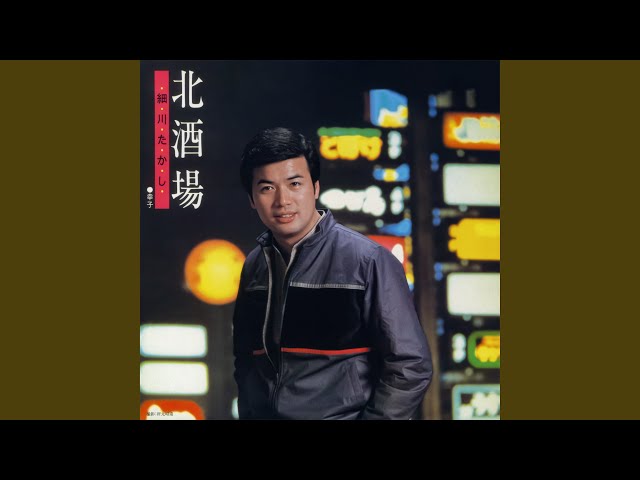
Takashi Hosokawa is one of Japan’s finest vocalists.
Early in his career he pursued a path as an enka singer, but after studying under Michiya Mihashi, who came from a folk song background, his already high-level singing ability grew to a monstrous level.
Among that, he has also actively taken on catchy songs, making him an extremely popular figure among enka fans.
Among Hosokawa’s songs, the one I particularly recommend for its crowd-pleasing energy and ease of singing is “Kita Sakaba.” While the overall range is set on the higher side, the range itself isn’t very wide, so you should be able to sing it if you adjust to the right key.
The song features a structure typical of enka, showcasing scale movements of two notes or more with kobushi (melismatic turns), but since the kobushi don’t continue in rapid succession, their difficulty is relatively low.
Instead of projecting your voice forward, try to produce it with the sensation of it piercing through from the crown or back of your head; doing so will bring you quite close to the original, so give it a try.

Come back.Matsumura Kazuko

Kazuko Matsumura is an enka singer from Hokkaido.
While she also performs orthodox enka, her essence arguably lies in rock-influenced enka.
Many people have surely been moved by her performances, where she holds a shamisen and sings as if she were a rock musician doing an acoustic set.
“Kaette Koi yo” is one of her signature songs; it maintains the fundamentals of enka yet stands out with a rock-tinged power.
The range is somewhat high, from mid2 A# to hi D#, but since the overall span is narrow, it shouldn’t be difficult to sing if you adjust to a suitable key.
It also features fewer kobushi (ornamental turns) than typical enka, making it a recommended choice.
Your path of gloryTendō Yoshimi

Yoshimi Tendo, a songstress who represents Osaka.
Discovered by Takajin Yashiki, she rose to public prominence.
Her vocal ability and expressive power are truly top-class, yet she has an approachable personality that has long endeared her to many enka fans.
Her hit number “Anta no Hanamichi” is a prime example.
Among her works, it’s one of the brightest, so it’s sure to get the crowd going.
This song features the distinctive twisting kobushi (melismatic ornamentation) characteristic of the Kawachi Ondo style, but since most of the ornamentation involves shifts of only two or three notes, you won’t encounter the complex kobushi heard in Tsugaru folk songs.
Instead, it calls for the powerful delivery typical of Kawachi Ondo.
As long as you can keep your pitch in check, it’s by no means a high-difficulty piece, so consider adding it to your repertoire.
TATSUYATanaka Aimi

Enka singer Aimi Tanaka, known as the beloved protégé of Takashi Hosokawa.
She has a remarkably deep voice for someone in her early twenties, and on top of that, her expressive power is extraordinary.
She is undoubtedly expected to lead the enka world in the future, yet she also releases many songs that are easy to sing.
Among them, the one that promises to get the most excitement is “TATSUYA.” While the lyrics are sad, telling the story of a widow, the melody is powerful and still brings out a feminine quality, so you can expect it to really energize a crowd.
It leans more toward kayōkyoku, so there aren’t the difficult pitch fluctuations—like extensive kobushi—that often raise the technical bar, which makes it notably easier to sing.
Life is like a Naniwa-bushi (a melodramatic ballad).Hosokawa Takashi

After training under Michiya Mihashi, Takashi Hosokawa showed an explosive improvement in his vocal ability.
Even after his vocals improved, he continued to release many tracks that emphasize catchiness.
Among them, Naniwabushi Dayo Jinsei wa is one of his most singable songs.
Aside from the kobushi at the end of the chorus, the song features only minimal melismatic turns that mostly move by a single note, and despite a BPM of 128, there are no rapid-fire sections, resulting in an overall low level of difficulty.
The range is fairly wide, so be sure to find the key that suits you before singing.
Casablanca GoodbyeToba Ichirō

Enka singer Ichiro Toba, beloved for his wide-ranging musicality from masculine to feminine styles, has earned broad popularity.
He has left many classic songs, but Casablanca Goodbye is especially recommended as an easy piece to sing.
While there are a few spots that feature kobushi (the distinctive enka vocal turn), overall the song has a flavor closer to kayōkyoku.
It uses a very light mixed voice, but the high phrases aren’t very long, and the song doesn’t demand much power overall, so its general difficulty is on the lower side.
Its mood-filled melody is sure to get the crowd going!
Enka That Brings the House Down at Karaoke! A Collection of Easy-to-Sing Classics (21–30)
marine snowNEW!jero

Jero’s debut single.
Released by Victor Entertainment on February 20, 2008, it’s a 2008 enka smash hit with lyrics by Yasushi Akimoto and music by Ryudo Uzaki.
Set against the backdrop of the Sea of Japan, this masterpiece poignantly sings of unreachable love, and it won the Best New Artist award at the 50th Japan Record Awards—quite a memorable song for its time.
Since the track features a guitar-based sound, it may be easier to listen to even for those who aren’t fond of enka.
In the final chorus, there’s a key change and the range rises slightly, so be careful not to belt.
For parts where the ending consonants are cut off, make sure to stop them cleanly rather than letting them trail—this gives it a cool, sharp finish.
