




I want to get the party going at karaoke with close friends! But I feel a bit embarrassed singing enka… have you ever felt the same? The truth is, there are lots of enka songs with familiar melodies that are easy to sing and perfect for warming up the room.
In this article, we’ll introduce classic enka tunes you can try casually at karaoke.
If you go for it, you’ll be surprised how everyone starts humming along, and handclaps naturally break out—these songs are perfect for creating that kind of wonderful moment! You’ll also find concrete advice from a vocal coach, so enjoy it to the end!
- Easy-to-sing enka: A roundup of recommended enka songs for karaoke
- Legendary enka songs that fire up the crowd. A song catalog of enka picks you won’t go wrong with at karaoke.
- Classic enka songs you’ll want to sing at karaoke: recommended popular tracks
- Enka songs that are easy for men to sing: a roundup of tracks to try at karaoke
- [For Beginners] Recommended Enka Masterpieces for Karaoke — Male Singers Edition
- [For Beginners] Recommended Enka Classics for Karaoke — Women Singers Edition
- Hype songs! Popular karaoke staples that are easy to sing
- Songs that get the crowd going at karaoke. Showa-era classics that people of all generations can enjoy.
- [Enka] Songs That Are Easy to Sing Even for the Tone-Deaf [Male Singer Edition]
- Songs everyone knows across generations. A roundup of karaoke tracks anyone can sing, regardless of age.
- Hidden karaoke gems you might not know: a collection of easy-to-sing, crowd-pleasing tracks
- [Must-See for Your 40s] Easy-to-Sing Karaoke Songs That Get Everyone Going | Timeless Classics Enjoyed Across Generations
- A compilation of easy-to-sing anime songs that get the crowd going at karaoke
Enka that gets the karaoke going! A collection of easy-to-sing classics (1–10)
Boat SongNEW!Yashiro Aki
A signature enka single by Aki Yashiro, released on May 25, 1979.
This masterpiece conveys the melancholy and inner landscapes of a sailor pining for the woman he parted with, expressed through her husky, resonant voice.
Beloved across generations, it has been featured in Suntory’s “BOSS” commercials and even reclaimed the No.
1 spot in the Reiwa era.
Though it’s a gentle, mellow song, it’s one almost everyone has heard, so the chorus is sure to get people going.
When you sing it, a calm, deep voice will capture the mood well—try placing a hand over your heart as you sing.

Dream PlayNEW!Umezawa Fumio

At first, Mr.
Tomio Umezawa said he didn’t want to sing, but thanks to this song’s massive hit, he also succeeded as a singer.
It’s a classic that depicts the push-and-pull of romance from a sultry male perspective, and it made Umezawa nationally famous as the “Tamasaburō of the downtown.” The song itself runs a quick 3 minutes and 40 seconds, so it might be just right for karaoke.
With an overall range of A2 to D4, it feels calm and singable without straining.
Sing it in a relaxed state.
Tsugaru Strait – Winter SceneNEW!Ishikawa Sayuri
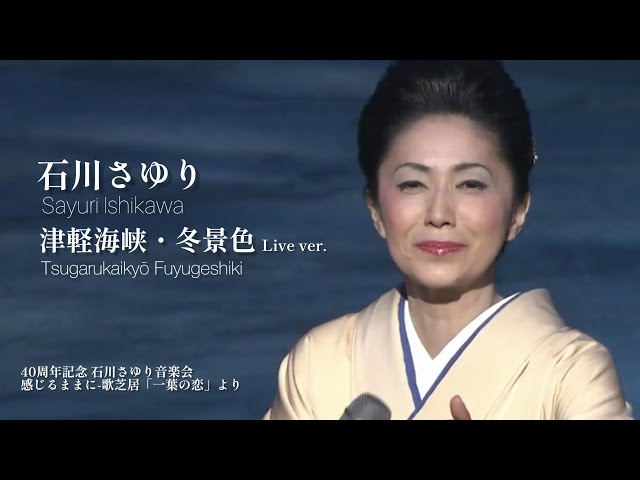
Sayuri Ishikawa’s signature song “Tsugaru Strait—Winter Scene,” released on January 1, 1977, is a masterpiece that portrays parting and resolve set against the northern strait, and it marked her turning point into a full-fledged enka singer.
The intro is also very striking—so famous you can hum it right from the start.
The song’s overall range is a slightly high F#3–D5, and the chorus suddenly leaps into the high register, so be careful—some people may end up tensing up by trying to sing powerfully.
Keep your head resonance engaged at all times, and when you go into the high notes, aim to resonate in the same place.
Snow CountryNEW!Yoshi Ikuzo

This is a classic ballad written and composed by Ikuzo Yoshi himself, released on February 25, 1986.
It vividly portrays a snow-laden scene and a poignant woman’s heart, becoming a huge hit that even reached No.
1 on the Oricon charts.
I think many of you have heard the chorus.
The A section is relatively calm, so you can sing it without forcing your voice, but the song’s structure goes straight into the chorus without a B section; the chorus suddenly soars and includes high notes.
If you raise the intensity phrase by phrase, the excitement will build and your voice will come out more.
If you sustain the long notes firmly, it should feel great to sing.
Crossing Amagi PassNEW!Ishikawa Sayuri

This is a classic masterpiece in the history of Japanese popular music that won the Gold Prize at the 28th Japan Record Awards.
Set at the Amagi Pass in Izu, it dramatically portrays a woman’s intense passion and has been performed many times on the Kōhaku Uta Gassen.
When you think of Sayuri Ishikawa, the two top songs that come to mind are Amagi-goe and Tsugaru Kaikyō Fuyugeshiki.
The overall vocal range of the song is F3 to D#5, with a structure that surges from the chorus.
Since the A and B sections are quite calm, be careful not to strain when you enter the chorus.
If you take a solid breath right before the chorus and imagine projecting your voice with momentum, it should come out more easily.
The trick is to sing as if you’re aiming your voice as far into the distance as possible.
Scorpio womanNEW!Mikawa Ken’ichi

This is a representative enka/mood kayō song released in 1972.
It likens the singer’s attachment and single-minded passion for the man she loved to the “Scorpio,” featuring intense lyrics.
The intro really sticks in your head, so it’s likely to get everyone excited the moment it starts.
The overall vocal range is A2–G4, and the chorus includes quite low notes, so be careful not to strain your throat.
Keep your eyebrows raised and imagine projecting the voice forward from your temples; this will help you sing smoothly even when the pitch changes.
Also, make sure to use plenty of breath.
For the low notes, try pushing the voice forward as you project.
Jonkara Onna-bushiNEW!Nagayama Yōko

As one of Yoko Nagayama’s signature songs, it’s very popular at karaoke.
It features her distinctive “tachi-biki” style—singing while playing the Tsugaru shamisen—and conveys the spirit she’s built over ten years since switching to enka.
The song is also popular among my voice-training students; several of them sing it, and I’ve performed it myself—it’s incredibly satisfying to sing.
When performing, pretending to play the shamisen as you sing would likely hype things up.
The opening is crucial, so be sure to pronounce the very first word clearly when you sing.