

Enka that gets the karaoke crowd going! A collection of easy-to-sing classics


I want to get the party going at karaoke with close friends! But I feel a bit embarrassed singing enka… have you ever felt the same? The truth is, there are lots of enka songs with familiar melodies that are easy to sing and perfect for warming up the room.
In this article, we’ll introduce classic enka tunes you can try casually at karaoke.
If you go for it, you’ll be surprised how everyone starts humming along, and handclaps naturally break out—these songs are perfect for creating that kind of wonderful moment! You’ll also find concrete advice from a vocal coach, so enjoy it to the end!
- Easy-to-sing enka: A roundup of recommended enka songs for karaoke
- Legendary enka songs that fire up the crowd. A song catalog of enka picks you won’t go wrong with at karaoke.
- Classic enka songs you’ll want to sing at karaoke: recommended popular tracks
- Enka songs that are easy for men to sing: a roundup of tracks to try at karaoke
- [For Beginners] Recommended Enka Masterpieces for Karaoke — Male Singers Edition
- [For Beginners] Recommended Enka Classics for Karaoke — Women Singers Edition
- Hype songs! Popular karaoke staples that are easy to sing
- Songs that get the crowd going at karaoke. Showa-era classics that people of all generations can enjoy.
- [Enka] Songs That Are Easy to Sing Even for the Tone-Deaf [Male Singer Edition]
- Songs everyone knows across generations. A roundup of karaoke tracks anyone can sing, regardless of age.
- Hidden karaoke gems you might not know: a collection of easy-to-sing, crowd-pleasing tracks
- [Must-See for Your 40s] Easy-to-Sing Karaoke Songs That Get Everyone Going | Timeless Classics Enjoyed Across Generations
- A compilation of easy-to-sing anime songs that get the crowd going at karaoke
Enka That Brings the House Down at Karaoke! A Collection of Easy-to-Sing Classics (21–30)
I’m falling in love with you againNEW!Sakamoto Fuyumi

This is a famous song that covers Billy BanBan’s song of the same name from 2007, released in 2009 as the B-side to the single “Asia no Kaizoku.” It was used in a commercial for the shochu “iichiko Hita Zen Koji,” and became a long-running hit beyond the enka singer category, reaching No.
1 on the download charts in 2010.
Because it tones down enka’s characteristic melodic ornamentation, its expansive, soft vocals have become a talking point, making it an accessible song even for beginners to enka.
When singing, it may be good to deliver it in a flowing manner.
Breathing is important, so be careful to take breaths at the right timing.

Memories SakeNEW!Kobayashi Sachiko

This is a signature enka single released on January 25, 1979, which became a massive hit selling over two million copies.
It ranked 3rd on Oricon’s year-end chart and won the Best Vocal Performance at the 21st Japan Record Awards, with its poignant lyrics about lingering feelings for a former lover resonating with listeners.
The section before the chorus sits quite low, so try to avoid a muffled tone.
Focus on diaphragmatic breathing and make sure you can use your breath steadily.
Inhaling through the nose won’t give you enough air, so take a big breath through your mouth and try projecting your voice as if slowly exhaling straight ahead.
It’s good to sing the chorus with added drive and momentum.
I’m appearing under my former name.NEW!Kobayashi Akira

Written by lyricist Tetsurō Hoshino and composed by Gendai Kanō, this song portrays the sorrow of a drifting woman and the aching heart that waits for a past lover, and it ranked 5th on the Oricon year-end chart.
It is one of Akira Kobayashi’s signature songs and a masterpiece that supported his comeback after a business failure at the time.
Since the vocal range is generally restrained, it seems singable without straining.
There’s a part in the chorus where backing vocals come in, so singing that section clearly will make it very listener-friendly.
To keep the song from feeling monotonous, try focusing on the accents at the beginnings of phrases when you sing.
Life is full of ups and downs.NEW!Shimakura Chiyoko
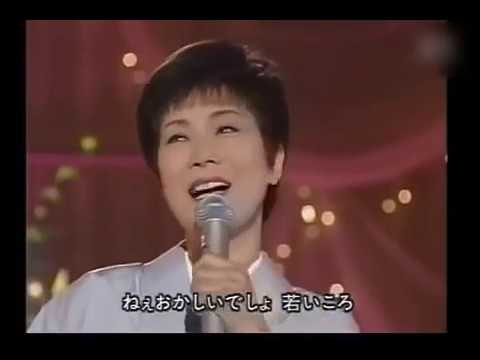
This is her biggest hit, released on April 21, 1987.
She performed it at that year’s Kōhaku Uta Gassen, which helped broaden its appeal among younger generations, and it became a major hit that sets the joys and sorrows of life to a light, upbeat rhythm.
The overall vocal range of the song is a calm F3–G4, so the key is that you can sing it without forcing your voice from the start.
When singing, instead of projecting with a big voice, try placing the voice right in front of you to maintain a composed tone.
In the latter half, the key changes and the range goes higher, so open your eyes wide and be careful not to let the pitch drop.
Cape ErimoNEW!Mori Shinichi

This is a fusion of folk and enka, composed by Takuro Yoshida with lyrics by Osami Okamoto.
It was a hit with total sales of about one million copies and won both the Japan Record Award and the Japan Kayō Award in the same year.
It’s a masterpiece praised for its profound lyrics that embody feelings of loneliness and nihilism, and for its beautiful trumpet melody.
The overall vocal range of the song is A#2 to A#4, giving the chorus a slightly higher feel.
First, try projecting your voice firmly so you can sing comfortably without worrying about pitch.
The opening of the chorus is crucial, so come in with strong, energetic vocals.
Like the flow of a riverNEW!Misora Hibari

Released on January 11, 1989, this was Hibari Misora’s final single during her lifetime—an immortal masterpiece bridging the Showa and Heisei eras, with lyrics by Yasushi Akimoto and music by Akira Mitake.
It likens the journey of life to a “narrow, long river,” featuring lyrics that gently embrace countless hardships and joys, paired with a grand melody.
In 2006, it was selected for the “100 Best Japanese Songs,” and it remains a long-loved piece.
Listening to it brings a sense of peace.
I’m sure it would be a hit at karaoke and have a soothing effect, so it’s worth memorizing for the right moment.
When you sing it, imagine yourself performing in a wide, open space—your voice will flow freely, and you’ll likely find it very pleasant to sing.
Brother ShipsNEW!Toba Ichirō

Ichiro Toba’s debut single Kyodaibune (Brother Ship) is his signature song, released on August 25, 1982.
With lyrics by Tetsuro Hoshino and music by Toru Funamura, this masterpiece depicts the pathos and spirit of brothers venturing out onto the harsh sea.
It became a long-running hit after its release, surpassing one million copies sold, and is a classic of enka that was also performed on NHK’s Kohaku Uta Gassen.
The opening melody is highly memorable, and singing it while clenching your fist powerfully can help capture the mood.
Using expressive gestures helps distribute the effort so your throat doesn’t tense up, so going all-in with your movements is recommended.