


Have you ever wanted to play something with friends or family but had trouble because you didn’t have any props? In fact, there are plenty of games you can enjoy with multiple people without any equipment.
Games like “Takenoko Nyokki” and the “Human Knot” can get everyone excited right away just by using your voices and moving your bodies! In this article, we’ll introduce easy, no-equipment group games you can enjoy anywhere.
Try them during short breaks or at gatherings with friends and family!
- Games that get everyone excited without any equipment! A collection of simple ideas everyone can enjoy
- Games that get the whole family excited! A collection of ideas you can start right away with no equipment
- Fun for up to 10 people! A collection of easy, no-equipment games and activities
- Big fun with no props! A collection of party game ideas
- Games you can play with just conversation. Classic and popular activities you can enjoy without any props!
- Party games you can play without any props! A collection of ideas everyone can enjoy together
- Get this excited with no props! A collection of Japanese play ideas
- Games for 4 people with no equipment needed! Fun activities you’ll want to try right now
- A big hit at after-school childcare! A special feature on group games and activities you can play without any equipment
- No-prop games for 6 people that will get everyone excited! Fun activities you can play right now
- Fun games for five people! No props needed—ideas you can enjoy right now
- Games for 20 People with No Equipment Needed: A Collection of Fun Ideas That Use Your Body and Mind
- Recommended games for two people that you can enjoy without any equipment
[No props needed] Games everyone can play. Fun activities that get lively with just voices and gestures (1–10)
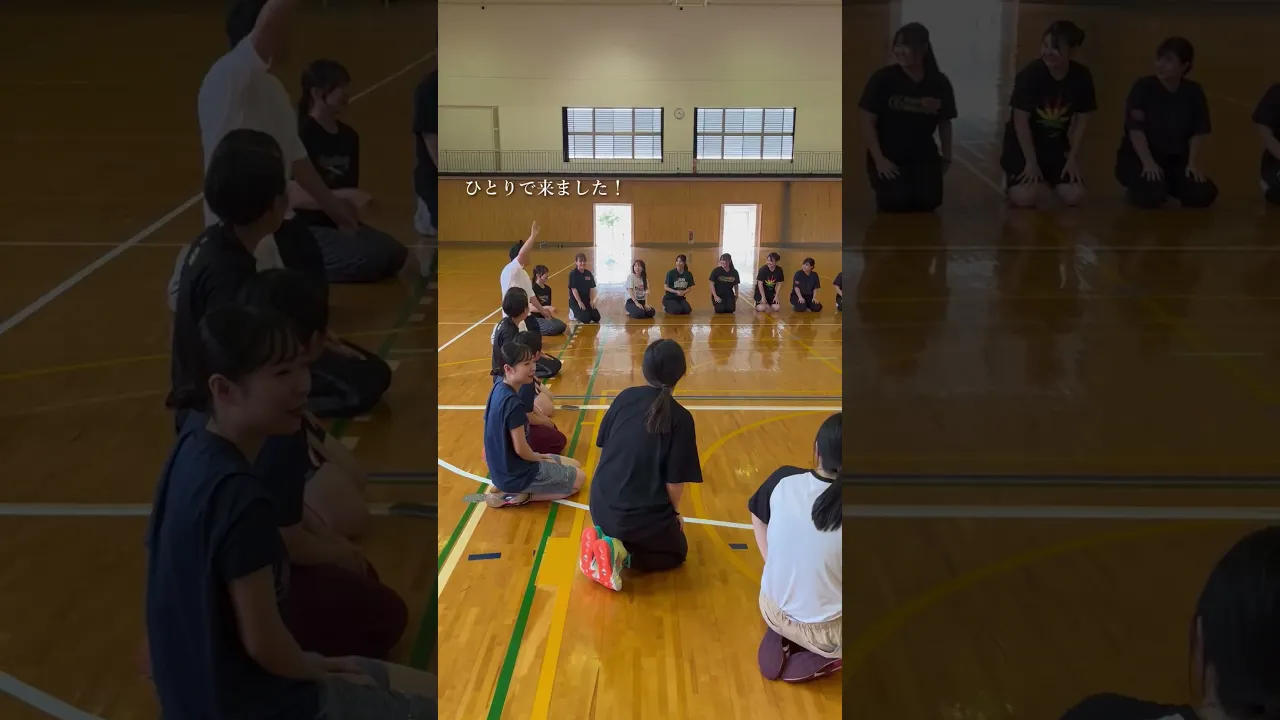
Came Alone Game

The “We Came Alone” game is an activity where concentration and timing are key.
Participants sit facing each other in a circle, and from one to five people, they take turns raising their hands and declaring, “We came with X people!” First, decide who will start.
That person declares, “I came alone.” Next, the two people beside them declare, “We came as two.” Continue the declarations up to “We came as five,” then go back to “I came alone.” Anyone who gets the timing wrong loses, so be sure to judge carefully when it’s your turn to declare.

Yamanote Line game

Let’s play the classic rhythm game “Yamanote Line Game.” Clap your hands to keep the beat and say words that fit the given theme.
Good categories are ones with lots of options, like “animals,” “vegetables,” or “flowers.” If you miss the rhythm or hesitate on a word, you lose.
It sounds easy, but once you try to stay on beat, you get surprisingly nervous and the words don’t come out.
If you want to make it harder, speeding up the rhythm is recommended.
Pin Pon Pan Game
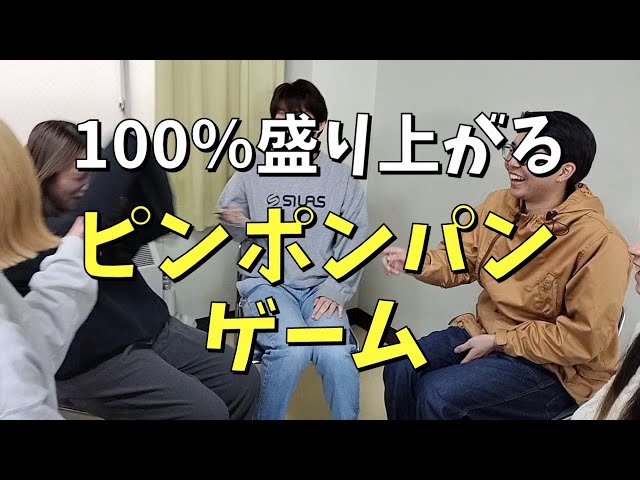
The “Ping-Pong-Pan Game” is simple but surprisingly confusing.
Participants form a circle facing inward and decide who goes first.
Once everyone says the starting chant together, the game begins.
Starting from the first person and going clockwise, each person says “Pin,” “Pon,” “Pan” in order.
The person who says “Pan” points to nominate the next person.
The nominated person then continues from there, again going clockwise with “Pin,” “Pon,” “Pan.” Even though the rules are simple, people often end up pointing on something other than “Pan”…!
playing rock-paper-scissors after seeing the opponent’s move (i.e., acting with hindsight/cheating)NEW!

After-the-fact rock-paper-scissors is also good brain training, and its simple rules make it enjoyable for everyone.
Decide on a leader or form pairs, then choose someone to give instructions.
The instructor gives prompts like “Please lose to me” or “Please beat me,” and calls the rock-paper-scissors cadence.
The person receiving the instruction should play accordingly.
This game seems easy but is surprisingly tricky, and increasing the speed makes it even more challenging—and funnier.
Who am I? game

The “Who Am I?” game is one where you guess the subject based on the hints given by the other person and the answers to questions.
A representative checks the subject and gives hints to the guessers.
You can also accept questions from the guessers and answer them.
It’s a fun activity that lets you organize information, use your imagination, and think things through.
Set a subject everyone knows and give it a try.
This game can be adapted in many ways to suit events and seasons, and it’s enjoyable for both children and adults.
Word association game

If you’re looking for a game that doesn’t require any props, how about a word-association game where you guess the prompt from a sound-imitating word? Split into roles: one person prepares the prompt, another thinks up and conveys the onomatopoeic word, and others guess the prompt from it.
Any onomatopoeia is fine, but you can say it only once—no adding or changing sounds midway.
Gestures are also forbidden.
Think carefully and choose the sound that best evokes the prompt.
Points are awarded to those who guess correctly.
You can play individually or make it a team competition for extra fun.
Tag (or chase) while holding hands

Usually, there’s only one tagger in tag, but in “hand-holding tag” the number of taggers increases.
Anyone who gets tagged holds hands with the tagger and chases the remaining runners together.
The child who manages to escape without being caught until the end wins.
It’s a fun game with the thrill of having to flee from many taggers.
As the number of taggers grows, it becomes harder to move, so be very careful not to fall and get hurt.
If there are too many taggers and there’s nowhere to run, you can split the taggers into several groups.