


Get this excited with no props! A collection of Japanese play ideas

Looking for games you can enjoy without any equipment? In Japan, there are actually many unique games that have long been shaped by creativity and ingenuity.
In this article, we’ll introduce Japanese games like Daruma-san ga Koronda and Kotorokotorō—simple rules, no gear needed, and fun anytime, anywhere.
They’re perfect for big groups, involve running or a bit of thinking, and naturally deepen communication with friends.
Experience these Japanese games where nostalgia and freshness coexist!
Get This Excited Without Any Tools! A Collection of Japanese Play Ideas (1–10)
Gatekeeper Rock-Paper-Scissors
Gatekeeper Janken is a tag game where you play rock-paper-scissors with the taggers to escape and rescue teammates.
First, divide participants into taggers (oni) and runners (children).
A good rule of thumb is two children per tagger.
From among the taggers, choose two gatekeepers and have them stand in front of the taggers’ zones located on both sides of the running court.
At the start signal, the children run away from the taggers; if they are tagged, they play rock-paper-scissors.
If they win, they run away again; if they lose, they enter the taggers’ zone.
By playing rock-paper-scissors with the gatekeepers, you can rescue teammates who have been captured by the taggers, but if you lose, you’ll be captured too.
The taggers win if they capture everyone within the time limit or reduce the number of children to fewer than the number of taggers.

I wonder if the rice crackers are done.
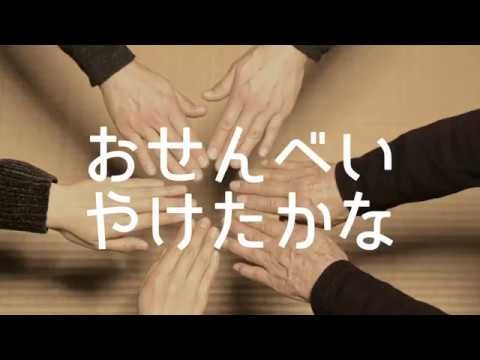
A hand game called “Has the Rice Cracker Finished Baking?” Everyone stands in a circle and extends one hand into the center with the back of the hand facing up.
One person goes around pointing to each hand while saying, “Has the rice cracker finished baking?” On the final syllable, ‘na,’ the person whose hand is pointed at flips their hand over.
Keep going; anyone who gets pointed at twice pulls their hand back and leaves the circle.
The last person remaining loses.
Usually, you start counting from the person next to the last one pointed at, but making it random can be fun too.
Poko-pen

Would you like to try playing “Pokopen,” a game similar to kick the can? In Pokopen, you use a tree or playground equipment in the park as the base.
Choose one “it” by rock-paper-scissors, and the others hide and run away.
When “it” finds someone, they return to the base and declare, “I found [name]! Pokopen.” The named person is caught and waits near the base.
If everyone is found, “it” wins.
If someone manages to touch the base before the seeker who’s away from it and shouts, “We cut the base!” the hiding team wins.
S-ken (traditional Japanese playground game)

Draw a large S-shape on the ground and designate the two circles as territories.
Place a treasure in each territory, and draw square safe zones outside the territories.
Split participants into two teams and assign roles within each team: some will steal the enemy’s treasure, and others will defend their own.
When the game starts, move around the outside of the S by hopping on one foot to go steal the enemy’s treasure.
In the safe zones and inside the enemy territory, you may move with both feet.
Those who stay in your own territory should push opponents out of the territory to protect your treasure.
oshikura manju (a children’s pushing game)

Let’s play the classic winter game “Oshikura Manju.” Draw a circle on the ground, and have the participants step inside.
Once everyone forms a ring standing back-to-back, sing “Oshikura manju, don’t push too hard,” and gently push each other with your backs and hips.
If you step out of the circle or touch the floor with your hands, you lose.
The game strengthens the lower body, and playing it in the cold winter warms you up—two birds with one stone.
There are no complicated rules, so even small children can enjoy moving their bodies.
Adjust the size of the circle and the rules to suit the number of participants and their ages, and have fun.
Hide-and-seek

A classic outdoor kids’ game! Hide-and-seek, where you search for hidden players.
Choose one person to be “it,” and while “it” counts, the others hide.
When the counting is done, “it” goes to find the hiders, and if everyone is found, “it” wins.
It’s a game that children and adults alike can enjoy, requires no equipment, and can be played anytime.
It’s also great that you can play it both indoors and outdoors.
To prevent the game from dragging on because someone can’t be found, decide in advance on a time limit for searching and the boundaries for hiding.
Red Light, Green Light

Choose one person to be “it.” The it-person claims a wall, tree, or similar as their base.
The children stand at a starting point away from it’s base, say “First step,” and take one step toward it.
Then it covers their face and calls out, “Daruma-san ga koronda.” While it is saying this, the children move closer, but when the call ends and it looks, anyone caught moving is captured.
Freeze well and wait for the next call.
If, during a call, someone cuts in to break the hand-hold between it and a captured child, quickly run away from it’s base.
When it says “Stop,” everyone must freeze; it will approach the children by a set number of steps, and anyone it touches becomes the new it.