

[2026] Crowd-Pleasing Songs Recommended for People in Their 50s: A Collection of Nostalgic Classics

When we think of people in their 50s today, many likely spent their formative years during Japan’s musical golden era: late-1970s to 1980s TV shows like “The Best Ten,” the late-80s band boom, and the early-90s J-POP and trendy drama boom.
In this article, we’ll introduce high-energy songs that 50-somethings can enjoy and feel nostalgic about.
In the midst of busy, demanding daily life, music can bring back memories you’d almost forgotten.
We hope this article can be that spark for you!
It can also serve as a helpful guide for younger generations when choosing songs for karaoke with people in their 50s.
- [2026] Japanese karaoke songs that get men in their 50s pumped up
- Recommended for women in their 50s! A curated selection of classic and popular karaoke hits that will get the crowd going
- [For People in Their 50s] Karaoke Songs That Get the Crowd Going: Ranking [2026]
- [For People in Their 60s] Karaoke Songs That Get the Crowd Going: Ranking [2026]
- Coming-of-age songs for your 50s: heart-thumping × heartwarming classics and popular tracks [2026]
- [50s] Popular Song Ranking by Generation [2026]
- Dance music in Japanese (J-pop) that people in their 50s used to listen to. Nostalgic classic hits.
- [2026 Edition] Karaoke Songs That Will Get the Crowd Going—Perfect for Women in Their 40s
- [For men in their 40s] That nostalgic song you can enjoy at karaoke!
- For people in their 50s: Songs that make you want to sing—perfect for driving
- Good songs recommended for people in their 50s: classic and popular J-pop tracks.
- Famous songs we’d like women in their 50s to sing (by age group)
- [2026] A collection of autumn songs for people in their 50s. Showa-era classics that bring back memories of those days
[2026] Uplifting Songs Recommended for People in Their 50s: A Collection of Nostalgic Classics (121–130)
Oneway GenerationHonda Minako

A quintessential hit of the 1980s, resounding with Minako Honda’s powerful vocals.
The lyrics, depicting the uncertainty of youth, self-discovery, and the determination to move forward, strike a deep chord.
Released in February 1987 as the theme song for the TBS drama “Papa wa News Caster,” the track was created by two titans of Japanese music, Yasushi Akimoto and Kyohei Tsutsumi.
It’s regarded as a song that opened up a new horizon for idol pop.
For those in their 50s, it may be a special piece that overlaps with memories of their youth.
Perfect for livening up a karaoke session or when you want to bask in a wave of nostalgia.
BoyhoodInoue Yosui

The timeless classic “Shonen Jidai,” beloved across generations, is a song released by Yosui Inoue in 1990 as the theme for a film of the same name.
Commissioned directly by Fujiko Fujio A, the author of the original work, “Shonen Jidai” features a simple yet moving piano tone, along with a melody and lyrics that evoke a deep sense of Japanese nostalgia.
It’s truly remarkable, and its fame and popularity are such that it would be no exaggeration to call it a national song—indeed, it has even been included in junior high and high school music textbooks.
For those in their 50s as of 2023, 1990 would have been their late teens to twenties.
True to its title, it’s a song you’ll want to sing while recalling your own boyhood days—perhaps at a gathering with your elementary or junior high school classmates.

I like you, I like you—I love you.Togawa Jun
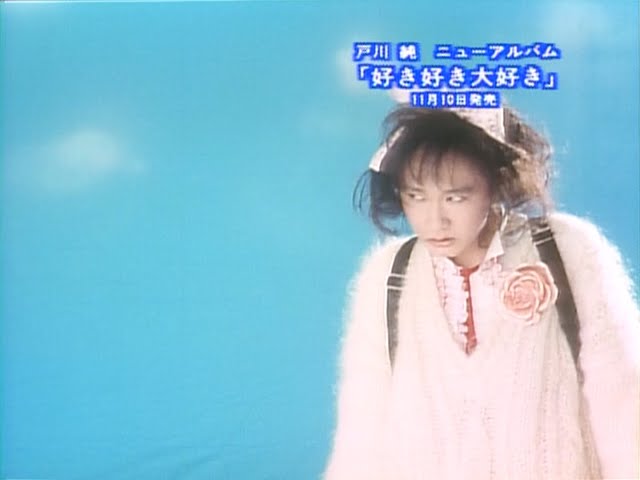
The song Jun Togawa released in 1985 is a shocking work that portrays extreme expressions of affection and destructive passion.
Memorable for its intense lines like “Say you love me or I’ll kill you,” it unfolds a unique worldview where love and violence intertwine.
The track was released as the title song of an album produced by Togawa herself and has been reissued several times since.
In 2021, to commemorate the 40th anniversary of her music career, a music video was released on YouTube.
Blending innovative sounds that incorporate elements of punk rock and new wave with Togawa’s distinctive vocals, this work is recommended for listeners who enjoy music that defies convention.
Imperial Regent Declarationsadamasashi

The term “dominant husband” has become a relic of the Showa era, but this song was a massive hit precisely in that period.
Released in 1979 by Masashi Sada—who at the time had a gentle, mild-mannered image—the contrast between the song and his persona was quite striking.
Many feminist groups likely voiced opposition to the lyrics, which take a condescending, male-centered point of view.
They say lyrics reflect their times; when you read songs from different generations, the gender dynamics of each era come into sharp relief.
It’s fascinating to let your thoughts wander back to those times.

[2026] Crowd-pleasing songs recommended for people in their 50s: A roundup of nostalgic classics (131–140)
Playback Part 2Yamaguchi Momoe

Here is the smash hit song released by Momoe Yamaguchi in 1978.
It’s a distinctive track crafted by the golden duo of lyricist Yoko Aki and composer Ryudo Uzaki.
The sudden breaks in the music and the dialogue-like lyrics leave a strong impression and feel like the kind of moments that really build excitement.
The lyrics also reflect the times—mentioning the supercars that were popular back then and even the title of a Kenji Sawada song that was a massive hit the previous year—which makes the song all the more captivating.
My teacher is feverishHarada Jun

Jun Harada, known as a singer and actor.
When it comes to his signature songs, isn’t “My Teacher Is Fever” the one that comes to mind? It also left a strong impression as the theme song for the drama “Netchu Jidai” and the variety show “The Most Useful School in the World.” With that unforgettable, catchy chorus, the song remains beloved by many even today.
Incidentally, in recent years, versions with newly updated backtracks and remix editions have also been released.

Refrain of SoulsTakahashi Yoko

This was Yoko Takahashi’s 14th single overall, released in February 1997.
It was used as the theme song (ending title roll) for the anime film Neon Genesis Evangelion: Death & Rebirth.
Incidentally, the title “L’illusion” is the French reading of “refrain.” This is another classic of Heisei-era J‑Pop.
The song itself is up-tempo and very easy to get into, and since the vocal melody doesn’t span a very wide range, it might be fun at karaoke to have everyone there join in a big sing-along.
It’s a track that lets you purely enjoy “using your voice” and “singing.”
