

How many can you read? A quiz on difficult kanji for foods

A common type of question on quiz shows is about difficult-to-read kanji.
Kanji we’re used to seeing can take on completely different readings when combined with other characters, and kanji we never encounter in daily life can also appear—so it’s really educational, isn’t it?
From among those tricky kanji, this article will present a quiz featuring difficult kanji for food names!
Food names are often written in hiragana or katakana when sold in supermarkets and the like, so you don’t get many chances to see the kanji, right?
Since many familiar food names will appear, feel free to use this for studying kanji or as brain training!
- [Interesting] Summary of Kanji Reading Quiz Questions
- Obscure fish kanji. Can you read them?
- [For Seniors] How many can you read? A comprehensive showcase of difficult food kanji
- The world’s toughest! A collection of insanely hard-to-read kanji
- A quiz of interesting obscure kanji: characters that look easy but are hard to read
- A quiz on how to read obscure kanji: words that become difficult when written in kanji.
- [Food Edition] Who Am I? Quiz Collection
- How Much Do You Know? Food Quiz for Elementary School Students
- [Hard-to-Read Quiz] Single-character difficult kanji — including surprisingly simple ones!
- [For Seniors] Fun and Exciting! Difficult Kanji Quiz
- [For Elementary School Students] Country Names in Kanji Quiz. A quick, fun quiz
- Trivia and fun facts about food (summary)
- [For Seniors] Challenging but Exciting! Kanji Quiz
How many can you read? Difficult Food Kanji Quiz (1–10)
How do you read/pronounce “和蘭芹”?
See the answer
parsley
Parsley is an ingredient that was brought to Japan from the Netherlands during the Edo period. For that reason, it was written as 和蘭芹, meaning “an umbelliferous plant introduced from Holland.” It is also sometimes written as 旱芹 or 旱芹菜.

How do you pronounce “牛酪”?
See the answer
butter
The kanji “酪” has the meaning of “products made from the milk of cows or sheep.” Therefore, “牛酪” means “a product made from cow’s milk,” and the answer is “butter.” Butter, now indispensable for cooking and baking, is said to have been produced as gyūraku (cow dairy) from the milk of Indian white cows by Tokugawa Ienari in the Edo period, and it was prized among the upper classes as a medicinal substance. It seems that it began to be used as a food in the Meiji era. Another similar word using “酪” is “乾酪,” which is read as “cheese.”
How do you read “善哉”?
See the answer
sweet red bean soup with mochi (zenzai)
Zenzai originally comes from a Sanskrit word meaning “wonderful.” It’s said that the dish was named after a monk who first ate it and exclaimed “zenzai” in praise. By the way, the difference from oshiruko is whether it contains a soupy broth or not.
How many can you read? Tricky Food Kanji Quiz (11–20)
How do you read/pronounce “牛蒡”?

See the answer
burdock (root)
Gobo is written as “牛蒡.” You might wonder why it uses the character for “cow.” In fact, in China the character 牛 is sometimes used to denote something large. Since gobo resembles the plant called 蒡 and is also large, it was named 牛蒡.
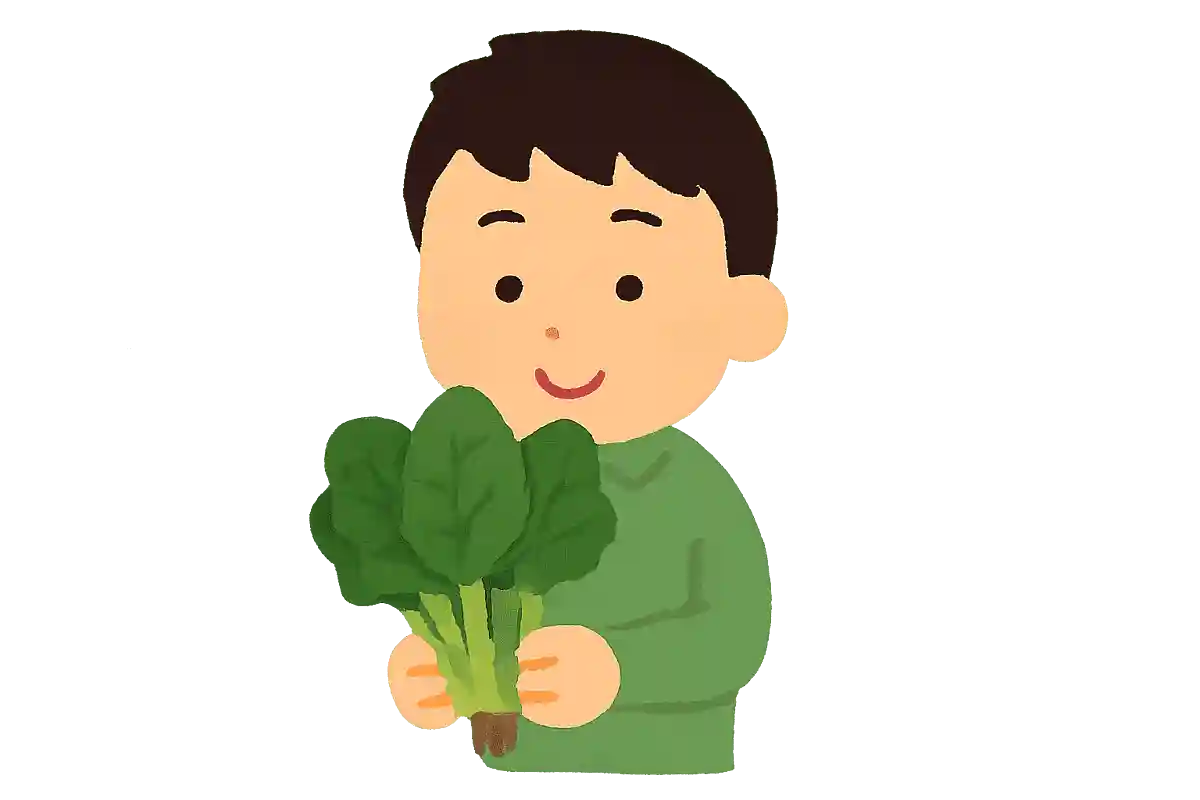
How do you read/pronounce “菠薐草”?
See the answer
spinach
The origin of the word horenso (spinach) is a bit complicated. Spinach came to Japan from China, but its original home was Persia. That’s why it was written with the characters 菠薐, which represent Persia in Chinese. In other words, it means “the grass from Persia.” By the way, in Chinese it’s pronounced something like “Polin.”
How do you read (pronounce) the word “西瓜”?

See the answer
watermelon
Watermelon is loved by many people. In fact, it’s a food that came from the Western Regions of China. That’s why it’s written with the characters meaning “melon from the west” (西瓜). By the way, its original pronunciation was “xī guā,” which is quite similar to how it’s pronounced today.
How do you read “胡桃”?
See the answer
walnut
There was once a country to the north of China called “Kokoku” (the Old Country). A food that closely resembled the peach pits brought from there is what we call “kurumi” (walnuts). Because there’s a solid story behind it, it’s easy to remember. Incidentally, there’s also a theory that they were named “kurumi” because they spin around (kuru-kuru).