

A classic song that celebrates Fukui. The enduring spirit of our hometown passed down through song.

This is a special feature on songs themed around Fukui Prefecture, which faces the Sea of Japan and Wakasa Bay.
Fukui, frequently referenced in enka and folk songs—led by the famous sightseeing spot Tojinbo—is a place rich in nature and full of travel charm and atmosphere.
By the end of this feature, you’ll no doubt want to visit Fukui, and if you live there, you’ll likely grow even fonder of it.
You might even discover a surprising connection—“Wait, this person has a song about Fukui?!”
Be sure to read through to the end!
- A classic song that celebrates Fukui. The enduring spirit of our hometown passed down through song.
- [Local Songs] Recommended tracks packed with Japan’s nationwide classics and hometown pride
- A classic song that sings of Toyama. The enduring heart of our hometown.
- An enka song about the Sea of Japan. A collection of famous songs themed around the great ocean.
- Folk songs, children's songs, and nursery rhymes of Toyama: the enduring heart of our hometown passed down through song
- A roundup of regional enka songs: classic hits that feature places from all across Japan in their lyrics.
- [2026] Masterpieces themed on Ehime: from local songs to municipal anthems
- A famous song about Fukuoka. The heart of the hometown passed down through song.
- Songs of Iwate: The Heart of Our Hometown Passed Down in Song | A Collection of Classics to Enjoy While Thinking of Iwate
- [2026] A Collection of Classic Enka and Kayōkyoku Songs About Nagasaki [Local Songs]
- [Songs of Aomori] A collection of local songs depicting the grandeur of nature and the warmth of its people.
- [Song of Shimane] Izumo, Matsue, Tsuwano... Exquisite masterpieces depicting Shimane
- [Flower News] A Collection of Hiroshi Takeshima’s Easy-to-Sing Songs [2026]
A classic song about Fukui. The heart of our hometown, passed down through song (21–30)
Itchorai-bushiShimakura Chiyoko & Moriya Hiroshi
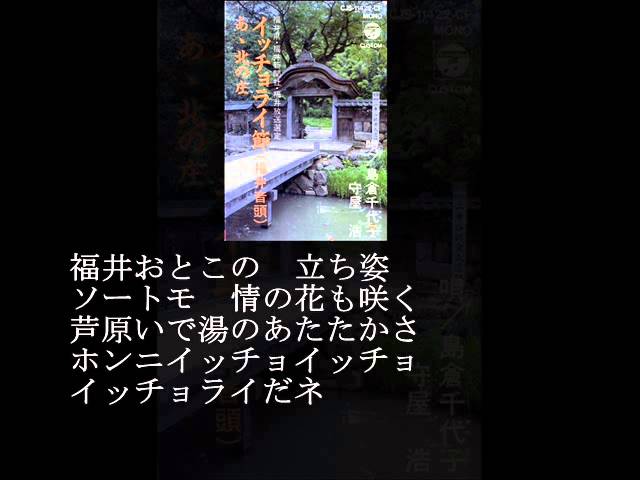
The Itchorai-bushi is another name for the Fukui Ondo; it is a new folk song released in 1962 to commemorate the opening of the Hokuriku Tunnel.
The lyrics mention many famous spots in Fukui Prefecture.
The word “Itchorai” itself has the same meaning as “icchora” (itchora), akin to having one’s best outfit, and by extension means “the very best,” making it full of local pride.
Danneeza: A Song in the Fukui DialectFukui Kēburu Terebi

It’s a song sung wholeheartedly in the Fukui dialect over a bright, rhythmic tune, but the lyrics are very long and I probably can’t make it through the whole thing.
“Danneeza” means “that’s fine” or “it’s okay” in an affirmative sense, and in this song it’s used to mean “no problem.” Regional dialects are true treasures, aren’t they?
Fukui Prefectural Residents’ SongKurata Yoshio, Kobayashi Shigeko

Although the Fukui Prefectural Anthem established in 1954 (Showa 29) has since been updated into a New Fukui Prefectural Anthem with a more contemporary musical style, both the old and the new songs fully celebrate the beauty of Fukui Prefecture.
In particular, the old anthem, created with great care for the Japanese language, features exceptionally beautiful wording in each and every phrase.
Echizen KamomeMiko Takekawa
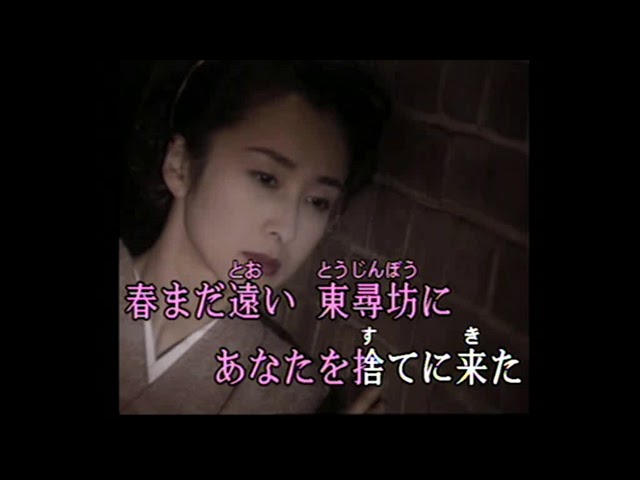
Tojinbo is famous, but the Oshima Bridge that appears in the lyrics is also a well-known sightseeing spot.
The red bridge to Oshima is a pedestrian bridge, allowing you to walk over to the island, where you can enjoy the beauty of the Sea of Japan and even view Tojinbo from a short distance away.
The expression about coming to the still-wintry Tojinbo to abandon a beloved person evokes images of fierce, raging waves.
Ah, Echizen.Kawamoto Yuki
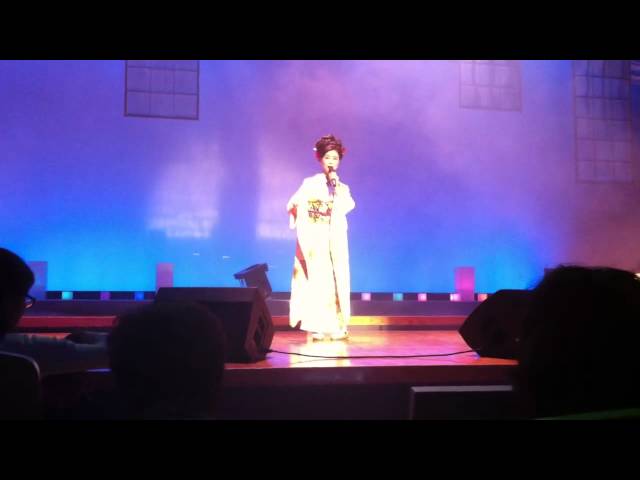
The song is set at Echizen Cape, but it’s different from a heartbreak song.
It’s about witnessing the magnificent winter scenery and wishing to be like that great nature.
For enka, it has a relaxed tempo, which is unusual.
Many local enka singers also teach at singing schools, and Yuki Kawamoto is from Fukui Prefecture as well.
Hokuriku JourneyRyū Tetsuya

As a traveling minstrel-style enka, Tetsuya Ryu’s poignant singing further enhances this song.
The Hokuriku region moves from Toyama Prefecture to Ishikawa, and finally Fukui appears.
In particular, the lyrics of the second verse are wonderful, especially the part about not lamenting one’s fate, which expresses life with deep insight.
We Fukui peopleDuke Aces

It’s a funny song that’s a bit self-deprecating, yet still sings with pride.
Duke Aces only sing up to the second verse, but apparently there’s actually a third.
What’s really amusing is the conversation with the taxi driver.
Still, even with Eiheiji and Tojinbo mentioned, is it really possible that the prefecture name wouldn’t come to mind?