

Trivia & Fun Facts About Fukuoka Prefecture, the Culinary Capital

Fukuoka Prefecture is full of attractive food-related spots, from Hakata ramen and spicy cod roe (karashi mentaiko) to its yatai street-food stall culture.
Beyond food, it’s also home to plenty of must-see sightseeing spots, such as PayPay Dome, the home stadium of the Fukuoka SoftBank Hawks, Mojiko Retro, and Miyajidake Shrine.
In this article, we’ll share trivia and fun facts about Fukuoka Prefecture.
Some of these are “of course” moments locals will recognize, but they may be surprising to people from other prefectures.
Let this article be your gateway to discovering even more of Fukuoka’s charm!
- [For Elementary School Students] Collection of Local Quizzes from Fukuoka Prefecture
- Trivia and fun facts about food (summary)
- Bursting into laughter! A roundup of Hakata dialect tongue twisters
- Trivia & Fun Facts about Miyazaki Prefecture
- Trivia quiz about schools: a roundup of fun facts you’ll want to brag about
- Useful right away in daily life! Surprising trivia and handy tips
- Trivia & fun facts about Osaka Prefecture
- [Common Sense & Trivia] True-or-False Quiz with Knowledge for Elementary School Students
- Fukuoka’s folk songs and children’s rhymes: History and sentiments conveyed by the nostalgic melodies of home
- Trivia quiz with useful tips to know: fun facts that come in handy at school or at home [for kids]
- A famous song about Fukuoka. The heart of the hometown passed down through song.
- Get Healthy with Vegetables: Trivia Quiz About Vegetables
- Trivia about Tokyo: A collection of fun facts useful for sightseeing
[City of Food] Trivia & Fun Facts about Fukuoka Prefecture (1–10)
Hakata Port Tower is a sibling of Tokyo Tower and Tsutenkaku.
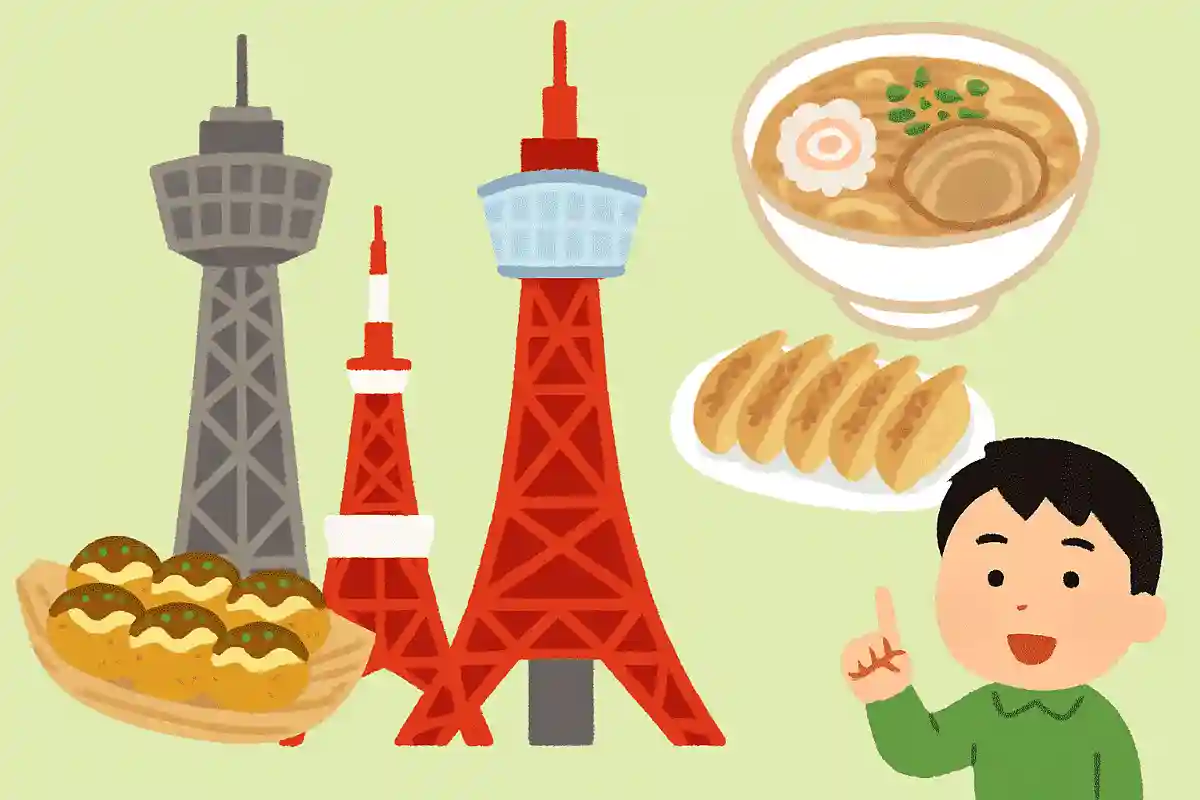
Standing in Hakata Port as a symbolic presence, the Hakata Port Tower offers views from its observation deck of the islands floating in the sea, the ships coming and going through the port, and the cityscape of Fukuoka lined with buildings.
Did you know that among the towers in Japan, including the Hakata Port Tower, there are some that are considered siblings? After the war, architect Tachu Naito designed six towers, which came to be known as the Six Tower Brothers of Japan.
After working on projects such as the Nagoya TV Tower, Tokyo Tower, and Tsutenkaku, Naito designed the Hakata Port Tower last.
In other words, the Hakata Port Tower is the youngest of the six brothers.
One of the charms is that each tower’s design has its own unique character.

In Fukuoka City, garbage is collected at night.

Isn’t it common knowledge that taking out the trash means doing it in the morning? I think many people only realize it’s trash day after stepping out the front door when they’re in a hurry, then rush back inside.
However, in Fukuoka City, Fukuoka Prefecture, trash is collected at night.
Nighttime collection helps avoid morning traffic jams and reduces damage caused by crows.
Depending on the neighborhood, there are also unique Fukuoka City practices such as door-to-door pickup and fewer sorting categories.

There’s “Kawabata Zenzai,” said to be the sweetest zenzai in Japan.
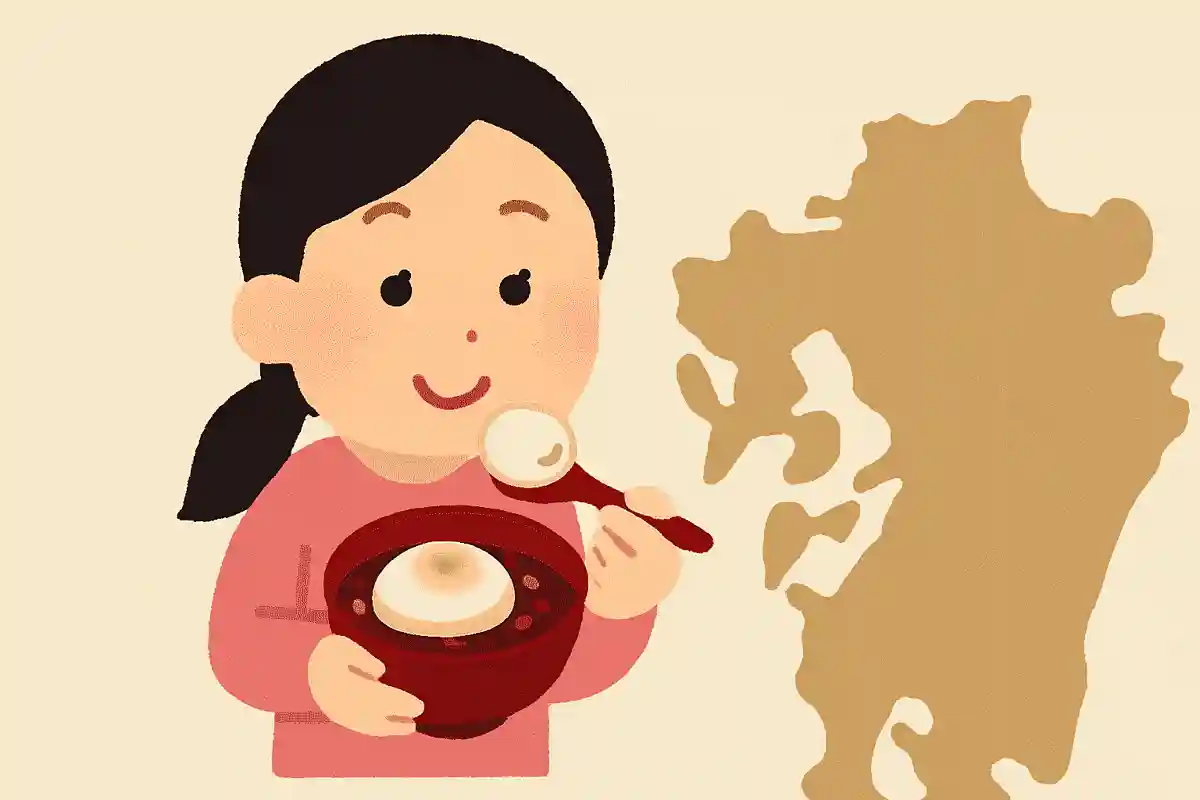
In Kamikawabata-machi, Hakata Ward, Fukuoka City, there’s a tourist spot called Kawabata Zenzai Plaza where you can enjoy a festive atmosphere year-round.
There, you can taste “Kawabata Zenzai,” said to be the sweetest zenzai in Japan.
It originally came from a shop, but after the shop closed and the zenzai disappeared, it was revived at Kawabata Zenzai Plaza thanks to nostalgic demand.
You can eat it on the spot, and it’s also sold as a souvenir.
If you have a sweet tooth, why not stop by?
[City of Food] Trivia & Fun Facts About Fukuoka Prefecture (11–20)
There’s a shrine where the wind god is sticking his tongue out at the thunder god.
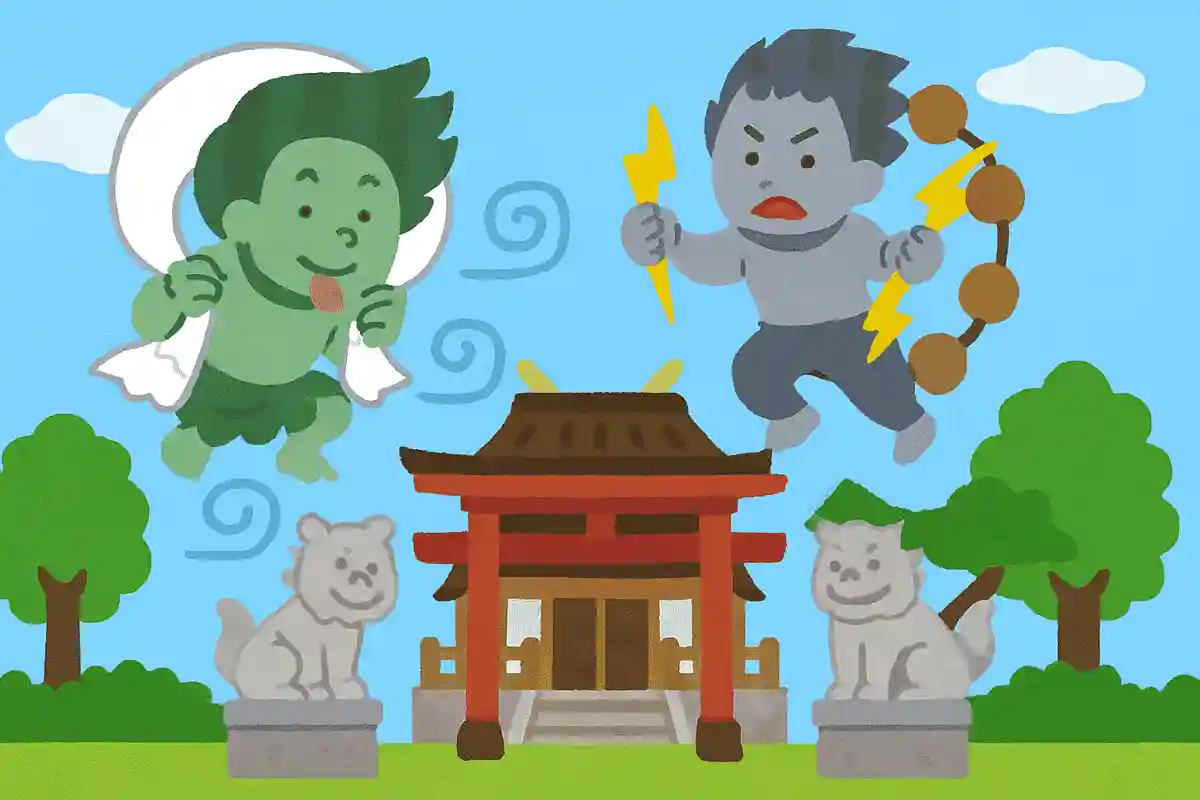
At the worship hall of Kushida Shrine in Hakata Ward, Fukuoka City, Fukuoka Prefecture, there are decorations of the Wind God and the Thunder God.
At first glance they look like the usual depictions, but if you look closely, you’ll see the Wind God sticking out his tongue at the Thunder God in a taunting gesture.
According to the information sign, it’s said that the Wind God is refusing the Thunder God’s attempt to stir up a storm in Hakata.
It’s hard to notice at first, but once you spot it, it’s a charmingly funny touch, isn’t it? Isn’t it surprising to find such a sense of humor in a shrine’s decorations?
There is a temple where a mermaid is said to be buried.
In Fukuoka Prefecture, there is a temple where a mermaid’s bones are buried.
At Reisenji Temple in Hakata Ward, Fukuoka City, it is said that a mermaid caught in a fisherman’s net during the Kamakura period was laid to rest.
The mermaid was reportedly 147 meters long when captured.
When a fortune-teller divined the mermaid’s omen, it was deemed auspicious, and the people rejoiced.
Because mermaids were considered messengers of the Dragon Palace (Ryūgū), the temple’s name was changed from Ukimido to Ryūgūji.
Although not open to the public, the temple still has the mermaid’s bones and a mermaid painting from the Edo period.
Until the Meiji era, at temple fairs they would place the mermaid bones in a basin of water and have worshippers drink the water, which was believed to grant benefits such as longevity and protection from illness.
There’s a live music café called “Showa” where bands like Kaientai and Tulip used to perform live.
In Fukuoka City, Fukuoka Prefecture, there is a legendary live music café that even appears in song lyrics.
The live café Sho-Wa, mentioned in songs by Tsuyoshi Nagabuchi, opened in 1970.
Back then, artists like Yosui Inoue, Kai Band, Kaientai, and Tulip are said to have performed there during their amateur days.
Many musicians, including Yoshihiro Kai, reportedly honed their skills on stage while working as waiters.
Even today, the shop’s walls still bear autographs from people like Tetsuya Takeda.
Although it closed once in 1978, it later resumed operations.
Fukuoka City is the birthplace of Yakult.
Do you know where Yakult originated? Some people might think it started in Tokyo, home of the Yakult Swallows.
However, Yakult’s birthplace is Fukuoka Prefecture.
In 1930, Dr.
Minoru Shirota, then a professor at Kyoto Imperial University, discovered the Yakult strain.
He pursued research and development with the hope of making health accessible at a price the poor could afford.
Sharing founder Dr.
Shirota’s vision, the first company president, Noboru Matsunaga, began sales in 1935 from Tojinmachi in Fukuoka City’s Chuo Ward.
At the time, they established the Shirota Protective Bacteria Promotion Association in Tojinmachi to support sales activities.
Interestingly, neither Shirota nor Matsunaga was from Fukuoka, and why Tojinmachi was chosen remains a mystery.