

[Rec] Interesting! A roundup of wordplay games

When you hear “word games,” do you mostly think of shiritori? It’s something everyone must have played as a child.
But if you take a look at this page, you’ll see there are actually quite a few types of word games.
In this article, we’ll introduce some fun word games and games that use language! They’re perfect for quick games with friends when you have some spare time, for recreation periods in preschools and elementary schools, and as icebreakers for working adults.
- Games you can play with just conversation. Classic and popular activities you can enjoy without any props!
- Challenge together! A roundup of word games for adults
- Brain-teasing game roundup
- Get the Fun Going! Easy Classroom Games You Can Play at School: Recreational Activities for the Whole Class
- [For Adults] Fun recreational games. Perfect for short breaks too!
- [Simple Games] Recommended Indoor Recreational Activities for Adults
- Fun activities for junior high school students. Recreation games.
- [Play Right Away!] Exciting Recreation Games Recommended for Elementary School Students
- Tongue twisters that will make you laugh out loud! Super funny
- A simple and fun co-op game that enhances teamwork
- [Recreation] Challenge! A roundup of tongue twisters recommended for elementary school students
- Indoor Games for Small Groups: Exciting Recreational Activities
- Games and activities everyone can enjoy together. A collection of fun play ideas.
[Rec] Fun! Wordplay Game Compilation (1–10)
No-English game
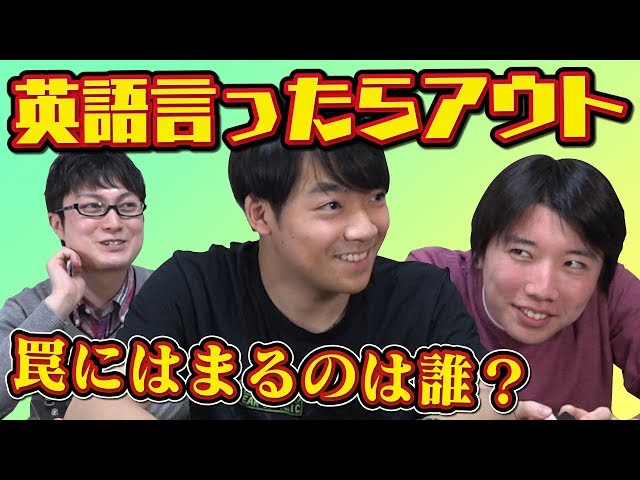
This is a game where you’re not allowed to use any English during the conversation.
Even if you think you aren’t saying any, we actually use English quite a bit in everyday talk.
Banning all of that makes this a surprisingly difficult game.
Prepare a penalty for the person who ends up using the most English within a set time.
Steering the conversation to make the other person slip up on purpose is also a valid strategy—just be careful not to get caught in your own trap.
It’s a fun game you can play in short breaks, or while eating or hanging out with friends!

phonetic symbol

Hanji-moji are a modernized, text-based adaptation of hanjie, the picture riddles handed down since the Edo period.
First, choose a word or phrase as the prompt, draw a circle, and divide it into as many sections as there are characters.
Break the prompt into individual characters, shuffle them, and write one character in each divided section.
Leave exactly one section blank and, in that state, have players guess the original word.
If a word is typically written in katakana, using hiragana for it in the sections increases the difficulty—for example, writing “ゲーム” as “げえむ.”

pangram

A “pangram” is a sentence that uses every hiragana character exactly once.
The classic Japanese “Iroha” poem is a prime example of a pangram.
Using the hiragana syllabary—omitting the ya- and wa-row versions of i and e—you create a single sentence.
You’re free to add voiced and semi-voiced marks.
It’s not enough to simply line up characters; the sentence must have a coherent meaning.
That makes the game quite challenging! It can be fun to set aside some time and then share your sentences with everyone afterward.
Give it a try and craft a wonderful story.
[Rec] Interesting! Wordplay Game Collection (11–20)
impromptu riddles

The riddle-wordplay often performed by rakugo storytellers and comedians on TV is called “nazokake.” It’s a classic of verbal play—so tricky that even professionals sometimes struggle with it.
You say one word, then another that seems totally unrelated, and finish with a word or phrase that ties them together.
The answer follows a set flow: “X to kake te, Y to toku” (A is like B), “sono kokoro wa?” (What’s the heart of it?), and “dochira mo 〜 deshou” (Because both are 〜).
Don’t overthink it—keeping a good rhythm makes it cool! Watch various people’s nazokake and give it a try yourself.
tongue twister

Tongue twisters, a classic form of wordplay, are a game anyone can enjoy, from kids to adults! In addition to staples like “namamugi namagome namatamago” (raw wheat, raw rice, raw eggs), there are funny ones, long ones, and even English ones.
If you can say it quickly all the way through without stumbling, you succeed! For short phrases, try repeating them about three times.
You can have people take turns one by one, but it’s also fun to compete in teams with rules like: everyone must say it for a success; if anyone can’t, the team is out.
It’s great for practicing enunciation and exercising the mouth and tongue, and English tongue twisters also help with pronunciation practice.
Anagram

The wordplay where you rearrange the letters of a word or phrase to form another word or phrase with a different meaning is called an anagram.
Because you have to find meaningful words or phrases from among the many possible letter arrangements, it’s even more complex and difficult than palindromes, which simply reverse words.
Anagrams are used in various contexts, such as authors’ pen names and company names.
It’s also said that medieval scientists like Galileo Galilei recorded their discoveries in the form of anagrams to prevent other scientists from stealing their ideas.
Word Shuffle Nickname Picker
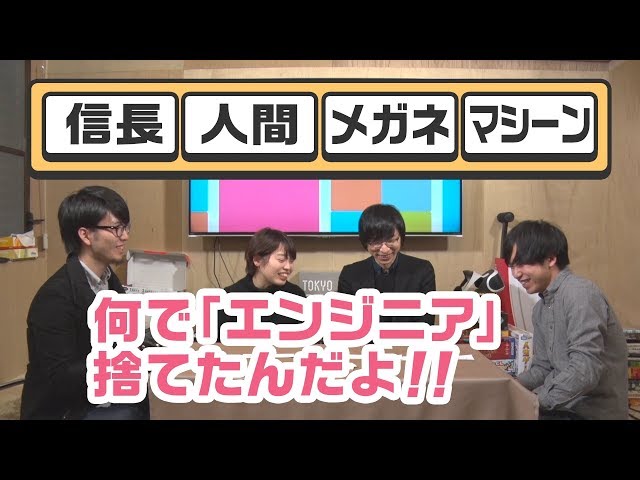
This is a game where you combine cards with various words to create a nickname for a target person.
At the start, deal a fixed number of cards to all players except the person who will receive the nickname.
Based on the cards in hand, ask the target questions and swap your cards as in poker.
Decide in advance how many times card exchanges are allowed.
At the end, use the remaining cards to come up with a nickname for the target.
The person receiving the nickname then chooses which of the proposed nicknames fits them best, and that selection determines the winner.