

A classic Group Sounds song. A nostalgic GS hit.

From the nostalgic Group Sounds era, our studio staff present their recommended classics and fan favorites.
It’s a throwback playlist that’s sure to heat you up the moment you press play.
- [Recommended for people in their 70s] Classic nostalgic hits: A collection of youth songs
- A collection of nostalgic hit songs and classics from the 70s
- [1970s] Collection of Japanese hit songs. Nostalgic masterpieces of Japan
- Legendary Japanese rock masterpieces and hit songs of the 1960s
- Classic and hit Japanese pop songs from the nostalgic 1960s
- Classic and popular blues songs to sing at karaoke
- [2026 Edition] Songs Loved by People in Their 60s: Classic Hits from Their Youth
- Nostalgic yet fresh!? Classic masterpieces of Japanese rock from the 1970s and 1980s
- [Recommended for people in their 70s] Songs that really move you. Beloved classic Japanese hits of the past.
- Classic and hit kayōkyoku songs from the nostalgic 1960s
- Revival hits driven by social media! Classic Showa-era songs popular with Gen Z
- Evokes the charm of the good old days. Showa-era inspirational songs that are still loved today.
- Hit songs in Japan in the late 1960s
A classic Group Sounds hit. Nostalgic GS hit songs (11–20)
Memories of the RainTerauchi Takeshi & Burū Jīnzu

With a melody that resonates as if by your side and the timbre of an electric guitar, this classic vividly evokes bittersweet memories of rainy days.
Released in November 1965, the piece was created through composition by Kunihiko Kase and arrangement by Takeshi Terauchi.
It appeared as the B-side to the single “Namida no Guitar” and was also included on the following year’s album, “Blue Jeans Golden Album,” capturing the hearts of many.
The richly expressive performance, wrapped in a gently subdued atmosphere, brings back cherished moments spent on rainy days.
It’s a song you’ll want to listen to alone on a quiet night, perfect for sinking into a reflective mood.
The Rock of SufferingZa Burū Inparusu

This song is emblematic of the late era of Group Sounds.
Released by The Blue Impulse in April 1970, it sharply captures the feelings of the youth at the time.
Incorporating elements of underground songs, the lyrics—centered on themes of suffering and inner conflict—leave a strong impression.
Shunichi Makaino’s arrangement blends perfectly with the lyrics written by Nozomi Hodaka, creating a compelling rock sound.
Along with its coupling track, “Wakare no Asa” (Morning of Parting), it marked the end of the band’s activities.
It’s a track that lets you feel the transitions in Japan’s music scene and is recommended for those interested in the social backdrop of the era.
rose-colored cloudsVirejji Shingāzu

Released by the Village Singers in August 1967, this song is known as an iconic anthem of the Group Sounds boom.
Michio Shimizu’s moody vocals are striking, conveying the poignant feelings of holding on to memories of a lover.
Jun Hashimoto’s abstract lyrics spark the listener’s imagination, and combined with Kyohei Tsutsumi’s melody, the song captured many hearts.
It peaked at No.
2 on the Oricon charts and became a major hit with 600,000 copies sold, later covered by a variety of artists.
As a song that stands close to those in love, it still radiates an unfading charm today.
The one I still love even after we’ve broken upPāpuru Shadōzu

This is a classic by the Purple Shadows that portrays a bittersweet romantic breakup.
Released in November 1969, it features a distinctive shuffle rhythm and an appealing style inspired by Hawaiian mood kayō (pop ballads).
The pain of heartbreak and the love that lingers even after parting are conveyed through a melody that resonates deeply.
Although it came out when the Group Sounds boom was beginning to wane, it has continued to be loved across generations.
The cover by Los Indios & Silvia was also a major hit, and the song is cherished as a staple duet number.
It’s a recommended track for anyone who has experienced the end of a romance or carries a tender, aching love in their heart.
Tipsy Young Ladypinkiishikkusu

This is a song by Pinky Six, an all-female Group Sounds band from the late 1960s.
Set against the GS boom of the time, it playfully riffs on The Folk Crusaders’ “Kaettekita Yopparai,” clearly aiming for topical appeal.
The group performed at U.S.
military camps and club shows, and this track was also featured on the TV program 11PM.
It was released as the A-side of a single by Japan Victor in March 1968.
With themes of youth freedom, romance, and a light, witty rebellion against society, it’s a work rich in entertainment value.
Recommended for those who want to feel the youth culture of the era or explore the appeal of Group Sounds.
Tunnel HeavenZa Dainamaitsu
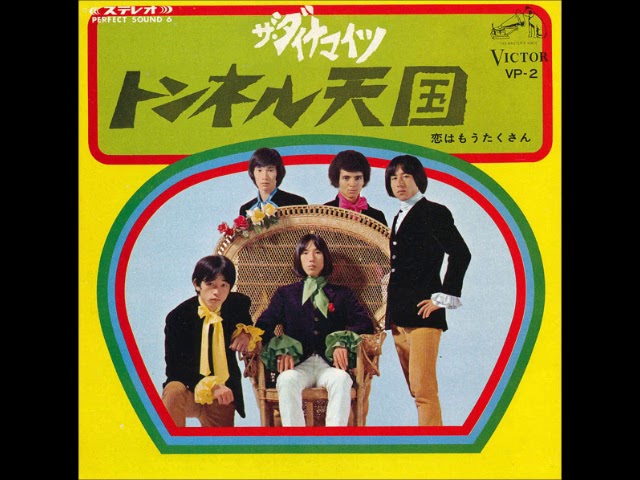
The debut single and biggest hit by The Dynamites, featuring genius guitarist Fujio Yamaguchi.
Although the band didn’t enjoy further hits after their debut, they built a devoted following as a connoisseur’s band, focusing on R&B covers in their live shows.
While the band’s vocalist is Hiroshi Segawa, on this track the lead vocals are handled by guitarist Fujio Yamaguchi.
A classic Group Sounds hit. Nostalgic GS hit songs (21–30)
Icarus’s StarZa Ravu

The Love was a band that made its record debut toward the end of the Group Sounds era.
They released only one record, but even before their debut they were a capable group, appearing in a Sakura Color commercial and at the Nichigeki Western Carnival.
“Icarus no Hoshi” was a competing release with Ms.
Fubuki Koshiji, but The Love’s version was more popular.