

Songs with titles that start with “Ha.” Lots that evoke the seasons!

Have you heard of karaoke shiritori, where you link the last letter of each song title to the next, or the version where you play using only song titles? The key is how many song titles you can remember and how many different songs you can sing, and it gets really exciting when music lovers play together.
Still, there are times when you just can’t come up with a song title… So in this article, I’ll introduce songs that start with “Ha” to help you out when you get stuck on that syllable! There are lots of seasonally themed songs like “Haru” (spring), “Hanabi” (fireworks), and “Hana” (flower), so please take a look.
- Compilation of Vocaloid songs with titles starting with “Ha”
- Songs with titles that start with “ba.” Useful hints for karaoke or shiritori!
- Songs whose titles start with “He.” Useful for shiritori or karaoke.
- Songs with titles that start with “Sa”: a roundup you can use for shiritori or karaoke
- A compilation of Vocaloid songs with titles starting with “He”
- [Spring Songs] Classic and Latest Hit Collections Perfect for a Bright, Gentle Spring
- Spring songs from the early Showa era: a collection of kayōkyoku and shōka that evoke spring
- Songs Women Want Men to Sing: Popular Karaoke Picks Chosen by Girls
- Songs with titles that start with “Hi.” The vast world of “Hi.”
- Summary of Vocaloid songs with titles starting with 'Hi' (ひ)
- [Stars, Fireflies, etc.] A collection of songs whose titles start with “Ho” (ほ)
- [Spring Songs] Recommended for Women! A Selection of Karaoke Classics & Popular Tracks
- Karaoke songs to sing in April: classic and popular spring hits
Songs with titles starting with “Ha.” So many that evoke the seasons! (231–240)
Temptation of the Spring BreezeKoizumi Kyoko

The song that suddenly comes to mind under the gentle sunlight is the fourth single released in February 1983 by Kyoko Koizumi—better known as Kyon Kyon.
Capturing both the pure innocence of an early idol and a hint of grown-up poise, this track also appears on the album “Breezing” and has been beloved by fans for many years.
Its light yet wistful melody line evokes the arrival of spring and the stirrings of romance.
While she wore the iconic “Seiko-chan cut” at the time of release, this song also symbolizes the transitional moment just before her shift to a short haircut.
It became her first entry into the weekly Oricon top 10 and drew attention on music programs as well.
It’s perfect for when you want to revive those sweet-and-sour memories of the past, or when you want your heart to lift in gentle, sunny weather.
First loveMurashita Kōzō

When the warmth of spring beckons and a melody you can’t help but hum comes to mind, it’s Kozo Murashita’s masterpiece that inevitably surfaces.
The lyrics, which conjure up images of after-school playgrounds and twilight scenes, awaken faint memories of distant days.
Released in February 1983 as his fifth single, it was also included on the album “Hatsukoi — Asaki Yume Mishi —.” It became a major hit, reaching No.
3 on the Oricon charts, and has been covered by many artists across generations and featured in commercials.
With a tenderness that gently accompanies its wistfulness, this song is perfect for the walk home after a class reunion or a leisurely stroll beneath the cherry blossoms.
The moment the intro begins, it has a mysterious power to transport you back to who you once were.
Song titles starting with “Ha.” Lots that evoke the seasons! (241–250)
Is spring here yet?Hamada Masatoshi

Are you familiar with the hidden gem where a comedy legend at the forefront of variety shows lets his true-to-life vocals shine? Produced by Tamio Okuda of Unicorn, this track pairs a unique sense of wistfulness and mellow melody with Masatoshi Hamada’s unpretentious singing to perfect effect.
Released in December 1997 as his first single under his solo name, it’s also well known as the campaign song for JR East’s “JR Ski Ski.” The pull-up bar hanging contest in the music video is a fond memory that symbolized their close friendship on TV at the time.
Its world evoking the wait for spring amid the cold is perfect for this season, when we long for warmer days.
Give it a listen in a quiet moment during your busy day.
Harusaki KobeniYano Akiko

Released as a single in February 1981, this song took the nation by storm as the theme for a Kanebo Cosmetics commercial.
The lyrics were written by Shigesato Itoi, and members of YMO contributed to the arrangement, creating a sound where technopop and kayōkyoku blend exquisitely—still sounding fresh today.
Included on the album “Tadaima.,” it’s one of Akiko Yano’s signature works, with her light, buoyant piano and bouncy vocals joyfully announcing the arrival of spring.
The word “Kobeni” in the lyrics linked directly to the image of a new product at the time, and for many, just hearing the song brings back memories of that glamorous season.
If you’re in your 50s, the moment the intro plays, you’ll be transported back to who you were then—a bright, fun track that makes you feel the spring.
Spring La! La! La!Ishino Mako

Lured by the warmth of spring, it features a bright melody that makes you want to skip without thinking.
Released in January 1980 as Mako Ishino’s eighth single, it pairs lyricist Akira Ito with composer Koichi Morita, who team up to comically portray slightly heart-fluttering human relationships over a bouncy rhythm.
The playful word-splitting of the kanji for “spring” became famously associated with the song, which is also known for marking her first appearance on TBS’s The Best Ten.
Beyond its success as a single, it was included on the album “Koi no Disc Jockey MAKO IV,” and is cherished as one of her signature works.
Even depictions of what could easily become a heavy love triangle are sung with her trademark brightness, turning them light and breezy.
If you listen to it when you’re feeling a bit clouded or need a morning energy boost, your worries are sure to blow away.
Flowers ~Flowers for everyone’s heart~Sakushi sakkyoku: Kina Shoukichi

A gentle melody that evokes the breeze of Okinawa is perfect for the warm spring sunshine! This piece was written and composed by the singer-songwriter Shoukichi Kina.
It carries a wish for peace, inviting each of us to let flowers bloom in our hearts as we shed tears and share smiles.
Originally included on the classic album “BLOOD LINE,” released in June 1980, it was later chosen as the theme song for the 1995 film “Himeyuri no Tō,” leaving a deep impression on many listeners.
It would be lovely to reminisce together while listening to the relaxed tones of the sanshin.
This is a song you’ll want to hear when you long to be wrapped in feelings of peace and kindness.
Song of the Language of FlowersSakushi: Saijō Yaso / Sakkyoku: Ikeda Fujio
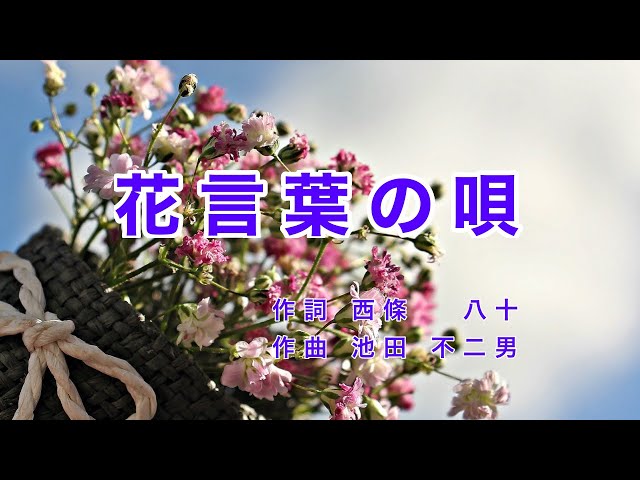
Hanakotoba no Uta, with its elegant waltz rhythm that evokes a modern Showa-era atmosphere, leaves a strong impression.
Its romantic theme of entrusting feelings to flowers and the call-and-response between a man and a woman make it a beautiful duet.
It was produced as the theme song for Shinko Kinema’s 1936 film First Love Diary.
With lyrics by Yaso Saijo and music by Fujio Ikeda, the piece became a major hit despite being composed on short notice during filming, and a line from the lyrics even became a popular catchphrase.
The voices of Akira Matsudaira and Nobuko Fushimi still sound fresh today.
The gentle triple-time melody is perfect for swaying leisurely in the spring sunlight.
Why not hum along with older listeners while reminiscing about nostalgic films?