

Easy DIY! Introducing educational toys that can be easily made with 100-yen shop items and things around the house.

You want to provide toys that match your child’s development and changing interests, but buying new ones every time can get expensive, right?
If that sounds familiar, this is for you.
Here are some easy, handmade toy ideas you can try.
They use items from 100-yen shops and materials you likely already have at home, so they’re low-cost and beginner-friendly—another great bonus!
We’re focusing on how to make educational toys that build concentration, imagination, and fine motor skills.
Try incorporating them into playtime at home, as well as in daycare or kindergarten!
Easy DIY! Introducing educational toys you can make easily with 100-yen store items and things around you (1–10)
drop-in box toy

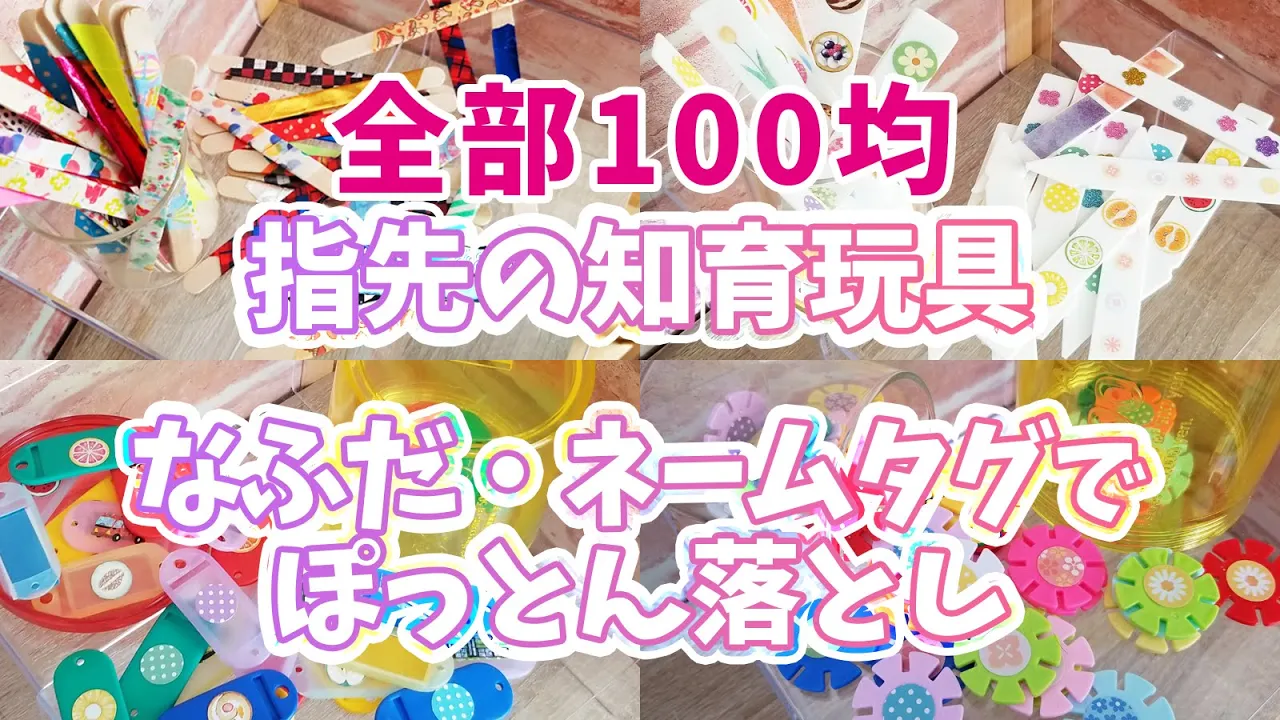
Let’s make a perfect drop-in toy for focusing attention on fingertip control using name tags that you attach to keys! Just remove the ring and the paper insert from the name tag, and you’re ready in no time.
Pinch the tag and drop it into a coin bank you can buy at a 100-yen shop.
If you decorate the tags with stickers or washi tape together with the kids, it will make them even more engaging.
You can use anything that can pass through the coin slot—like ice cream sticks or flower tags used for planters—so give it a try!

You can enjoy matching pictures too! A plastic bottle toy
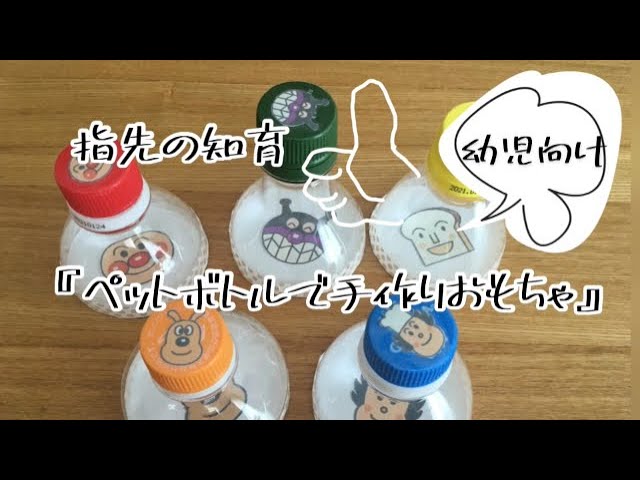
Here’s an idea for a PET bottle toy that’s perfect for educational play.
First, prepare several plastic bottles.
Next, cut each bottle at about one-third from the top.
Then, insert a piece of thick paper with a character drawn on it into the open section.
Finally, stick a sticker of the same character on the bottle cap, and it’s complete.
Kids can enjoy opening and closing the caps and matching the character designs.
Using caps in different colors makes it look colorful and extra cute.

Home planetarium
https://www.instagram.com/p/CeD4l9WpVA1/Turn your home into a planetarium! Here’s a toy that’s sure to get kids super excited.
First, cut black construction paper into a fan shape, then use a craft knife to cut out any shapes you like.
Using a craft punch makes it easier.
Next, stick colored cellophane over the cutout sections.
Once you’re done, roll the paper into a cone and tape it in place.
Finally, stack a paper cup with its bottom cut out and a paper plate with a hole cut to match the cup’s bottom onto a standing flashlight, then place the cone-shaped paper over the top—and you’re done! When you spin it, the many colorful shapes projected in the dark look like they’re moving, and it’s beautiful.
It’s a perfect toy for bedtime or indoor playtime!
Perfect for button practice! Onigiri

Here’s an idea for felt rice balls that help kids practice buttoning! First, cut a rectangle from white felt and fold it.
Keeping the middle of the folded edge intact, cut it into a rice ball shape.
Make fillings like pickled plum or salmon and sew on snap buttons.
Sew matching snap buttons to the center of the rice ball’s inside as well.
Sew a two-hole button to the upper inside part of the rice ball, and make a slit on the opposite side.
Finally, glue a strip of seaweed cut from black felt to the outside, and you’re done! Attach your favorite filling and close the rice ball with the buttons to enjoy making onigiri.

Paku-Paku Bear
https://www.instagram.com/p/CWK66zuvZF7/Pakupaku Kuma-san: a bear face sewn onto a large piece of felt with a zipper for its mouth.
Next to the bear, items like rice balls, bread, eggs, and vegetables are attached with snap buttons.
You can unfasten them and feed them to the bear—it’s a toy, right? The actions of unbuttoning and buttoning seem helpful for developing fine motor skills, and seeing the bear eagerly eat everything might spark children’s interest in food, making them think, “I want to try the same thing,” or “I wonder what it tastes like?”
Fruit Concentration
https://www.instagram.com/p/Cu9Ue4sps3R/These are felt cards you can use to play Concentration (Memory)! You can choose any motifs you like—fruits, vehicles, animals, anything is fine.
However, since Concentration is a game where you match pairs of identical cards, be sure to make two cards of each design.
Cut felt into card shapes and either glue or sew the motifs onto them.
If you’re making everything out of felt, it’s efficient to layer the same fabric and cut two identical pieces at once to save time.
If you want to keep things simple, you could also use store-bought appliqués and just stick them on.
Sensory Mat Made with 100-Yen Store Materials!

A sensory mat is an item you can enjoy by touching it with your hands or feet! Prepare interlocking floor mats and attach items that offer interesting textures or sounds—like kitchen sponges, CD discs, squeaky pet toys, or mops—to each piece.
Then simply connect the mats so children can walk or crawl over them, and you’re done! It’s great because you can easily make it with everyday items.
If you assemble the pieces like a dice cube, it transforms into a toy for exploring touch with hands! Try using different combinations to suit your child.