

[For High School Students] Recreational Activities That Can Energize the Entire Grade or Class

There are times during school trips and other various school events when the whole grade gets together and does recreational activities, right?
Teachers and class representatives, in particular, may be wondering what kinds of activities to do so that everyone in the grade can get along and have fun.
In this article, we introduce exciting recreation ideas for high school students.
We’ve gathered a variety of ideas, from activities where classes in the same grade can compete against each other, to ones that help deepen bonds within a single class.
When you want your class or the entire grade to be connected by even stronger bonds, be sure to give these a try!
- Recreation Ideas That Truly Excite High School Students! A Fun Collection of Activities
- Fun activities for junior high school students. Recreation games.
- Recreation Popularity Rankings for High School Students
- Recommended Recreations and Indoor Games for High School Students
- Ideas for Grade-Level Activities That Will Make Middle Schoolers Go Wild with Excitement!
- Recommended for upper elementary grades! Exciting indoor recreation and games
- [For University Students] A Roundup of Fun Games and Recreational Activities
- Recreation popularity rankings for junior high school students
- For Upper Grades: A Collection of Performance Ideas for School Arts and Learning Presentations That Inspire Tears and Laughter
- A collection of simple indoor recreational games
- Fun and exciting penalty games recommended for high school students
- Indoor recreation popularity ranking
- [For Middle Schoolers] Let's Have Fun Together! A Collection of Bus Recreation Ideas
[For High School Students] Recreational Activities That Can Energize the Entire Grade or Class (21–30)
Word Wolf

Introducing a party game you can play empty-handed during school breaks! It’s called “Word Wolf”! You deal out cards with similar words on them, but one person gets a card with a different word.
Everyone discusses the word, trying to find the person in the minority.
It sharpens your mind games and teamwork, and it deepens trust among classmates.
You might even make new friends! The rules are simple, so it’s a quick and easy game for class mixers or school events.
High school students, give it a try!
little thief

Let me introduce a consensus game set in a convenience store.
The characters are: the “store manager,” “part-time worker A,” and a “boy who steals three rice balls every day.” Noticing the boy’s theft, the manager tells A to catch him and call the police.
However, A does not apprehend the boy.
Even when the manager asks why, A won’t answer, and A is ultimately fired.
Among these three, who do you think is the most at fault? Also, rank the individuals from 1 to 3 in order of blame.
It’s a question where the rankings may change depending on how you imagine the boy’s reasons for stealing.

Poem of First Love

It’s a theme that lets you reflect on romance while enjoying a story packed with the sweet-and-sour freshness and poignancy of first love.
By thinking about why she exchanged emails and why she sent those words, you can imagine the movements of a person’s heart.
When she seemed to be happily spending time with the boy like a friend, why did I give up on my feelings? Beneath that might lie a lack of confidence or the inner struggle of not being able to muster the courage.
By discussing it with classmates, you can relive the characters’ emotions and overlay them with what you would have done yourself—that’s the appeal.
It’s a topic that invites lively exchanges of opinions, with the bittersweetness of love and personal growth as its themes.

dodgeball

Dodgeball is a guaranteed hit for school events and class bonding! The rules are simple, the number of players is flexible, and everyone can have fun.
Throwers and dodgers each have their roles, so teamwork comes naturally.
If you hold a class-versus-class match, a healthy rivalry will spark and the excitement is guaranteed! It’s a simple game, but it has real depth.
You need creativity in how you throw and dodge, and it sharpens your split-second decision-making.
Everyone works up a sweat and ends up smiling.
Give dodgeball a try—you won’t regret it!
Blindfold telepathy challenge

The Blindfold Telepathy Challenge: a game where you draw pictures on a board or paper while keeping your eyes covered with an eye mask.
It’s a perfect idea not only for playing with your usual group of friends, but also for breaking the ice and getting closer with classmates.
After receiving a prompt from the host, two blindfolded players place their pens at the same spot.
From there, they start drawing at the same time to complete a single picture together.
Try drawing various shapes, from simple circles and squares to stars and hearts.
It’s an easy activity for high school students to try using a chalkboard or whiteboard.
Getting lost in snowy mountains
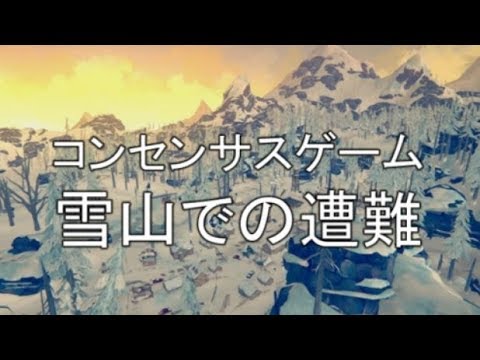
You all joined a tour to see the aurora.
However, the plane you were on crashed due to a geomagnetic storm.
The crash site is in snowy mountains, and the nearest town is as far as 32 kilometers away.
The pilots have died, and the plane has sunk to the bottom of a lake, so you have no choice but to make your way on your own.
Besides cold-weather clothing, you only have 10 items.
To survive, discuss as a group and rank the items from most to least important.
The time limit is 30 minutes; when time is up, present your ranking.
When giving opinions about the ranking, be sure to explain your reasons, and when making decisions, reach a consensus—an agreement among everyone.
Southern Cross Expedition

It’s an exciting theme where you become a member of the Southern Cross Expedition Team and go on a treasure hunt.
It begins when you receive a message from a teammate saying, “I found treasure on a southern island, but it’s heavy—please help.” However, communication is cut off partway through, and the story revolves around completing the remaining map.
Each member holds different pieces of information, and you can’t reach the answer unless everyone shares what they know.
The key is not to keep your own information to yourself, but to share it and work cooperatively with your teammates.
While enjoying the fun of deduction and organizing information, you also learn the importance of trusting your companions.
The very process of completing the map through repeated discussions is a stimulating theme that lets you experience a real sense of accomplishment.