

[2026] Masterpieces that sing of Hokkaido: the heart of a beloved homeland passed down in song


Hokkaido, a land surrounded by grand, beautiful, and sometimes harsh nature, has often been featured as the setting in songs—especially kayōkyoku and enka—from the Showa era to the present day.
Artists and bands from Hokkaido sometimes write songs about their own hometown, and there are countless masterpieces themed around the northern land.
This time, we’ll introduce a selection of songs connected to Hokkaido, regardless of genre or era.
From famous hits to hidden gems, give them a listen while picturing the scenery of Hokkaido!
- [Folk and Children's Songs of Hokkaido] Songs of Hokkaido that continue to be loved across generations
- [Local Songs] Recommended tracks packed with Japan’s nationwide classics and hometown pride
- A roundup of regional enka songs: classic hits that feature places from all across Japan in their lyrics.
- [Hometown Songs] A curated selection of popular Japanese tracks that fill your heart with nostalgia
- [Song of Osaka] A selection of passionate, warm-hearted Osaka tunes
- [Songs of Aomori] A collection of local songs depicting the grandeur of nature and the warmth of its people.
- Chiba Songs: A comprehensive introduction, from famous tunes filled with hometown love to local theme songs
- [2026] Enka Spring Songs to Savor: A Collection of Classic Enka That Evokes the Japanese Spring
- [Japanese School Anthems] A Hot Topic at Koshien! From Beautiful Anthems to Unique Ones, All Introduced at Once
- Winter songs you'll want to listen to in the cold season! Recommended for the yutori generation
- [For Seniors] Heartwarming Winter Classics: A Cozy Moment with Nostalgic Kayōkyoku and Traditional Songs
- A classic song that sings of Nagasaki: the enduring heart of our hometown
- [2026] A Collection of Classic Enka Songs Depicting Winter Scenery
[2026] Masterpieces that sing of Hokkaido: The enduring heart of our homeland (11–20)
Woman of HakodateKitajima Saburō

Set in a port town in Hokkaido, this classic enka masterpiece delicately portrays the subtleties of human emotions and a deep longing for home.
Saburo Kitajima’s powerful vocals brilliantly convey a man’s heartache and passion, culminating in a grand composition that evokes the vastness of the land and vivid scenes of the harbor town.
Released by Nippon Crown in November 1965, the song became a mega-hit, selling over 1.4 million copies.
It was also featured in commercials for Asahi Beer’s “Dosan no Nama” and Nagatanien’s “Sake Chazuke,” and has long been cherished as one of Kitajima’s signature songs.
This piece is perfect for moments when you want to reflect on Hokkaido’s majestic nature and the lives of its people.
Its travel-inspiring, beautiful melody and heartfelt lyrics will resonate deeply with anyone living far from their hometown.
WakkanaiGalileo Galilei

This nostalgia-filled rock number themed around Wakkanai, Hokkaido is a work that can be called the origin of Galileo Galilei’s musical style.
Carried by a gentle melody, the song sings of longing for one’s hometown and is included on the album Parade, released in February 2011.
Parade debuted at No.
5 on the Oricon chart, helping to bring wider recognition to their music.
Its refreshingly delicate arrangements and tracks incorporating elements of indie rock and chillwave beautifully capture the atmosphere of the northern land.
It’s a song that resonates deeply with those living away from home or anyone who feels a sense of nostalgia for a cherished place.
Long, Long Ago (Home Song)Hokkaidō

Among the three songs designated as songs of the people of Hokkaido in May 1967, this one is cherished as a home song.
In contrast to the vigorous march “Hikari Afurete,” it gently sings of the history of pioneering and everyday life, like an old folktale.
The lyrics were selected through a public contest, and the music was composed by Yoshinao Nakada, known for “Medaka no Gakkō.” Its warm melody remains deeply etched in the hearts of Hokkaido’s people today.
Distant StarShimokawa Mikuni

A song that deeply resonates with longing for one’s hometown, captured by Mikuni Shimokawa—who hails from Shinhidaka, Hidaka District in Hokkaido—on her November 2004 album, “Kimi no Uta.” Carried by gentle acoustic guitar and piano, this beautiful ballad tenderly paints scenes of the northern land, like the flow of the Shizunai River and fields of corn.
Her calm yet powerful vocals quietly convey parting with the past and a resolve to start anew, stirring the listener’s heart.
The album “Kimi no Uta,” which includes this track, is highly acclaimed as a masterpiece that showcases the depth of her musicality.
It’s a song to be heard on a quiet, nostalgic night, as you reflect on the indelible memories of your hometown.
I like Sapporo.Mori Yuji to Sazan Kurosu

A masterpiece that beautifully encapsulates the charm and sentiment of Sapporo.
The refined lyrics and graceful melody portray the city’s atmosphere and the richly textured transitions of the four seasons.
It’s a mood kayō song steeped in melancholy, characteristic of Yuji Mori and Southern Cross, and it resonates deeply with listeners.
Released as a single in 1981, it was also used as the theme song for the Sapporo Snow Festival.
Beloved as a cheer song for Hokkaido Consadole Sapporo, it has become a piece rooted in the community.
It’s a gem you’ll want to hear on a calm winter’s day, and one I highly recommend both to those nostalgic for Sapporo’s cityscape and to those who have yet to visit.
Sapporo ElegyTakeshima Hiroshi
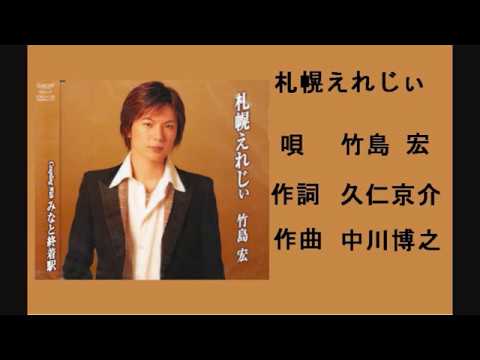
Set in the northern city of Sapporo, this melancholic mood kayō ballad—richly portraying a heartrending love story—was released as a single by Hiroshi Takeshima in October 2004.
It beautifully overlays the solemn atmosphere of Sapporo’s streets with the emotions of a man pursuing the lingering traces of a past romance.
With lyrics by Kyosuke Kuni and composition by Hiroyuki Nakagawa, its exquisite melody is deeply moving.
Peaking at No.
44 on the Oricon Weekly Singles Chart, the song captured the hearts of many enka fans and remains a popular work that represents the early phase of Takeshima’s career.
Evoking the clear, wintry air of Sapporo and weaving delicate vocals with poignant longing, this track is especially recommended for snowy seasons or quiet nights spent thinking of someone dear.
[2026] Masterpieces that sing of Hokkaido: The enduring heart of our homeland (21–30)
Hokkai Bayashi (Hokkaido Residents’ Folk Dance)Hokkaidō

In fact, Hokkaido has as many as three songs that have been designated as “Songs of the People of Hokkaido.” Among them, the one introduced here is Hokkai Bayashi, an ondō-style piece beloved at festivals and Bon dances.
With a powerful rhythm that sings of the vast land and rich nature, the work perfectly embodies the very scale of Hokkaido.
It was produced in May 1967, based on lyrics solicited from the public as part of the Hokkaido Centennial Commemoration project.