



The new musical trend that emerged in early 20th-century France, known as Impressionism.
Composers such as Claude Debussy and Maurice Ravel—emblematic figures of the Impressionist movement—released many delicate works in an effort to express, through music, the play of light and the subtle gradations of color.
In this article, we highlight masterpieces from Impressionist music that have been performed and cherished by a wide range of artists up to the present day.
We’ll offer a thorough introduction to each piece, along with its distinctive features and the background of its composition.
- Introducing Maurice Ravel’s Famous and Representative Works
- [Impressionist Music] A Selection of Classical Works That Evoke the Japanese Spirit
- Debussy’s masterpiece. Popular classical music.
- Masterpieces of the Romantic Era: A sweeping introduction to soul-stirring, celebrated gems!
- Gabriel Fauré | Introduction to His Famous and Representative Works
- [Impressionism] A Curated Selection of Colorful Piano Masterpieces — Debussy & Ravel
- [François Couperin] Introducing famous and popular pieces by the composer who loved the harpsichord
- Cello Masterpieces: A comprehensive introduction to exquisite classical works that let you savor its profound timbre
- [Masterpiece Classics] A special showcase of gem-like masterpieces so beautiful they’ll move you to tears
- Songs with cool trumpet. Introducing famous pieces from wind ensemble and jazz.
- Masterpieces of Ballet Music: Introducing Classic Favorites
- Classical Music for Summer: A Selection of Cool and Refreshing Masterpieces
- Classical Masterpieces: Recommended Works You Should Hear at Least Once
[Impressionist Music] A Comprehensive Introduction to Masterpieces of the Impressionist Movement in Classical Music (1–10)
Prélude to the Afternoon of a FaunClaude Debussy
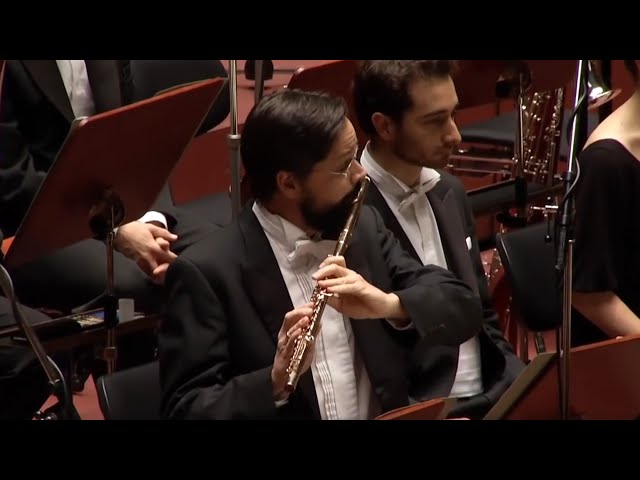
Among the works of Claude Debussy, a composer emblematic of French Impressionism, one piece often singled out as especially rich in Impressionist elements is the orchestral work Prélude à l’après-midi d’un faune, composed after being inspired by the poet Mallarmé’s The Afternoon of a Faun.
The faun, lost in sensual daydreams on a summer afternoon, is symbolically expressed through a flute melody in the instrument’s middle to lower register.
In interplay with the strings, Debussy deftly portrays the faun drifting between dream and drowsiness.
It’s a perfect recommendation when you want to savor a pastoral scene along with a subtly intoxicating atmosphere.
The Symphonic Poem “La Mer” — Three Symphonic Sketches for OrchestraClaude Debussy

Claude Debussy, a master of Impressionist music, established his own musical style after studying at the Paris Conservatory.
His symphonic poem La Mer is a work that delicately and vividly depicts the sea’s various expressions.
It skillfully conveys subtle nuances of nature—such as the movement of waves, reflections of light, and the timbre of the wind—guiding listeners into seascapes.
This piece is an innovative work that opened up new possibilities in music, unconstrained by traditional symphonic form, and an ambitious attempt to depict sensations and atmospheres through sound.
Influenced also by Impressionist painting, Debussy’s music overflows with distinctive harmonies and a rich sense of color, and its beautiful melodies continue to captivate countless classical music enthusiasts.
Images for Orchestra: IberiaClaude Debussy

Claude Debussy, the composer who led the French music scene from the late 19th to the early 20th century, is known for his innovative compositional techniques that transcended traditional harmony and modes, pioneering the current of Impressionist music.
One of his best-known works, Images for Orchestra: “Ibéria,” is a musical depiction of an imagined Spain, captivating listeners with its richly colored orchestration and delicate harmonic nuance.
Though Debussy had little firsthand experience visiting Spain, this masterpiece is recommended for those who wish to savor his passionate and mysterious vision of the Iberian Peninsula and for anyone seeking to encounter the essence of Impressionist music.
Chamber Concerto for Alto Saxophone and 11 InstrumentsJacques Ibert

French Impressionist composer Jacques Ibert, known for his light, witty style within a neoclassical framework, is celebrated for works such as the Chamber Concerto for Alto Saxophone and 11 Instruments, a captivating piece that draws out the saxophone’s full expressive potential.
This work holds an important place in the saxophone repertoire and demands both high technical skill and musicality from the soloist.
Though scored for a chamber ensemble, it also incorporates concerto-like elements, making it a highly recommended piece for those who want to fully enjoy the saxophone’s allure.
Play of WaterMaurice Ravel

Maurice Ravel’s “Jeux d’eau” has been a beloved masterpiece among pianists since its premiere in 1902.
Its charm lies in the gentle melodies that evoke the soothing flow of water.
While influenced by Franz Liszt, the piece is distinctly Ravel in its watercolor-like delicacy and approachable character.
It’s highly recommended as a first encounter with Impressionist music.
If studied carefully as a recital piece or an etude, it will offer both the joy of performance and noticeable technical growth.
BoleroMaurice Ravel

Maurice Ravel, a composer who epitomizes French modern music.
Of Swiss and Basque heritage, he pursued a meticulous, flawless style, and his works continue to be loved around the world today.
Among them, the orchestral piece Boléro is a masterpiece known for its original structure and overwhelming swell of sound.
Its monotonous rhythm and simple melody gradually expand to encompass the entire orchestra, evoking the very evolution of life.
Listeners cannot help but be drawn into the tense sonic world that Ravel weaves.
Video, Volume 1, Track 1: ‘Reflections in the Water’Claude Debussy

The shimmering glints of light reflected on a beautifully wavering water surface… it’s a gorgeous piece that evokes a painterly image.
Among classical piano works themed around water, Claude Debussy’s Reflections in the Water is renowned alongside Franz Liszt’s The Fountains of the Villa d’Este—which directly influenced it—and Maurice Ravel’s Jeux d’eau.
Released as part of the piano collection Images, Book I, the piece vividly depicts a world focused on the very movement of water, rendered exquisitely through the composer’s delicate sensibility.
Since it’s a work by Debussy, known for his free compositional approach that steps outside classical conventions, even those who find rigid classical music daunting should definitely give it a listen!
