

[Intermediate Level] Cool Piano Pieces You Can Play [Great for Recitals Too]


You’ve moved beyond the beginner stage, but you still need a bit more experience to tackle advanced pieces… This time, we’ve gathered a cool selection of pieces that are perfect for anyone looking for intermediate-level piano music.
From delicate tones to powerful resonance, from lyrical moods to lively vibes—the expressive range of the piano is limitless!
We’re excited to introduce wonderful pieces that let you fully savor the instrument’s charm.
Alongside classic staples, we’ve included a wide variety of selections such as film music and pop tunes.
These pieces are all great choices for recitals, so if you’re unsure what to work on next, be sure to check them out!
- [Intermediate Level] A curated selection of piano masterpieces featuring strikingly brilliant melodies!
- [For Intermediate Players] Challenge Yourself! Recommended Masterpieces That Shine at Piano Recitals
- It’s so cool if you can play these on the piano! A selection of irresistibly charming masterpieces.
- [For Elementary School Students] Brilliant, Showy Masterpieces That Sound Impressive at Piano Recitals
- [For Adults] Recommended for Piano Recitals! A Curated Selection of Impressively Sounding Masterpieces
- [Piano Recital] Perfect Pieces for Middle Schoolers! A Curated Selection of Impressive, Audience-Pleasing Works
- Piano Masterpieces: Surprisingly Easy Despite Sounding Difficult!? A Curated Selection Perfect for Recitals
- [Intermediate] Recommended Piano Duets | A Curated Selection of Cool and Dazzling Pieces
- [Piano Recital] Recommended for Boys! A Curated Selection of Cool, Impressive, and Popular Pieces
- Beginner to Intermediate: Chopin pieces with relatively low difficulty. Recommended works by Chopin.
- [For Advanced Players] A Curated Selection of Classical Masterpieces to Tackle at Piano Recitals
- [For Piano Recitals] Simple yet Cool Classical Pieces
- [Classical Music] All pieces under 3 minutes! A collection of short and cool piano pieces
Cool Piano Pieces You Can Play [Intermediate Level] (Also Great for Recitals) (71–80)
Symphonia No. 1 in C majorJ.S.Bach

This delightful miniature features a bright, lively three-voice piano melody and was composed in 1720 for the education of the composer’s son.
From the very opening, the flowing main theme is elegantly handed from the upper voice to the middle and then the lower, showcasing the intricate counterpoint characteristic of Baroque music.
Its unbroken melodic lines and pleasing harmonic progressions are full of charm that captivates listeners.
The passages speak clearly, the phrasing connects naturally, and it is an ideal performance piece for upper-elementary students.
With its sparkling layers of sound and rich expressiveness, it will lend a brilliant flourish to any recital stage.
Rhapsody on a Theme of Paganini, Op. 43, Variation 18Sergei Rachmaninov

Rhapsody on a Theme of Paganini, Op.
43 is a work composed in the form of a piano concerto.
Based on the theme of No.
24 from Niccolò Paganini’s 24 Caprices—Paganini being hailed as the “legendary violinist” for his transcendental virtuosity—it unfolds across 24 variations.
Among them, the 18th variation is especially popular, captivating many with its graceful and alluring melody and harmonies.
Aim to bring out the melodic line within the chords, and perform it gently yet romantically.

Waltz ÉtudeWilliam Gillock

William Gillock’s Waltz Etude is a hugely popular piece with a bright, charming character that captivates children.
Its appeal lies in its refined melody and the way it allows performers to express themselves richly.
We mustn’t forget the left-hand accompaniment that supports this charm, either.
For children who aren’t yet familiar with the waltz rhythm, it offers excellent practice for mastering pieces in 3/4 time.
Despite its approachable character, the performance demands solid technique, so be sure to maintain your fundamental practice and polish it carefully.
Piano Sonata No. 8 “Pathétique,” Second MovementLudwig van Beethoven
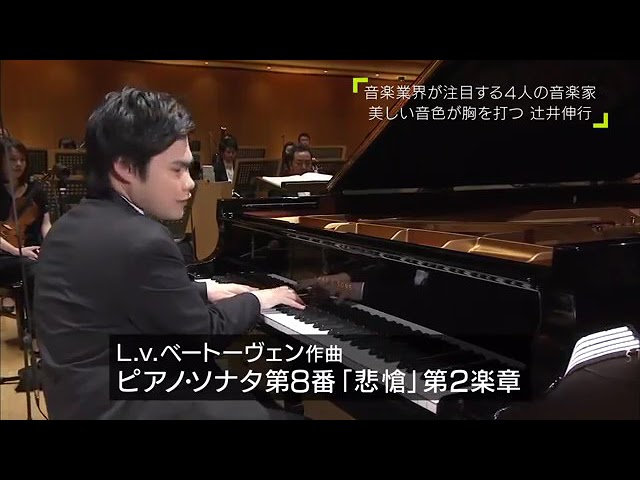
Beethoven’s Piano Sonata No.
8 “Pathétique” is a representative work from his early piano compositions.
Among its movements, the second is often said to be one of the most beautiful melodies Beethoven ever wrote and has been used frequently as incidental music in films and television dramas.
Although the melody is simple and its range is not particularly wide, the other parts have a rich texture, so if you don’t carefully listen for balance while playing, the melodic line tends to get buried.
Aim to play gently, keeping in mind the gracefully flowing, unhurried melody that warmly envelops the listener’s heart, supported by the weighty harmonies beneath it.
The Confectionery World, No. 14: “Demon Arare”Yuyama Akira

This is a short piece included on the album “The World of Sweets,” notable for its glittering, hard-edged piano sound.
Composed in 1973, the work creates a highly original sound world that brilliantly fuses Japanese and Western elements within a brief span of 1 minute and 25 seconds.
It opens in A minor with a 4/4 meter, achieving a hard, springy sonority through skillful use of dissonance and staccato.
With three-voice textures, complex rhythms, and thematic variations, it combines performance difficulty with strong appeal.
Frequently performed at recitals and competitions, it is cherished as a piece that tests expressive ability.
Highly recommended for those seeking fresh facets of classical music, it makes an effective closer for a program.
Suite bergamasque, No. 3: Clair de LuneClaude Debussy

Claude Debussy’s masterpiece, “Suite bergamasque, No.
3: Clair de Lune.” To be blunt, it’s not a piece beginners can handle.
It can even be considered advanced.
In terms of difficulty, it’s about the same level as Czerny’s 40 Studies.
The core challenge lies in dynamic control, but the hardest section is the latter part where the chords stack up.
For those who struggle with octaves, it may be a tough piece.
That said, the other sections are about the same difficulty as Czerny’s 30 Studies, so intermediate players with larger hands may find it relatively easy.

Amazing GraceSakkyokusha fumei

Amazing Grace is known for its moving, heart-touching melody.
Many people likely still remember Minako Honda’s crystal-clear voice singing it.
With a title meaning “God’s wondrous grace,” the song is originally a hymn with lyrics by the English clergyman John Newton.
In the United States, it is cherished as a “second national anthem,” and in Japan it is widely used in films and TV dramas.
Because it consists of a simple 16-bar melody repeated, aim for an expressive performance by varying dynamics, phrasing, and arrangement.