

[Intermediate Level] Cool Piano Pieces You Can Play [Great for Recitals Too]


You’ve moved beyond the beginner stage, but you still need a bit more experience to tackle advanced pieces… This time, we’ve gathered a cool selection of pieces that are perfect for anyone looking for intermediate-level piano music.
From delicate tones to powerful resonance, from lyrical moods to lively vibes—the expressive range of the piano is limitless!
We’re excited to introduce wonderful pieces that let you fully savor the instrument’s charm.
Alongside classic staples, we’ve included a wide variety of selections such as film music and pop tunes.
These pieces are all great choices for recitals, so if you’re unsure what to work on next, be sure to check them out!
- [Intermediate Level] A curated selection of piano masterpieces featuring strikingly brilliant melodies!
- [For Intermediate Players] Challenge Yourself! Recommended Masterpieces That Shine at Piano Recitals
- It’s so cool if you can play these on the piano! A selection of irresistibly charming masterpieces.
- [For Elementary School Students] Brilliant, Showy Masterpieces That Sound Impressive at Piano Recitals
- [For Adults] Recommended for Piano Recitals! A Curated Selection of Impressively Sounding Masterpieces
- [Piano Recital] Perfect Pieces for Middle Schoolers! A Curated Selection of Impressive, Audience-Pleasing Works
- Piano Masterpieces: Surprisingly Easy Despite Sounding Difficult!? A Curated Selection Perfect for Recitals
- [Intermediate] Recommended Piano Duets | A Curated Selection of Cool and Dazzling Pieces
- [Piano Recital] Recommended for Boys! A Curated Selection of Cool, Impressive, and Popular Pieces
- Beginner to Intermediate: Chopin pieces with relatively low difficulty. Recommended works by Chopin.
- [For Advanced Players] A Curated Selection of Classical Masterpieces to Tackle at Piano Recitals
- [For Piano Recitals] Simple yet Cool Classical Pieces
- [Classical Music] All pieces under 3 minutes! A collection of short and cool piano pieces
[Intermediate Level] Cool Piano Pieces You Can Play [Also Recommended for Recitals] (31–40)
Tarantella from ‘Album for the Young’William Gillock

William Gillock’s “Tarantella” is a piece beloved by many piano learners for its lively rhythm and striking melody.
While it requires keeping a precise beat and producing even, well-shaped notes, its overall difficulty is not very high, making it approachable even for beginner children.
Characterized by its distinctive 6/8 meter, it’s important to feel the off-beats and maintain forward motion without letting the flow stall.
Pay attention to fingering in practice as well, so you can play cleanly without notes tumbling.
Impromptu FP 176 No. 15 in C minor “In Praise of Édith Piaf”Francis Poulenc
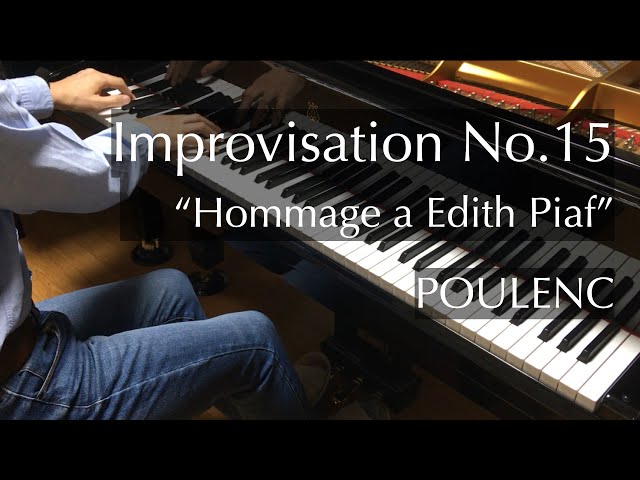
Among the 15 Piano Improvisations by French composer Francis Poulenc, this piece is especially beloved for its sweet, bittersweet atmosphere.
As its title suggests, it is dedicated to Édith Piaf, the chanson singer who remains a national icon in France, and its main theme draws on the motif of the chanson classic “Autumn Leaves.” To convey the Parisian mood of the piece, careful attention to rubato and dynamics is essential.
Listening to actual chansons and studying ways to shape the tempo may be particularly helpful.
Two Rhapsodies, Op. 79 No. 2Johannes Brahms

A wonderful choice for intermediate pianists is Johannes Brahms’s Two Rhapsodies, Op.
79 No.
2.
While employing chords and octaves, it is known as a piece that makes it easy to gain a deep understanding of its harmony and melody.
Easy to perform and resonant for listeners, this work also reduces the burden of sight-reading, allowing you to balance challenge with a sense of achievement.
If you’re considering a recital performance, this powerful yet melodic piece will undoubtedly enrich your piano journey.
Waltz No. 1 in E-flat major, Op. 83Durand

A dazzling waltz by the French composer Durand, highly popular as a recital piece! After an opening filled with a stream of fine notes that evoke a shimmering effect, the mood shifts from an elegant yet powerful atmosphere to a sudden, wistful melancholy, before the bright music returns.
In the sumptuous finale, try to play through with a brilliant, piercing sound without ever relaxing the tension.
Although the piece contains many repetitions, its natural contrasts in pacing keep listeners engaged, making it a highly effective, stage-worthy work that truly shines in performance.

10 Pieces, Op. 12: No. 7, Prelude “The Harp”Sergei Prokofiev

An early work by Sergei Prokofiev, one of the defining composers of the 20th century.
It’s a captivating piece where delicate sonorities coexist with power.
Though only about two minutes long, it showcases Prokofiev’s characteristic bold harmonies and rhythmic complexity.
Written in C major, the piece has a fantastical atmosphere that evokes the elegant resonance of the harp.
Composed during his student years at the St.
Petersburg Conservatory, it premiered in Moscow in 1914.
Recommended for intermediate players or anyone looking to try something a little different at a recital!
[Intermediate Level] Cool Piano Pieces You Can Play [Also Recommended for Recitals] (41–50)
Liebesträume No. 3Franz Liszt

The piano pieces by Franz Liszt, a leading composer of the Romantic era, are known for their rich emotional expression and virtuosic elements.
This work is no exception: it is one of a suite of three pieces that portray different forms of love.
Originally composed as a song, it was later arranged for solo piano.
The beautiful sonic world woven from delicate melodies and passionate sonorities moves the listener’s heart.
Depicting both the fragility and depth of love, this piece is a wonderful choice for intermediate players, fully showcasing the piano’s expressive potential.
It’s also a popular selection for recitals—why not give it a try?
Final Fantasy VII Piano Collections “One-Winged Angel”Uematsu Nobuo

A piano arrangement of the masterful final battle theme—friendly and approachable yet imbued with grandeur—returns with overwhelming quality.
Also used in the Sephiroth battle of the film FINAL FANTASY VII ADVENT CHILDREN, created with game CG techniques, this piece fuses classical and rock in an innovative style, successfully rendering the majestic sound of choir and orchestra on a single piano.
Without losing the atmosphere of the original released in 1997, it becomes an excellent arrangement that adds the piano’s unique delicacy and power.
While by no means easy to play, it’s a piece that lets you fully showcase dynamic expressiveness and dazzling technique.
It’s perfect not only for boys who want to perform something cool at a recital, but also for skilled players looking to create a spotlight moment that makes the most of their technique.