

[Japanese-style BGM] Beautiful tones woven from Japanese tradition

Welcome to a new musical world where the spirit of Wa meets the breath of the modern era.
The shamisen’s powerful tones, the koto’s delicate melodies, the taiko’s resonant depths—Wafu BGM woven from tradition and innovation reminds us of our pride as Japanese.
In this article, we’ve carefully selected BGM brimming with the charm of Japan.
Whether you want to focus on work or study, or calm your mind, Japan’s beautiful sounds will accompany your moments.
With exhilarating rhythms and the exquisite harmony of traditional instruments, why not enrich your everyday life with vibrant color?
- [Japan] A collection of J-pop with a traditional Japanese (wa) vibe and Japanese-style taste
- A bright, Japanese-style song. A roundup of J-POP with a traditional Japanese flair.
- The Spirit of Japan: A Collection of Famous and Popular Shamisen Pieces
- Masterpieces of Japanese instrumental music. Recommended instrumental tracks.
- [Japanese-style Piano Pieces] A selection of recommended works with a pleasantly Japanese flavor
- Nostalgic yet new! Hit songs from the Showa era you’ll want to use as BGM
- [I Want Healing] Songs That Bring a Sense of Calm: Heartwarming Masterpieces of Japanese Music
- [Classical] Classical music BGM. Recommended classical music as background music for work and study.
- Stylish songs that are popular and recommended for vlog background music
- Recommended BGM for YouTube Shorts! Popular songs released in the Reiwa era
- Gently soaking into a weary heart... Healing songs released in the Reiwa era
- A nostalgic song—a timeless classic that somehow feels familiar and touches the heart.
- Gets you pumped! A curated selection of popular and classic Japanese songs perfect as background music for work
[Japanese-style BGM] Beautiful Tones Woven by Japanese Tradition (61–70)
From Zatoichi, FestivoOrijinaru Saundo Torakku

As you’d expect from Keiichi Suzuki’s sound, even as it tightens up the handclaps—which in Japanese folk/pop music often lead to a somewhat slack kind of buildup—it still makes sure that the slight moments of delay in the rhythm clearly assert a distinctly Japanese tone.
It never slips into rhythms of other parts of Asia or the Pacific.
A truly skilled person is impressive both in the whole and in the details; even if you isolate just one fragment, it’s still outstanding.
Please enjoy this convincing, well-crafted track…
medaka (Japanese rice fish)Senba Kiyohiko to Haniwa Ōrusutāzu

A big band on the scale of an orchestra, formed by percussionist Kiyohiko Senba—who comes from a Japanese music background—and centered around traditional Japanese instruments.
Many top-tier musicians take part as well.
Listening on headphones is an incredible thrill—the layered depth of the traditional instruments’ sound surges right up to you!
Tsugaru Shamisen / Jonkara Improvisational StrummingYoshida Brothers · Hiromitsu Agatsuma · Shinichi Kinoshita
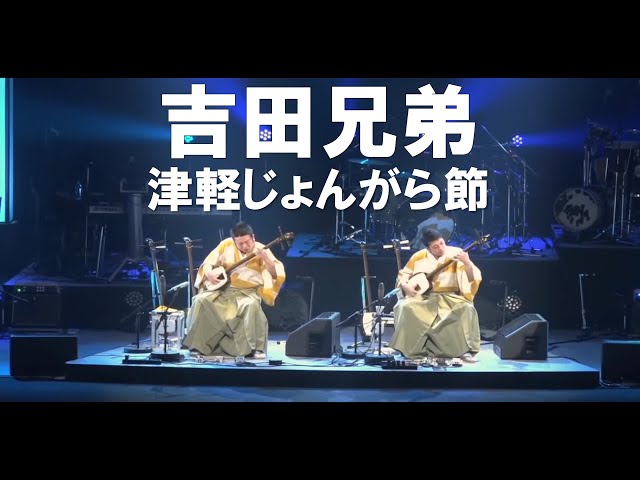
In the Hokkaido–Tohoku area, when you hear the names the Yoshida Brothers, Hiromitsu Agatsuma, and Shinichi Kinoshita, you think of incredible shamisen performances and some seriously cool guys.
Beyond their collaborations with various artists, TV commercials, and other widely seen works, their classical performances are on a whole different level—also unbelievably cool.
The playing is truly outstanding…
the kind of performance that makes listeners instinctively sit up straight in seiza.
Please enjoy these magnificent performances.
Desert of the MoonFujiwara Dōzan

The world of wa as evoked by Dozan Fujiwara’s shakuhachi.
Its rich, resonant tones paint a dreamlike scene reminiscent of moonlight over the desert.
Released in February 2009, this piece reflects Fujiwara’s pursuit of new possibilities for the shakuhachi.
Blending tradition and innovation, it is part of the “Toki (Seasons)” series themed on Japan’s four seasons, and it received the Excellence Award at the Agency for Cultural Affairs Arts Festival.
With its calm atmosphere, it’s perfect for listening alone on a quiet night.
Shamisen: Kineie Nami (Kineie Nanami); Shakuhachi/Flute/Nohkan: Takei Makoto; Koto: Yamada AkemiShamisen, shakuhachi (fue), koto de Kurumiwari Ningyō o hiite mita

Another entry in our “veteran masters of Japanese music in full-on mode” series.
Kineya Nanaomi has taken part in numerous recordings and boldly tackles Russian music and classical pieces as well.
In recent years, they’ve also become hugely popular for performances of Vocaloid songs.
This rendition, too, lets you feel a fresh allure in the melodies of The Nutcracker.
Merry Christmas, Mr. Lawrence performed with traditional Japanese instrumentsMitsuzuka Yukihiko, Ono Mihoko

A track from the album “ESSENCE Again” by tōTONEon (Tōne).
The duo consists of shakuhachi performer Yukihiko Mitsuzuka and koto player Mihoko Ono, whose instrument has thirteen strings.
While Ryuichi Sakamoto’s original composition already incorporated a Japanese sensibility, the duo’s emotive performance brings it out even more vividly.
Tsugaru Jongara-bushiAgatsuma Hiromitsu

Hirokazu Agatsuma, who often collaborates with top-tier artists, also has many fans around the world—including among professional players of various instruments—thanks to his exceptional technique.
This piece is the same as earlier: the classical Tsugaru Jongara-bushi.
When he plays, it’s remarkable how everything comes alive, as if the sound were reaching up into the sky.
Please enjoy a performance that embodies the techniques shared by the famed shamisen masters of the past who have gone down in history.