

[Japanese-style BGM] Beautiful tones woven from Japanese tradition

Welcome to a new musical world where the spirit of Wa meets the breath of the modern era.
The shamisen’s powerful tones, the koto’s delicate melodies, the taiko’s resonant depths—Wafu BGM woven from tradition and innovation reminds us of our pride as Japanese.
In this article, we’ve carefully selected BGM brimming with the charm of Japan.
Whether you want to focus on work or study, or calm your mind, Japan’s beautiful sounds will accompany your moments.
With exhilarating rhythms and the exquisite harmony of traditional instruments, why not enrich your everyday life with vibrant color?
- [Japan] A collection of J-pop with a traditional Japanese (wa) vibe and Japanese-style taste
- A bright, Japanese-style song. A roundup of J-POP with a traditional Japanese flair.
- The Spirit of Japan: A Collection of Famous and Popular Shamisen Pieces
- Masterpieces of Japanese instrumental music. Recommended instrumental tracks.
- [Japanese-style Piano Pieces] A selection of recommended works with a pleasantly Japanese flavor
- Nostalgic yet new! Hit songs from the Showa era you’ll want to use as BGM
- [I Want Healing] Songs That Bring a Sense of Calm: Heartwarming Masterpieces of Japanese Music
- [Classical] Classical music BGM. Recommended classical music as background music for work and study.
- Stylish songs that are popular and recommended for vlog background music
- Recommended BGM for YouTube Shorts! Popular songs released in the Reiwa era
- Gently soaking into a weary heart... Healing songs released in the Reiwa era
- A nostalgic song—a timeless classic that somehow feels familiar and touches the heart.
- Gets you pumped! A curated selection of popular and classic Japanese songs perfect as background music for work
[Japanese-style BGM] Beautiful Tones Woven by Japanese Tradition (41–50)
Isn’t she lovelyŌhira Mitsumi, hoka

An experimental session exploring what happens when the koto is set to jazz music.
It seems that acoustic jazz accompaniment fits surprisingly well.
Koto by Mitsumi Ohira, guitar by Koshiro Iwaya, and bass by Hideyuki Hashimoto.
[Japanese-style BGM] Beautiful tones woven by Japanese tradition (51–60)
raccoon dogIchikawa Seizan

When you think of the shamisen, many people probably picture the Tsugaru shamisen.
But in fact, the mainstream tradition is the hosozao, which has been passed down since the Edo period.
This video features a nagauta piece performed on the shamisen.
Its brisk playing style and intriguing melodic lines can hold their own against the Tsugaru shamisen.
Shamisen & Tap DanceShimura Ken & Biito Takeshi

Recently, Ken Shimura made headlines by collaborating with Tokyo Ska Paradise Orchestra in a commercial, showing off his Tsugaru shamisen skills.
The piece he plays in this video seems like an improvised tune by Shimura, with his deft pick work on display, and Beat Takeshi dancing beside him, tapping out a strong rhythm.
What a lavish collaboration.
Wadaiko + drum performance [Leap Forward]Garyū
![Wadaiko + drum performance [Leap Forward]Garyū](https://i.ytimg.com/vi/7aUbuFMhge8/hqdefault.jpg)
GARYU is a unit formed in Fukuyama and Fuchu, Hiroshima Prefecture, with the goal of creating new music unconstrained by conventional genres through the fusion of Japanese taiko and drum set.
In addition to stage performances at events, they are extremely popular for band collaborations such as student wind ensembles.
Their crisp, exhilarating performances are especially captivating.
Wagaku: Heart Sutra PopKineya Nanami Shachu with Semimaru P

A very pop-styled take on the Heart Sutra in traditional Japanese music.
I’ve relearned it many times in my life, but, as you’d expect, it never really sticks—after all, most of it reads like dense classical Chinese.
With something this pop, though, it feels like it would really stay in both your head and your heart! It’s the kind of track that makes you want to use it for a sunny-day drive—the scripture and the sound wash your heart clean in double measure.
It’s a piece featuring Kineya Nami (Kineya Nanami), who earlier delivered outstanding shamisen performance in The Nutcracker.
Also, don’t miss how they gradually become more character-like in the latter half of the video!
SHI-BU-KIHayashi Ei & Kinoshita Shin’ichi
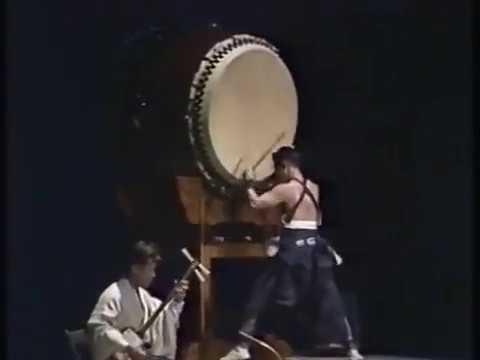
A collaborative piece by a master of Japanese taiko and a master of shamisen.
Even through a YouTube video, you can sense the extraordinary fusion of sound at an exceptionally high level, completely different from an ordinary traditional Japanese ensemble.
For anyone who thinks taiko and shamisen are simply instruments overflowing with powerful beats, this track will amaze you with its unmistakable technical sophistication.
SenbonzakuraBiwa ensō

There are many YouTube videos covering Hatsune Miku’s signature song “Senbonzakura” with traditional Japanese instruments.
Among them, this video using the biwa is particularly rare.
Not only is the instrument itself uncommon, but the performance technique is outstanding as well.
Do you know the name of the performer?