

[Japanese-style BGM] Beautiful tones woven from Japanese tradition

Welcome to a new musical world where the spirit of Wa meets the breath of the modern era.
The shamisen’s powerful tones, the koto’s delicate melodies, the taiko’s resonant depths—Wafu BGM woven from tradition and innovation reminds us of our pride as Japanese.
In this article, we’ve carefully selected BGM brimming with the charm of Japan.
Whether you want to focus on work or study, or calm your mind, Japan’s beautiful sounds will accompany your moments.
With exhilarating rhythms and the exquisite harmony of traditional instruments, why not enrich your everyday life with vibrant color?
- [Japan] A collection of J-pop with a traditional Japanese (wa) vibe and Japanese-style taste
- A bright, Japanese-style song. A roundup of J-POP with a traditional Japanese flair.
- The Spirit of Japan: A Collection of Famous and Popular Shamisen Pieces
- Masterpieces of Japanese instrumental music. Recommended instrumental tracks.
- [Japanese-style Piano Pieces] A selection of recommended works with a pleasantly Japanese flavor
- Nostalgic yet new! Hit songs from the Showa era you’ll want to use as BGM
- [I Want Healing] Songs That Bring a Sense of Calm: Heartwarming Masterpieces of Japanese Music
- [Classical] Classical music BGM. Recommended classical music as background music for work and study.
- Stylish songs that are popular and recommended for vlog background music
- Recommended BGM for YouTube Shorts! Popular songs released in the Reiwa era
- Gently soaking into a weary heart... Healing songs released in the Reiwa era
- A nostalgic song—a timeless classic that somehow feels familiar and touches the heart.
- Gets you pumped! A curated selection of popular and classic Japanese songs perfect as background music for work
[Japanese-style BGM] Beautiful tones woven by Japanese tradition (51–60)
A serious Lupin the Third with traditional Japanese instruments!Mahora wagakki ansanburu

When you think of the Lupin the Third theme, many people probably recall the hard-boiled brass sound of a big band arrangement.
This version doesn’t just swap in traditional Japanese instruments; it also sprinkles in deliberate rhythmic displacements while keeping a decent sense of groove.
In the best possible way, it feels Edo-esque—gently drawing you into a laid-back wa vibe—with a pleasing, easygoing rhythm.
The performance is solid, and the arrangement is outstanding!
I tried playing “Roku Chōnen to Ichiya Monogatari” (Six Trillion Years and One Night Story)Koto Manon
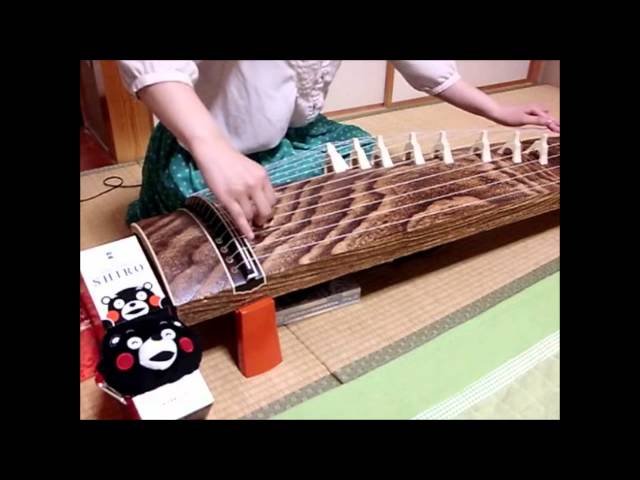
The famous Vocaloid song “Roku Chōnen to Ichiya Monogatari” can now be found performed in many different styles by various artists on video platforms everywhere, including overseas.
Manon performs a gently rendered version on the koto.
That said, it’s a piece you’ll want to watch on video to fully appreciate—especially the suppleness with which she keeps up with the intense melody.
The famous Vocaloid song “Roku Chōnen to Ichiya Monogatari” can now be found performed in many different styles by various artists on video platforms everywhere, including overseas.
Manon performs a gently rendered version on the koto.
That said, it’s a piece you’ll want to watch on video to fully appreciate—especially the suppleness with which she keeps up with the intense melody.
Ecchu Owara BushiWakabayashi Michiko

The kokyū is an instrument shaped like a shamisen and played with a bow like a violin.
It has existed in Japan since ancient times, but is often mistaken for the Chinese erhu because of its timbre and other similarities.
Its piercing, resonant sound carries a tinge of melancholy, leaving a deep impression on the listener.
Nozakirakugo debayashi

The entrance music used by the rakugo master known as a Shōwa-era great, the Eighth Katsura Bunraku.
In Osaka, it was long used by the Third Katsura Harudanji, who passed away in 2016.
Because masters from both East and West used it, it is now a highly respected piece of entrance music in the rakugo world.
Originally, it was background music from the Gidayū-bushi tradition.
[Japanese-style BGM] Beautiful Tones Woven by Japanese Tradition (61–70)
Gagaku Arrangement of ‘Princess Mononoke’Gakūkai

Gagaku is court music that uses transverse flutes such as the shō and the hichiriki (nōkan).
It conjures an image of a highly refined world, doesn’t it? In this video, however, there’s a unique twist: the theme song from the film Princess Mononoke is performed in a gagaku style arrangement.
Bittersweet Japanese-style BGM

A calm, gently flowing medley of Japanese-style music soothes the heart.
This nearly hour-and-a-half-long piece, centered on computer music, feels as if it captures the changing seasons of Japan.
The delicate tones of traditional instruments blend beautifully with modern sounds.
It’s perfect as background music when you’re short on sleep or want to unwind and forget the day’s fatigue.
Why not let the pleasant timbres envelop you and spend some unhurried time at your own pace?
Japanese-style EDM compilationOmunibasu (“Koto” by Clozee… )

Have you ever listened to EDM at a club, felt a distinctly Japanese vibe in some tracks, then gone looking for them only to have trouble finding the exact song you wanted? This is a 13-track collection featuring items like Maturbo’s “Warrior” and Aiobahn’s “Towa no Utage.” It’s a handy YouTube reference for those “What was that Japanese-style EDM track again?” moments.