

[Warabe-uta] Beloved Classic Songs Passed Down Through Generations


Nursery rhymes that have been passed down in Japan since long ago.
There are many types of nursery rhymes, including drawing songs, counting songs, and play songs.
Many of you probably sang and played games like Kagome Kagome and Hana Ichi Monme at least once when you were children.
In this article, we introduce popular nursery rhymes.
If you want to remember the nursery rhymes you sang as a child or enjoy them with your kids, be sure to give them a listen!
- Nostalgic Children’s Songs, Folk Songs, and Nursery Rhymes: The Heart of Japan Passed Down Through Song
- Japanese counting songs: nostalgic temari (handball) songs and children’s folk songs
- [Hand Play] Popular with kids! A collection of trendy hand-play songs and nostalgic traditional children’s songs
- Lullabies: children's songs, folk songs, and nursery rhymes. Nostalgic songs for putting children to sleep.
- Snake Song: Children's song, nursery rhyme, and hand-play song
- Beanbag song: a playable children's folk song
- Collection of winter nursery rhymes, folk songs, and children's songs. Includes fun winter hand-play songs too.
- Ranking of Popular Children's Songs [2026]
- Actually scary nursery rhymes. Children's songs that give you the chills once you understand their meaning
- [Minna no Uta] Beloved Across Generations: Nostalgic Classics and Popular Songs
- Nursery rhymes, folk songs, and children's songs about animals
- Folk songs, children’s songs, and nursery rhymes of Kumamoto: the enduring spirit of our hometown passed down through song.
- [February Songs] Introducing children's songs, folk songs, nursery rhymes, and hand-play songs about Setsubun and winter!
[Warabe-uta] Beloved Nostalgic Songs Passed Down Through Generations (31–40)
Brr, it’s so cold.

“Oosamu Kosamu” is a song with a catchy phrase that every generation has heard at least once.
It can also be sung as a round partway through, making it fun for groups.
Singing it with friends or classmates doubles the enjoyment.
It’s a great pick for kids who love to sing.
It works solo, with friends, or with family—any way you like.
Give singing it as a round a try with everyone.
And as the title suggests, it’s a winter song, so it’s perfect for the colder months.

pine coneSakushi: Hirota Takao / Sakkyoku: Kobayashi Tsuyae

This is an autumn children’s song that depicts a charming scene: a pine cone tumbles down a high mountain, and a little monkey picks it up and eats it.
The lyrics were written in 1936 by Takao Hirota, who was a first-grade elementary school student at the time, and the music was composed by Tsyae Kobayashi, a music teacher.
From the late 1950s to the 1960s, the song was included on King Records’ album “Songs for Kindergarten.” With just a single, simple, and easy-to-remember verse, it has long been loved as a seasonal song in nurseries and kindergartens.
It’s also recommended to add simple choreography and enjoy it as a hand-play song! Singing while moving your body will bring back fond memories of childhood fun playing in autumn nature.
Please let me pass.

When people hear Tōryanse, many probably find themselves humming along without thinking.
That’s how familiar this song is to Japanese people.
Many of you may have also played the game that goes with it.
You’ve likely seen the scene at school where friends form a “bridge” with their arms and others pass underneath.
Playing this game can be a way to make friends at school.
Even very young children can learn it quickly, so invite your classmates and give it a try.
It’s also fun to play not just at school, but with the whole family at home.
There once was a stick.
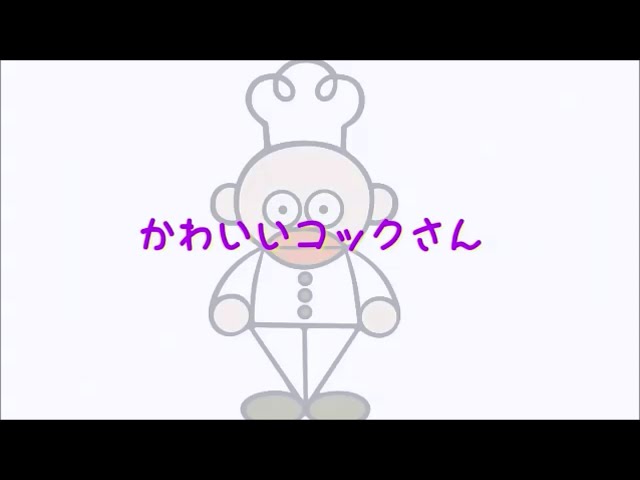
When it comes to classic drawing songs, this is the one.
If you’re Japanese, you’ve probably drawn along to it at least once.
It’s exciting when the cute little chef turns out just like the song says, isn’t it? Even if it doesn’t come out perfectly, everyone’s personality shows through, which is fun too.
I think it would be interesting to use this song as inspiration to make your own drawing song.
Some people have probably done just that.
First, master this song and try drawing lots of cute little chefs.
Singing it with friends is fun as well.
TulipSakushi: Kondo Miyako / Sakkyoku: Inoue Takeshi

This is one of Japan’s most beloved children’s songs, depicting a beautiful spring scene of red, white, and yellow tulips blooming in a row.
Miyako Kondo’s lyrics carry a warm message that recognizes diversity—“every flower has its own beauty”—and, together with Takeshi Inoue’s friendly melody, make it a tune that people of all ages can hum naturally.
Widely cherished in kindergarten and elementary school music classes, it was selected in 2006 for the list of 100 Best Japanese Songs.
It’s the perfect piece for when you want to feel the arrival of spring or enjoy singing with children!