

[Playable from lower grades] Japanese language games and activities

In elementary school language arts, there’s so much to learn—hiragana, katakana, kanji, and more.
Kids can get overwhelmed by how much they have to memorize and start to dislike studying… but before that happens!
How about easing their resistance with Japanese language games that are both fun and educational, so they can learn through play?
We’re introducing plenty of language games, activities, and apps focused on kanji and characters.
Some games are great for parents and children to enjoy together, so we also recommend trying them on weekends!
- Learn by Playing! Recommended Games with a Kanji Theme
- [Rec] Interesting! A roundup of wordplay games
- Fun quizzes for elementary school kids: a collection of questions everyone can enjoy together
- [Easy] Quizzes That Elementary School Students Can Solve! A Collection to Nurture Wisdom
- [For Elementary School Students] Cipher Quiz: Fun Puzzle Riddles
- [For Elementary School Students] Recommended Riddle Collection
- A game where you can learn the multiplication table while playing
- [Elementary School] Quick and Easy! Indoor Recreational Activities Perfect for Lower Grades
- Fun activities for junior high school students. Recreation games.
- [For Elementary School Students] A Collection of Games and Activities You Can Enjoy on Zoom
- Easy Riddles for Elementary School Students
- [Play Right Away!] Exciting Recreation Games Recommended for Elementary School Students
- [For Kids] Fun Either Way: A Collection of Rock-Paper-Scissors Game Ideas
[Playable from Lower Grades] Japanese Language Games and Activities (11–20)
Two-letter Shiritori
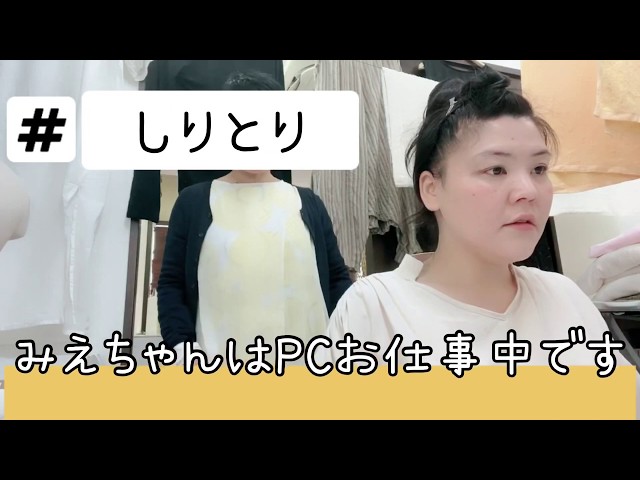
Shiritori is a game everyone has played: you take the last character of a word and continue with a word that starts with that character.
Because it’s such a familiar game, one of its features is that you can think of many variations.
In 2-character shiritori, you proceed by taking the last two characters, continuing as in going from “shiritori” to “toriniku.” You need to decide how to handle the character “n”: do you lose if it’s the final character, or if it appears as the second-to-last character? Set the rule according to each version you play.

Essay of the Bear in the Forest
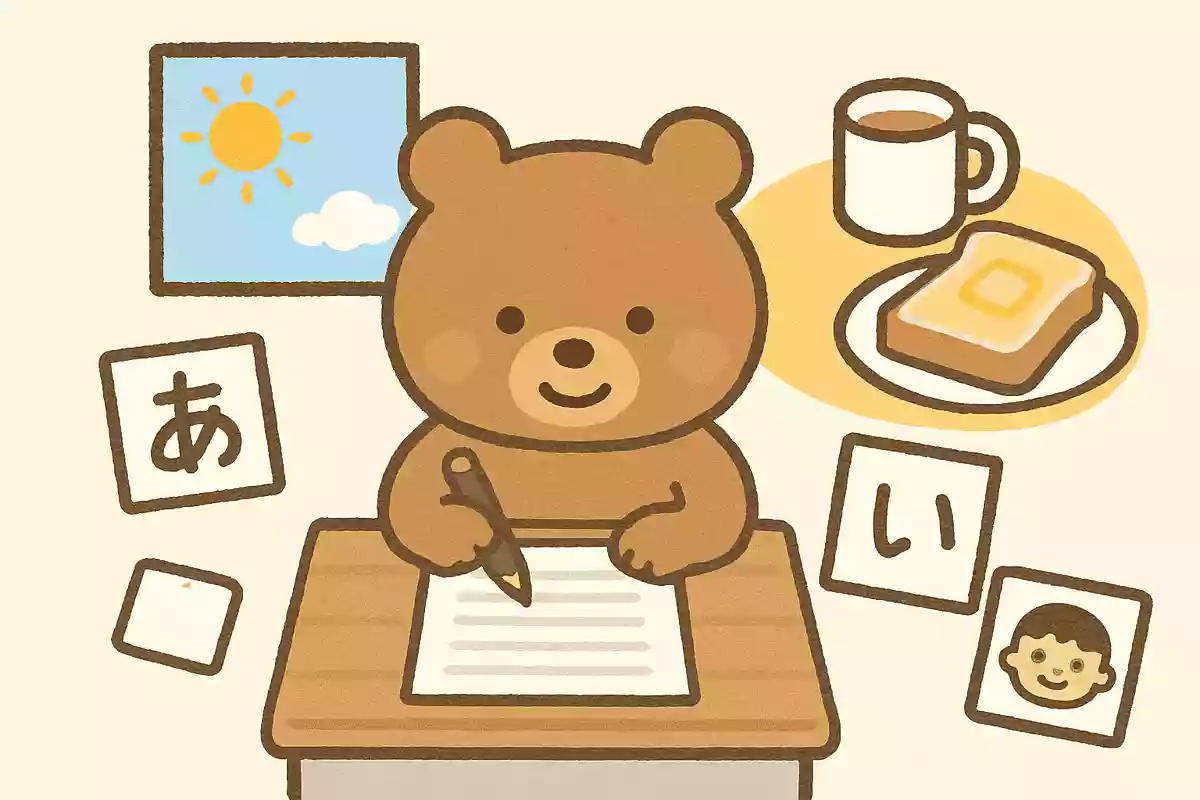
This is a game for exploring different ways of expression using the children’s song “The Bear in the Forest” as the theme.
It presents two different passages based on the same subject and asks what impressions each one gives.
By having players consider which parts of the text created those impressions, it teaches the effects of different writing styles.
If you then ask them to write a passage that matches a desired mood, it may also convey how challenging that can be.
Combined with reading aloud, it seems likely to spark broader reflection on expression as a whole.
Kanji Hide-and-Seek
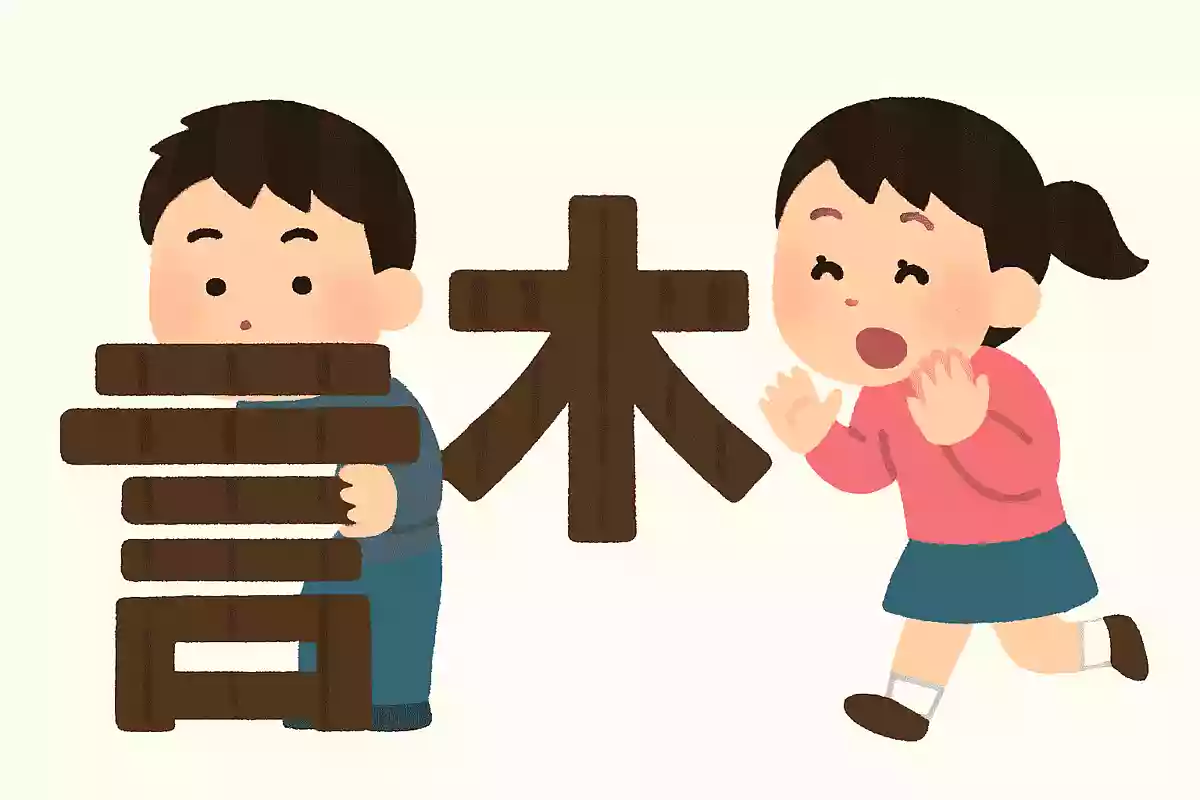
This is a quiz that uses the components of kanji characters.
Since there isn’t just one correct answer, it can also serve as a conversation starter among participants.
For example, if you have a square divided into four sections like the character 田, people might answer with kanji such as 口 or 日 that could be hidden within it.
In this way, participants think of and share kanji that are hidden inside shapes.
When something appears that looks slightly different from an actual kanji, the exchange of opinions can heat up and become lively.
If you use kanji that are not simple shapes, it also prompts participants to think about the parts used in kanji and consider how the characters are formed.
Elementary School Handwritten Kanji Drill

This app lets you learn 1,026 kanji taught in elementary school.
It’s a simple app that focuses on writing kanji.
You can trace with your finger, but using a stylus will likely make your handwriting more accurate.
It progresses in a format where questions similar to those in kanji workbooks appear, and you write the corresponding kanji; answers are judged immediately, which is a key feature.
The app evaluates and teaches the important aspects of writing—such as character balance and stroke order—accurately and clearly.
Idiom Karuta

An idiom is a set phrase used by convention, characterized by distinctive turns of expression.
Unlike proverbs, many idioms express ideas through metaphor, and if they aren’t properly understood, conversations can sometimes break down.
This is an attempt to learn idioms through playing karuta.
In addition to the meanings of the idioms, explanations and example sentences are also provided, so when you take a picture card, be sure to think carefully about the meaning of the phrase.
Building on this “Idiom Karuta,” it might also be a good idea to look up similar expressions that aren’t included here.
Kanji Radical Relay
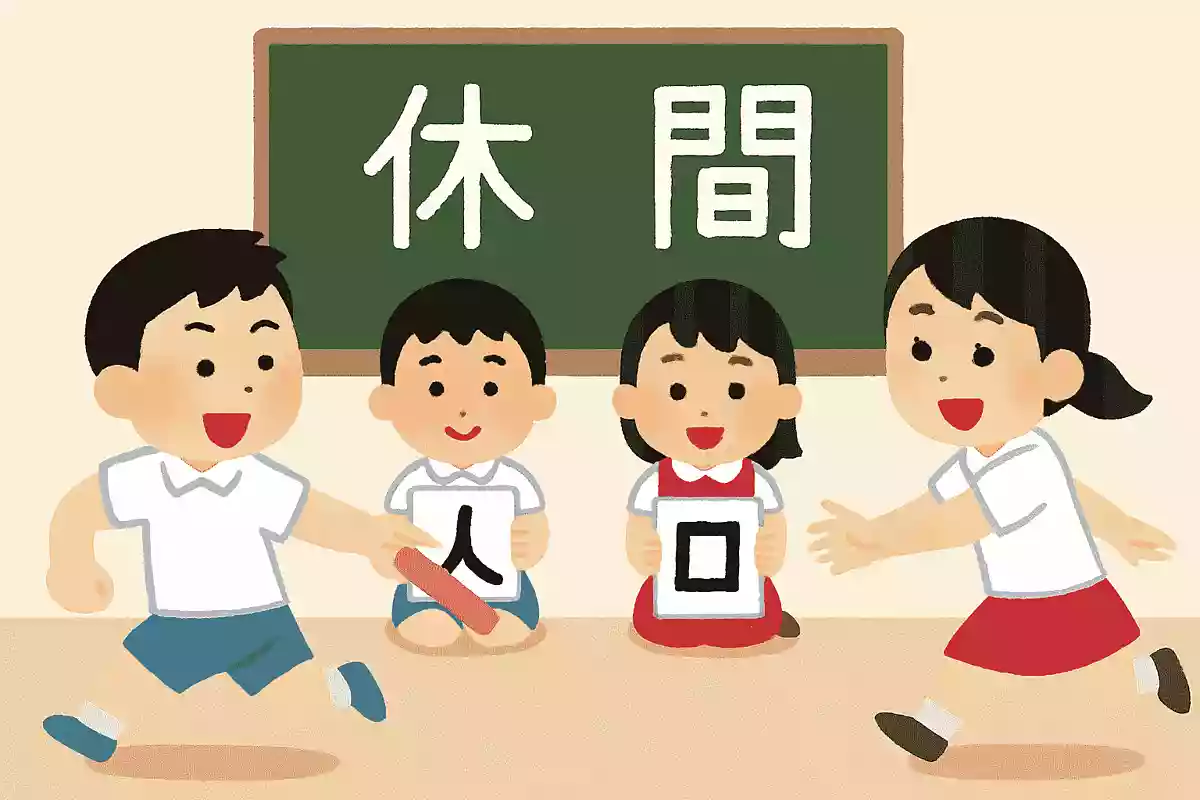
Some kanji have radicals, and those radicals can be related to the meaning of the character.
Here’s a simple game that uses radicals—an important point when learning how kanji are constructed.
A radical is specified, and the goal is to write as many kanji containing that radical as possible within a time limit.
It might work better as a team competition so players can pool their knowledge and improve together.
Since there’s a speed element and handwriting may get sloppy, be strict when awarding points.
[Playable from Lower Grades] Japanese Language Games and Activities (21–30)
Opposite Words Quiz

Let’s recall words we know! Here are some ideas for an opposite-words quiz.
Opposite words are words whose meanings are completely contrary to each other, also known as antonyms.
This time, let’s try a quiz about opposite words.
It might help to tackle it while recalling familiar words.
For example, there’s a question like, “What is the opposite of ‘up’?” presented along with an illustration.
The illustration serves as a hint, so feel free to give it a try.