

[Playable from lower grades] Japanese language games and activities

In elementary school language arts, there’s so much to learn—hiragana, katakana, kanji, and more.
Kids can get overwhelmed by how much they have to memorize and start to dislike studying… but before that happens!
How about easing their resistance with Japanese language games that are both fun and educational, so they can learn through play?
We’re introducing plenty of language games, activities, and apps focused on kanji and characters.
Some games are great for parents and children to enjoy together, so we also recommend trying them on weekends!
- Learn by Playing! Recommended Games with a Kanji Theme
- [Rec] Interesting! A roundup of wordplay games
- Fun quizzes for elementary school kids: a collection of questions everyone can enjoy together
- [Easy] Quizzes That Elementary School Students Can Solve! A Collection to Nurture Wisdom
- [For Elementary School Students] Cipher Quiz: Fun Puzzle Riddles
- [For Elementary School Students] Recommended Riddle Collection
- A game where you can learn the multiplication table while playing
- [Elementary School] Quick and Easy! Indoor Recreational Activities Perfect for Lower Grades
- [For Elementary School Students] A Collection of Games and Activities You Can Enjoy on Zoom
- Easy Riddles for Elementary School Students
- [For Kids] Fun Either Way: A Collection of Rock-Paper-Scissors Game Ideas
- Recommended for upper elementary grades! Exciting indoor recreation and games
- [Children’s Club] Easy and fun indoor games. Exciting party games
[Playable from Lower Grades] Japanese Language Games and Activities (21–30)
Mitsukaruta
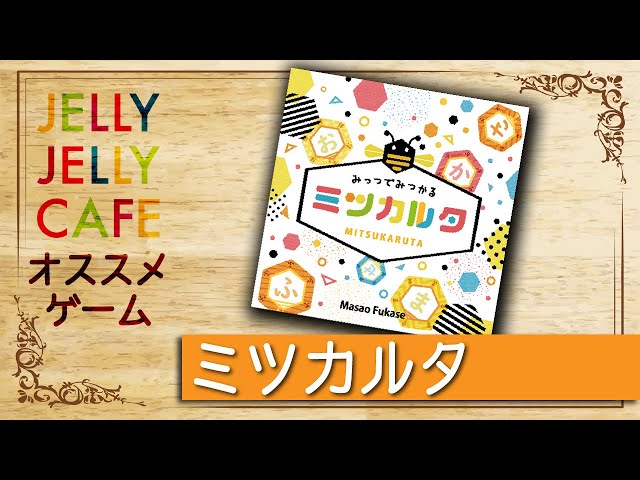
It’s a fun game where your vocabulary decides who wins.
Prepare stacks by placing seven cards, each with one hiragana character, and layering more cards on top to form piles.
Everyone playing draws one card from any of the seven piles, and the game begins.
Use three or more of the visible letters on the piles to come up with a word and say your answer.
It’s also okay to use words that include letters not currently visible on the piles.
You get to keep the cards for the letters you used.
There’s no set turn order—first come, first served.
Keep calling out all the words you know!

Hiragana Collecting Game
https://www.tiktok.com/@cocoskip/video/7286789916544044289Let’s play with 50-sound (hiragana) cards! Here are some ideas for a hiragana-collecting game.
Once you’ve prepared cards or slips of paper with one hiragana character on each, you’re ready to go! Within a time limit, try to make as many words as you can that fit a given theme.
For example, if the theme is “animals,” you can combine characters to form words like い・ぬ (dog) or き・り・ん (giraffe).
It’s helpful to set aside space to place completed words, so it’s easy for kids to understand.
Kanji Quiz for First Graders

Recommended for those who are good at kanji! Let me introduce an idea for a quiz using the kanji learned in first grade.
When you think of quizzes, there are all kinds of categories, right? This time, let’s try a quiz that uses kanji.
Since the questions use kanji learned in first grade, it should be easy to jump in.
For example, the characters “七夕” are shown, and the question asks, “How do you read this?” Of course, there are hints, so if you don’t know the answer, try thinking it through using the hints.
A riddle mainly written in hiragana

Once children start going to elementary school, their range of activities broadens compared to before, and all sorts of things begin to catch their eye.
They learn that a café is a place to drink coffee, that you can even buy a gravestone at a stone shop—things they didn’t understand before suddenly start to make sense, and I’m sure everything they see becomes fascinating and intriguing.
Learning words is just as much fun, so why not try some Hiragana riddles? They’re not only enjoyable but also help with Japanese language study—truly killing two birds with one stone.
Grown-ups, please join in the thinking, too!
Dictation Rock-Paper-Scissors

Kanji practice meets rock-paper-scissors! Try a one-on-one showdown.
First, the two players decide which kanji they’ll write.
Once decided, they play rock-paper-scissors, and the winner writes one stroke of the chosen kanji.
Repeat rock-paper-scissors like this: each time you win, you add another stroke, and the person who completes the kanji faster wins.
Start with kanji that have fewer strokes, and once you’re used to it, try more complex kanji with many strokes! Even children who find memorizing kanji difficult can enjoy practicing while having fun.

Riddles Quiz for Lower Grades
Children learn much of their vocabulary from everyday life.
It’s surprisingly rare for them to go to school and be explicitly taught the things themselves, like “the animal that goes ‘woof-woof’ is a dog” or “the blade you use when cooking is called a kitchen knife.” Children absorb the words they feel they need from daily life and start using them on their own.
So in a sense, being able to understand puns could be considered a kind of “advanced skill” in a child’s world.
For example: “What kind of bump appears when you’re happy?” Of course, the answer is “a lump” (a wordplay in Japanese).
Children realize that they don’t actually get a physical bump from being happy, and that this is a form of wordplay.
This may sound a bit theoretical, but if a child shows interest, it might be a good idea to give them lots of riddles.
Haiku to remember

Let’s learn through animation! Here are some haiku ideas you’ll want to remember.
Haiku has a rich history, and it’s well known that in the Edo period the three great masters of haikai—Kobayashi Issa, Matsuo Bashō, and Yosa Buson—composed remarkable verses.
This time, let’s learn seasonal words (kigo) from famous haiku.
Memorizing well-known haiku will help you discover the types of kigo and how to use them.
In recent years, haiku karuta (card sets) have also been available, so they’re great for anyone who wants to memorize while having fun!
In conclusion
We’ve introduced plenty of language-related activities and games that even lower-grade students can enjoy. When it comes to Japanese language studies, kanji is a big focus, and there are many games for learning kanji. These days, there are also lots of apps that let you study while having fun. We hope kids can overcome any aversion, enjoy learning kanji, and connect that enjoyment to their studies.