

Heartfelt! Inspiring Quotes Left by Great Figures of Japan

Various great figures who built Japan have left behind numerous famous sayings.
These quotes sometimes resonate with people living in the present and can serve as guideposts when moving things forward.
In this article, we introduce inspiring quotes left by those known as great figures of Japan.
We have gathered quotes from a variety of fields, including historical figures, people who supported major corporations, athletes, and entertainers.
Among the quotes we present, you may find a hint that clears your mind.
Be sure to check them out!
- Quotes from great figures that give us the power to live
- Recommended as life tips! A collection of short, memorable quotes from great figures
- A collection of quotes from people of the past: messages from famous military commanders and great figures of the world.
- Just remembering them fills you with courage! Striking quotes that touch the heart from great figures and famous people
- If you know them, they might become beacons that light your life’s path: a collection of memorable quotes.
- Quotes from professional baseball players: words that pierce the heart, filled with effort and passion
- Words I want to make my motto that always inspire me
- Guaranteed to move you! Memorable words by great figures and famous people.
- Short quotes that reach your heart in an instant. Words to encourage you right now.
- Gives you the power to overcome entrance exams! Short quotes by great and famous people.
- Words from famous people that I’d like to adopt as my motto. Inspiring quotes that convey the power of words.
- Short precisely because it sticks in your heart: witty, chuckle-worthy one-liners and quotes
- Short quotes that resonate with the heart. Words that reach you effortlessly.
Resonates with the heart! Memorable quotes left by great figures of Japan (61–70)
Rather than staking my life on sumo, it is within sumo that my very life exists.Kōji Takanohana
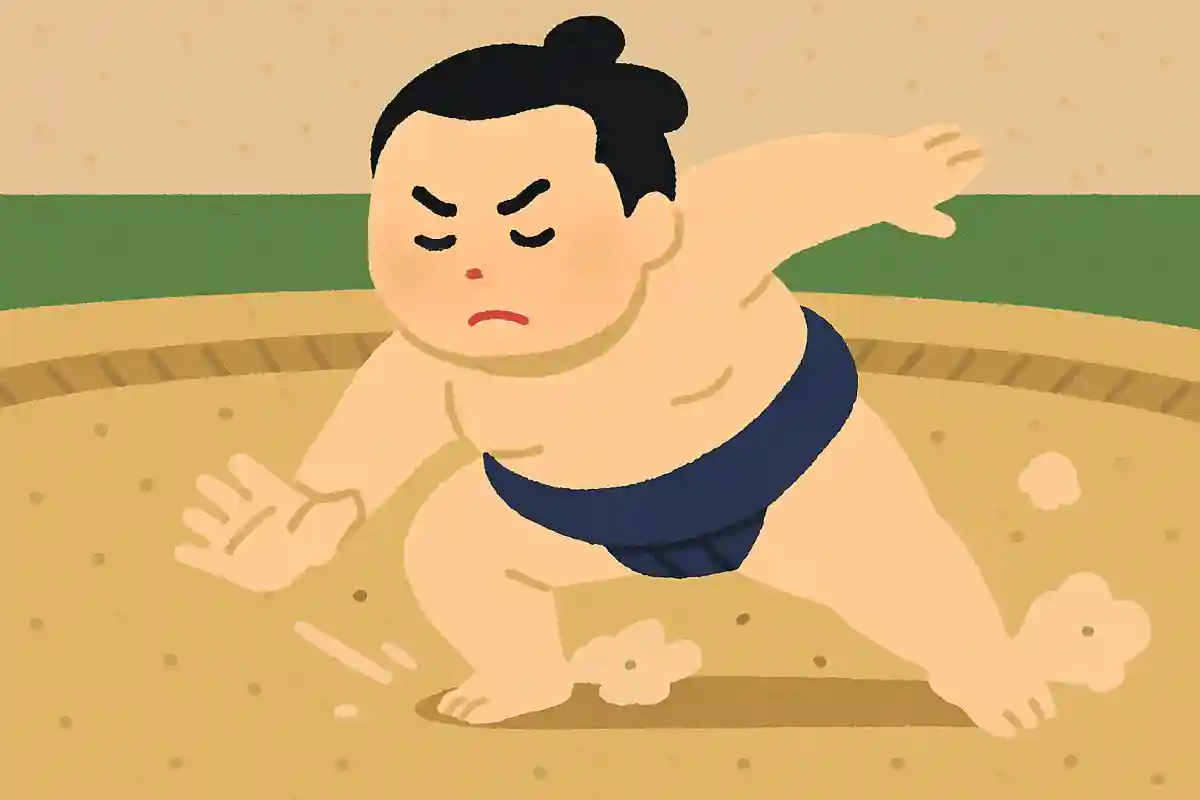
These are words left by Takanohana after he retired and became a stablemaster.
When we see someone working earnestly and giving their all, we may be tempted to say they are “risking their life,” but this quote conveys that, for the person themselves, it isn’t necessarily so.
For him, sumo itself was like life… that’s how closely his life and sumo were intertwined.
These are words that could only come from someone who has felt positive change and joy through sumo.
I, too, would like to find something in life that I can express in this way.

The voices of children without votes and without a voice, the voices of our grandchildren, will surely be heard. We will make sure they are heard.

It expresses a determination that adults will take responsibility for protecting the future of generations who cannot vote yet.
Children and those yet to be born cannot participate directly in politics.
Yet choices about the environment, education, and social security will certainly affect their lives.
That is precisely why those of us living now must serve as their advocates and bring voices for the future into politics.
The message is that politics is not only about “the present self,” but also about caring for “someone in the future.” These words teach us that it is an action taken with the happiness of the next generation in mind.

A professional never makes excuses, no matter what.Chiyonofuji Mitsugu

There may be many people who make excuses when they lose.
They don’t want to be blamed or disappoint others because of their defeat, so they’re tempted to pin the cause of the loss on something other than themselves.
But Chiyonofuji voiced a firm resolve that professionals are not allowed to do that.
By eliminating excuses—external conditions, health, judges’ decisions—he focused all his energy on action.
And when he lost, he accepted the facts and confronted his own shortcomings.
He called this mindset a philosophy of personal responsibility, and stated that it leads to true strength.
Sweat you shed never liesChiyonofuji Mitsugu

When does sweat run down our bodies? You might break out in a sweat due to changes in temperature or from fear, but if we’re talking about a sumo wrestler’s sweat, it’s surely the sweat shed during training.
Sumo is a world of competition—matches are often decided in an instant.
To rise to that decisive moment and demonstrate their true worth, wrestlers must train not only their bodies but also their minds to the utmost.
Chiyonofuji’s famous quote seems to say that tireless effort becomes one’s confidence and can, in turn, become the certainty of victory.
It’s easy when you’re on the ascent and riding momentum. A person’s true worth is determined when they’re in a tight spot.Taihō Kōki

Everyone feels good when they’re on a roll.
It feels like everything is going your way.
But life isn’t an endless uphill climb.
Even Taihō, who left us these words, lost the bout that would have given him a record 69 consecutive wins.
That match is known as the century’s great misjudgment and led to the introduction of video review.
There was an official objection to the decision, but after deliberation, Taihō was handed the loss.
He naturally had regrets, but after the bout he said, “It was my fault for fighting like that.” A person’s true worth is decided when they’re in a tight spot… a quote worth remembering.
War is murder carried out by states.Katsuya Okada

War is a major problem that, despite being condemned as bad and undesirable around the world, stubbornly persists for the sake of the interests, pride, and selfishness of a select few.
In Japan, the constitution establishes a pledge not to wage war, yet even so, the country ends up supporting wars indirectly or risks being drawn into them.
In this context, the words Mr.
Okada clearly conveys express the truth that, whatever the reason, war is nothing other than state-sanctioned killing.

If there are differences, we should discuss them thoroughly with each other and then overcome those differences to build consensus—that is the true role of politicians.Katsuya Okada

Mr.
Okada’s view that a politician should exist not to forcefully push through policies or drag the public along, but as a mediator who aligns people with one another is very sound, and it also seems imbued with the traditional Japanese ideal of cherishing harmony—an outlook long held by a people living on an island nation.
Politics rarely proceeds in such a manner, but it would be wonderful if the Centrist Reform Union to which Mr.
Okada belongs could conduct politics in this style, grounded in such ideas and convictions.