

A collection of nostalgic hit songs and classics from the 70s

The 1970s, which began with the Osaka Expo, were a tumultuous decade of change, marked by the reversion of Okinawa, the first oil shock, and the opening of the first McDonald’s and Seven-Eleven stores in Japan.
In this article, we’ll introduce hit Japanese songs that energized the music scene during that dynamic era!
Many of these tracks have continued to be featured in commercials and more long after their release, so even younger listeners may find many of them familiar.
Whether nostalgic for those who lived through the era or fresh for younger generations, please enjoy these hit songs from the 1970s!
- Popular Showa-era pop. Timeless hit songs.
- [1970s] Collection of Japanese hit songs. Nostalgic masterpieces of Japan
- Classic and hit songs by nostalgic Japanese idols from the 1970s
- 1970s Female Singer-Songwriters: Popular Songs Ranking [2026]
- [Recommended for people in their 70s] Classic nostalgic hits: A collection of youth songs
- Nostalgic Japanese hit songs from the 1970s: the golden age of idols and kayōkyoku (Japanese pop songs)
- Commercial songs from the 70s. Nostalgic TV commercial jingles.
- Popular Oldies and Classic Songs Ranking: 1970s Japanese Music
- Revival hits driven by social media! Classic Showa-era songs popular with Gen Z
- Memorable Youth Songs: Looking Back on New Music Masterpieces from the 1970s–80s
- Evokes the charm of the good old days. Showa-era inspirational songs that are still loved today.
- Classic and hit kayōkyoku songs from the nostalgic 1960s
- Timeless classics only! Showa-era hit songs perfect for acoustic sing-alongs
Nostalgic Hit Songs of the ’70s: Collection of Classics (21–30)
You’re cute.Itō Sakiko

Released in 1976 as Sakiko Ito’s seventh single.
It’s a number that begins with chorus vocals, with lyrics by Yu Aku and music composed by Takashi Miki.
This song earned her first appearance at the 27th NHK Kōhaku Uta Gassen, and it drew attention for featuring Hiromi Iwasaki, Hiromi Ohta, Candies, and Masako Mori as backing vocalists.
While listening to a distant train whistleArisu

It was released as Alice’s ninth single in [year].
The lyrics were written by Shinji Tanimura and the music composed by Takao Horiuchi.
At the 47th NHK Kōhaku Uta Gassen in 1996, Horiuchi performed it as a solo act, and at the 56th NHK Kōhaku Uta Gassen in 2005, it was used as one of the songs in a medley by Alice.
Nostalgic Hit Songs of the ’70s: A Collection of Classics (31–40)
Only youAoi Teruhiko

“Anata Dake o” is the 11th single by Teruhiko Aoi, released in 1976.
Its upbeat tone was well received, and it reached No.
1 on the Oricon charts.
Teruhiko Aoi was active as a member of the idol group Johnny’s, and after the group disbanded, he pursued a career as a solo singer and actor.
See ya.Naoko Ken

It was released in 1976 as Naoko Ken’s 12th single.
The song was cut as a single from the album “Naki Warai,” and became her biggest hit, achieving her only No.
1 on the Oricon charts.
It received the 18th Japan Record Award for Vocal Performance, the Nippon Kayō Awards’ Broadcast Music Award, and the FNS Music Festival’s Best Kayō Music Award.
melancholyAzusa Michiyo

“Melancholy” is a single by Michiyo Azusa released in 1976.
It won the Japan Record Award for Arrangement.
The composer is folk singer Takuro Yoshida.
Michiyo Azusa is a singer who debuted in 1962, best known for her hit “Konnichiwa Akachan” (“Hello, Baby”).
Days of No ReturnArisu

Kaerazaru Hibi (Days of No Return) is the eighth single by Alice, released in 1976.
It was written and composed by Shinji Tanimura.
The song begins with a calm tone and shifts to a more upbeat tempo, making it a pleasant listen.
Although Alice was formed as a folk group, many of their works have a rock flavor, and this track also falls into the pop category.
Nice to meet you, melancholy.Gō Hiromi
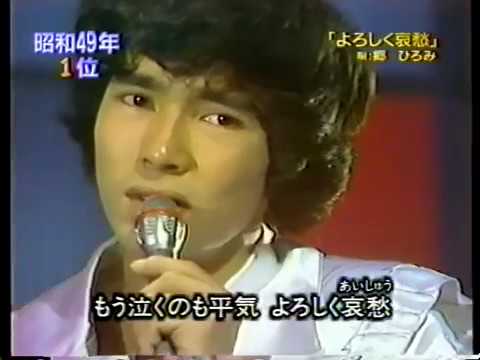
Released in 1974 as Hiromi Go’s 10th single.
The song was used as the theme for the TV drama “Chotto Shiawase,” in which Hiromi Go co-starred with Wakako Sakai.
It became the first No.
1 on the Oricon Singles Chart by a singer from Johnny & Associates, and it remains his biggest hit and his only Oricon No.
1.