




The number-one concern middle schoolers have in music is voice change.
While girls might not feel it as much, it’s a period when the vocal cords change significantly for both boys and girls, making it arguably the most difficult time to sing in your entire life.
For middle schoolers going through this, just controlling pitch can be challenging.
On top of that, recent Japanese pop songs often feature many high notes and few rests, which makes it even harder to aim for high scores.
So this time, we’ve selected songs that even middle school students with unstable voices can use to aim for high scores.
We also carefully considered how well the songs will be received, so be sure to check them out to the end.
- [For Middle Schoolers] Ranking of Easy-to-Sing Karaoke Songs [2026]
- Easy-to-sing songs even for those who aren’t good at singing. Karaoke songs recommended for middle school students.
- [Attractive] Recommended for junior high schoolers! Cool Japanese songs that are impressive when you can sing them
- Songs popular among junior high school students. Also songs trending on social media.
- [For Junior High School Girls] Popular Latest Songs: A Collection of Timeless Tracks You'll Want to Keep Listening To
- Recommended Japanese pop songs for middle schoolers to sing at karaoke
- [Middle School Students] Karaoke Popularity Rankings by Generation [2026]
- [For Teen Girls] Popular Karaoke Songs That Are Easy to Sing
- [Clubs, Friendship, Romance] Youth songs middle schoolers should listen to
- Recommended for teenage girls! Easy-to-sing karaoke songs
- Aim for a high score! A collection of easy-to-sing karaoke songs recommended for high school students
- [For Teenage Girls] Songs That Score High Easily at Karaoke [2026]
- [Teens] Easy-to-Sing Karaoke Song Rankings [2026]
Karaoke songs that are easy for junior high school students to score high on (1–10)
Shadows of SummerMrs. GREEN APPLE

Mrs.
GREEN APPLE’s “Natsu no Kage,” loved by every generation, is a quintessentially summery song that conjures up lush, green natural scenery as you listen.
Among Mrs.
GREEN APPLE’s tracks, it doesn’t demand belted high notes and the overall range is relatively modest, so I think it’s easy to sing even for junior high schoolers dealing with voice changes.
The overall vocal range is B2–A4, and it’s best if you can start by using plenty of breath and sing gently and lightly.
For the falsetto just before the chorus, try switching as if you’re humming rather than forcing it—this helps you sing smoothly without strain.
From the chorus onward, projecting your voice forward will help stabilize your chest voice.
Overall, aim to use steady breath, avoid tension, and sing gently.
Like Omori-san, keeping your eyebrows lifted and your facial muscles raised makes it easier to stay on pitch and sing lightly.

hummingIkuta Rira

Although Rira Ikuta is known for her captivating high notes, Humming is, as the title suggests, a song you sing in a relaxed, humming style.
There isn’t much movement up and down in pitch, so I think it’s easy to sing.
Since there’s humming in the intro, I’d love for you to join in.
When you relax and hum, it becomes much easier to stay on pitch, and your vocal cords resonate properly rather than singing from the throat.
The trick is to take in plenty of air through your mouth and let it bounce lightly! One thing to watch out for is that if you end up making sound from your throat, your singing voice will stay throaty.
So, make a surprised expression and let the resonance lightly buzz between your eyebrows.
If you open your mouth just a little, the resonance will more easily travel to the area between your eyebrows.
The key is to keep it light and effortless, without tension.
The higher the notes get, the more breath you need, so it’s important to inhale and exhale for each phrase!
fireworks (launched into the sky)Yonezu Kenshi

Regarding the duet song Uchiage Hanabi with DAOKO, this time I’ll introduce Kenshi Yonezu’s solo version! The overall vocal range sits at a relatively calm C3–A4, showcasing Yonezu’s characteristically gentle, tender tone throughout.
In fact, pitch tends to become less stable in the lower notes than the higher ones, so it’s important to pay close attention to the very beginning of each phrase.
If your breathing is shallow, it becomes harder to produce sound, so focus on taking deep breaths.
To nail the pitch, it also helps to lift your facial muscles.
Rather than lifting them while singing, raise them as you inhale and keep them engaged as you phonate.
Since the song is relaxed, there’s ample time for breaths, so don’t forget to take one each time.
Also, because it sits in the midrange, make sure to project your voice forward so it doesn’t get muffled!
Goodbye ElegySuda Masaki
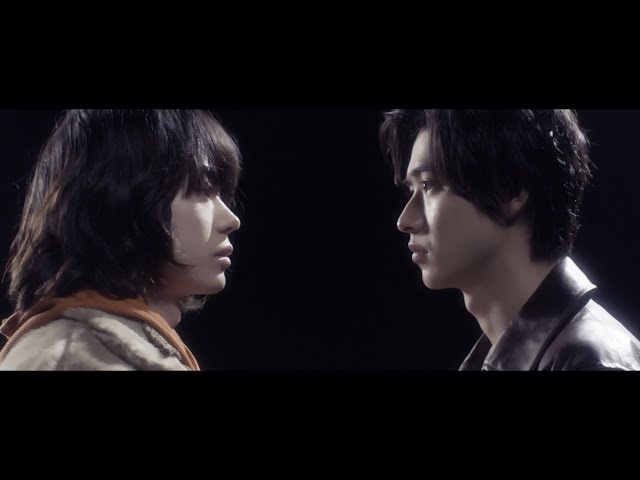
Masaki Suda is highly acclaimed not only as an actor but also as an artist.
I think many middle school students like his music.
Among his songs, “Sayonara Elegy” is one that makes it especially easy to score high in karaoke.
It’s one of his signature tracks, and many people know it.
If you’re trying to make it sound artistically impressive, that’s another story, but if your goal is simply to get a high karaoke score, the simple vocal line makes it very easy to sing.
Definitely give it a try.

amberSEKAI NO OWARI
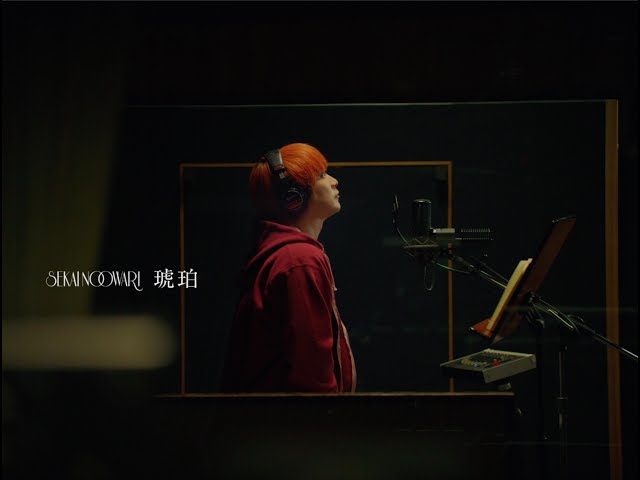
People often think SEKAI NO OWARI has lots of high-pitched songs, but the new track Kohaku doesn’t have those belted high notes, and its relaxed tempo makes it a calm song to sing! The melody is straightforward and easy to remember, so it’s great for karaoke beginners and for those who struggle with high notes.
The overall vocal range is C3–A4, and breath control is the key.
No matter what you sing, if you can’t produce your voice comfortably, it won’t be enjoyable, so at first, focus more on letting your voice out with ease rather than hitting the exact pitches.
If you keep a straight face, you’ll definitely end up singing from your throat, so make the kind of surprised face you would when something startles you.
You should feel the back of your throat gently open.
With that face, take in plenty of air and try singing as if you’re placing your voice softly in front of your face.
Once you’re used to that, start paying attention to pitch and sing more carefully.
ElfAdo

You might want to imitate Ado’s singing voice, but first and foremost, it’s best to sing in a voice that feels natural for you.
Also, if you put too much emotion into your singing, your voice can become unstable and your score may go down.
When using a scoring system, don’t worry too much about vibrato and the like—start by singing straight and focusing on accurate pitch.
Of course, once you get used to it, go ahead and aim for those bonus points! Some people use their hands to guide their pitch while singing, right? This method is actually highly recommended! Especially for high notes, using your hand helps you feel the momentum, making it easier to hit them cleanly.
By the way, for low notes, don’t lower your hand; instead, raise it like you do for high notes.
That way, your head resonates more, your voice won’t sound muffled, and low notes will come out more easily.
Definitely give it a try!
greatest common divisorRADWIMPS

Among RADWIMPS’ songs, this one doesn’t sit too high in range, so you don’t need to belt.
As long as you stay mindful of the rhythmic timing, you can aim for a high score! In particular, the A verse stays mostly in the mid–low (mid1) range, so it’s good to sing gently, as if speaking.
The range gradually rises from the B verse, but there’s no need to push your voice.
If you keep the breath flowing and imagine resonating in the head, your head voice will take on a chesty quality, and once you find your comfortable spot, it becomes much easier to sing.
Also, some may find the rhythm tricky where the melody gets fast, but since the range isn’t too high, you’ll be fine if you place the notes carefully and sing with precision.
As the pitch climbs, imagine resonating in the head and try keeping it light!