

[Childcare] Snake Quiz

Unlike dogs and cats, snakes may be creatures that children aren’t very familiar with, but they often appear in fingerplay and picture books.
This article introduces a quiz about snakes.
Precisely because they aren’t so familiar, it would be great if children could develop interest and curiosity about snakes through the quiz.
Each question has three multiple-choice answers, so even young children can join in and have fun.
Try using it during little pockets of free time! Adults can enjoy it too, so join in with the kids and have a great time together!
- [Childcare] Snake Quiz
- [Childcare] Animal quiz for toddlers! Let’s all give it a try together.
- [Preschool/Childcare] Let's have fun together! A three-choice animal quiz
- [Childcare] I want to have fun with the kids! Sample Questions for a Me Quiz
- Make childcare more fun with winter quizzes! Seasonal ideas to get kids excited
- Have fun in childcare! Today’s recommended quizzes and riddles
- Ideas for Childcare Quizzes to Enjoy in January
- [Childcare] Collection of snake craft ideas using various materials
- [For Toddlers] Let’s All Give It a Try! Animal Quiz Special
- [For Toddlers] Fun Trick Questions! Recommended Gotcha Riddles
- [Early Childhood Education] Mysterious! A collection of fish quizzes that will excite kids
- [Childcare] Anime Quiz! A Collection of Questions to Enjoy with Kids
- [Quiz] Recommended for preschoolers! A collection of fun quiz ideas
[Childcare] Snake Quiz (1–10)
What is a snake’s tongue like?
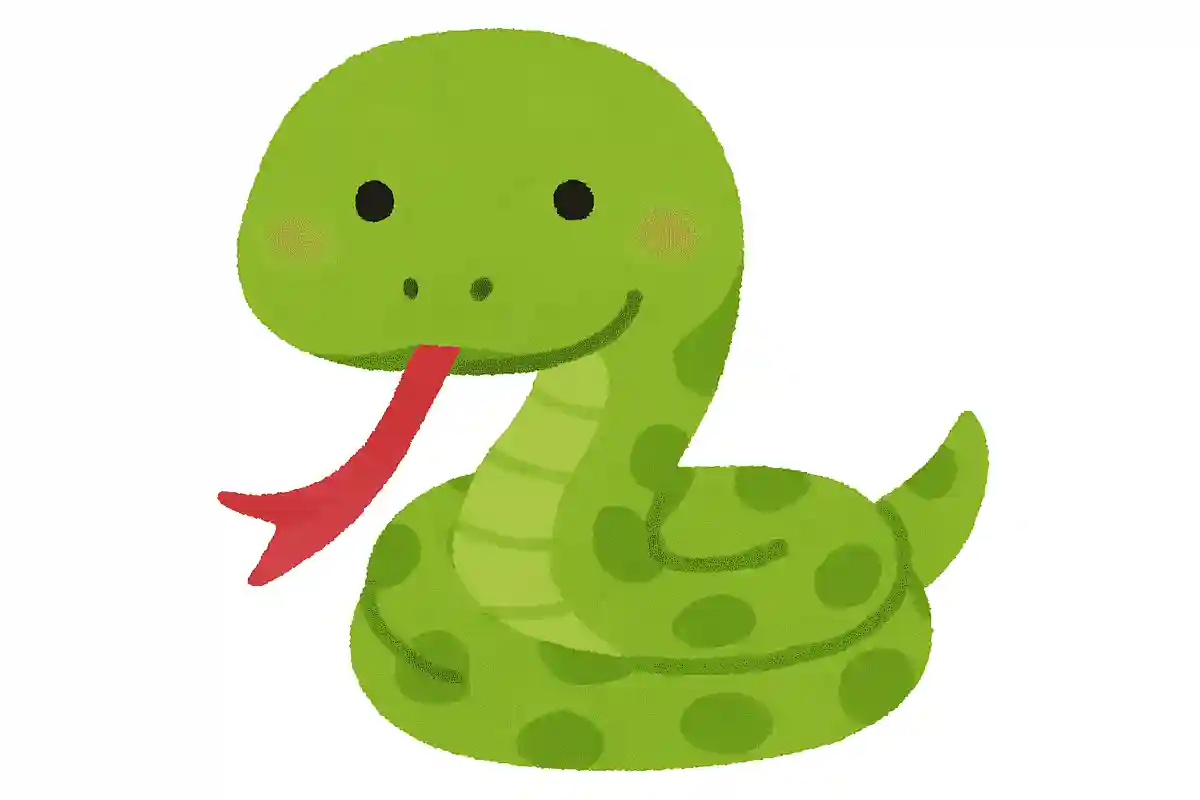
- The tip of the tongue is split into two (forked).
- The tongue curls into a single roll.
- Originally, there is no tongue.
See the answer
The tip of the tongue is split into two (forked).
Unlike humans, the tips of a snake’s tongue are split into two. It’s said that this forked shape allows them to accurately determine the direction of scents in the air. By the way, the option mentioning curling the tongue refers to chameleons, and it’s said that snakes are natural enemies of chameleons.
Which of the following is the largest snake in the world?
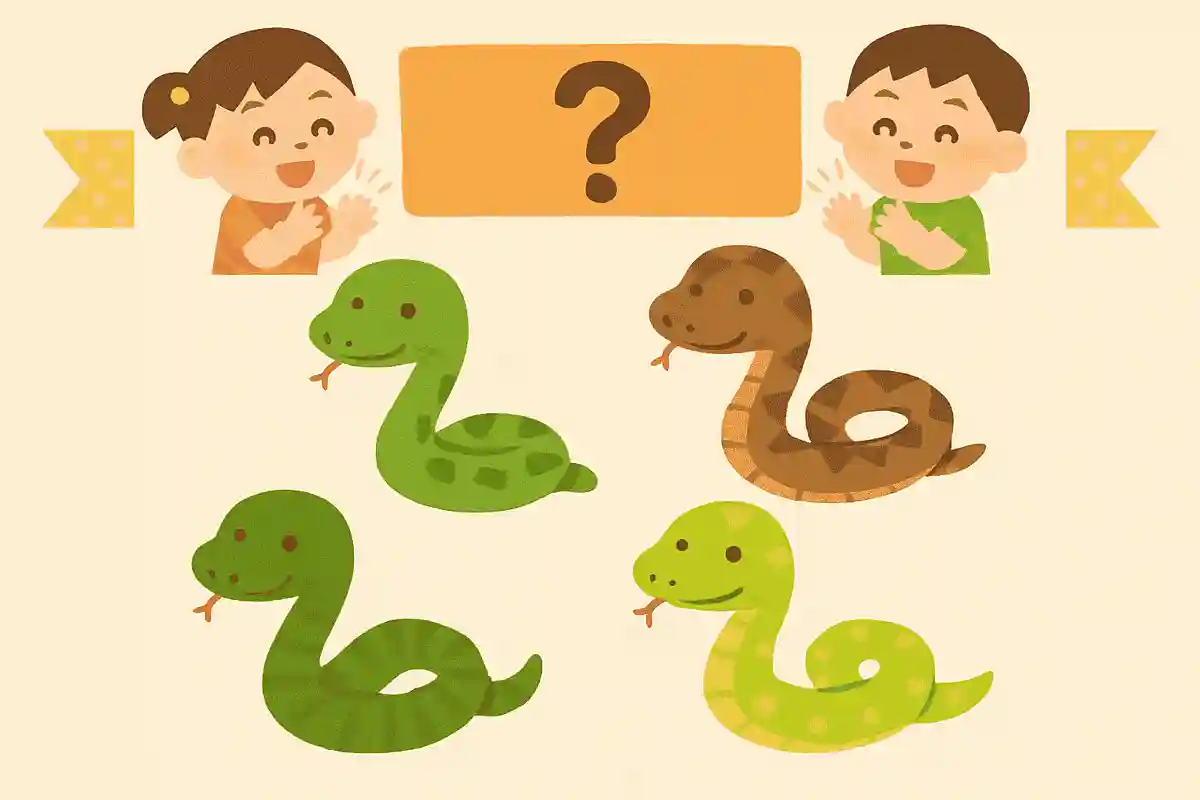
- Dodeca Anaconda
- Green anaconda
- Big anaconda
See the answer
Green anaconda
It lives in South America, has a total length of about 9 meters, and reportedly weighs 250 kilograms. Nine meters is about the height of the third floor of an apartment building, and 250 kilograms is roughly the weight of a lion or a tiger, or even a grand piano. The long and massive green anaconda must be incredibly impressive to see in person.
Which of the following can a snake do?
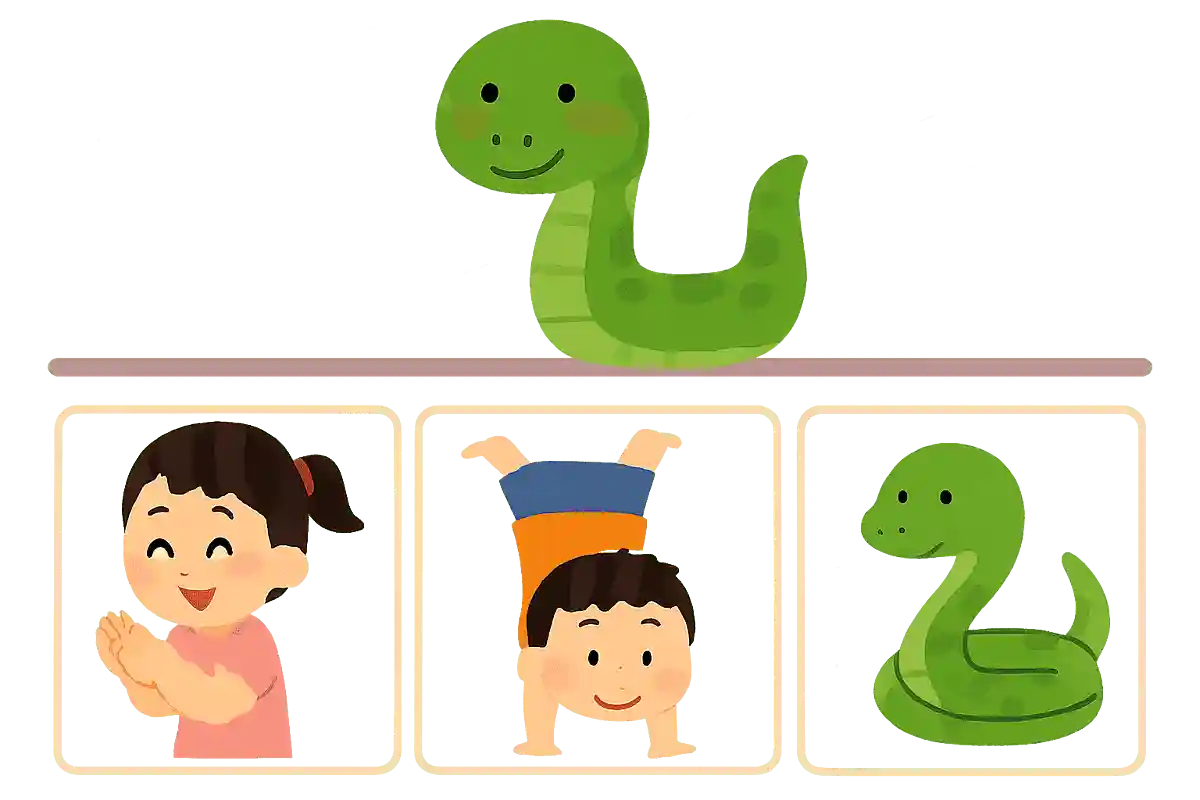
- Snakes can sing.
- Snakes can play games.
- Snakes can swim.
See the answer
Snakes can swim.
Snakes like water, and some can swim and dive in the sea or rivers. They drink a lot of water and often bathe. Since they frequently defecate in water, be sure to change the water often when keeping them as pets.
[Childcare] Snake Quiz (11–20)
Where do venomous snakes release their venom from?
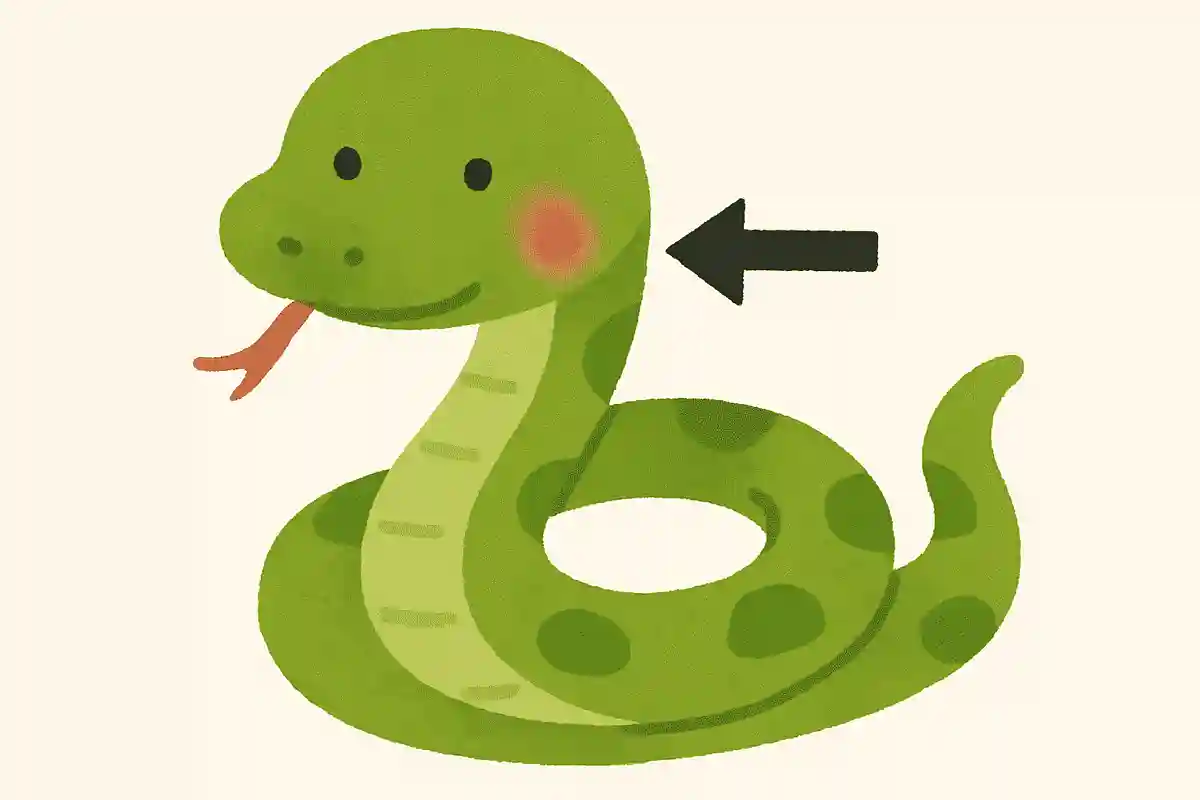
- fang
- nose
- butt; bottom; buttocks
See the answer
fang
Venomous snakes have special fangs called venom fangs with grooves in their upper jaw. When they bite their prey, the venom is injected into the prey’s body through these fangs. Since humans can also be bitten, we need to be careful.
It’s called “toguro o maku” when a snake coils its body, but why do snakes coil themselves like that?
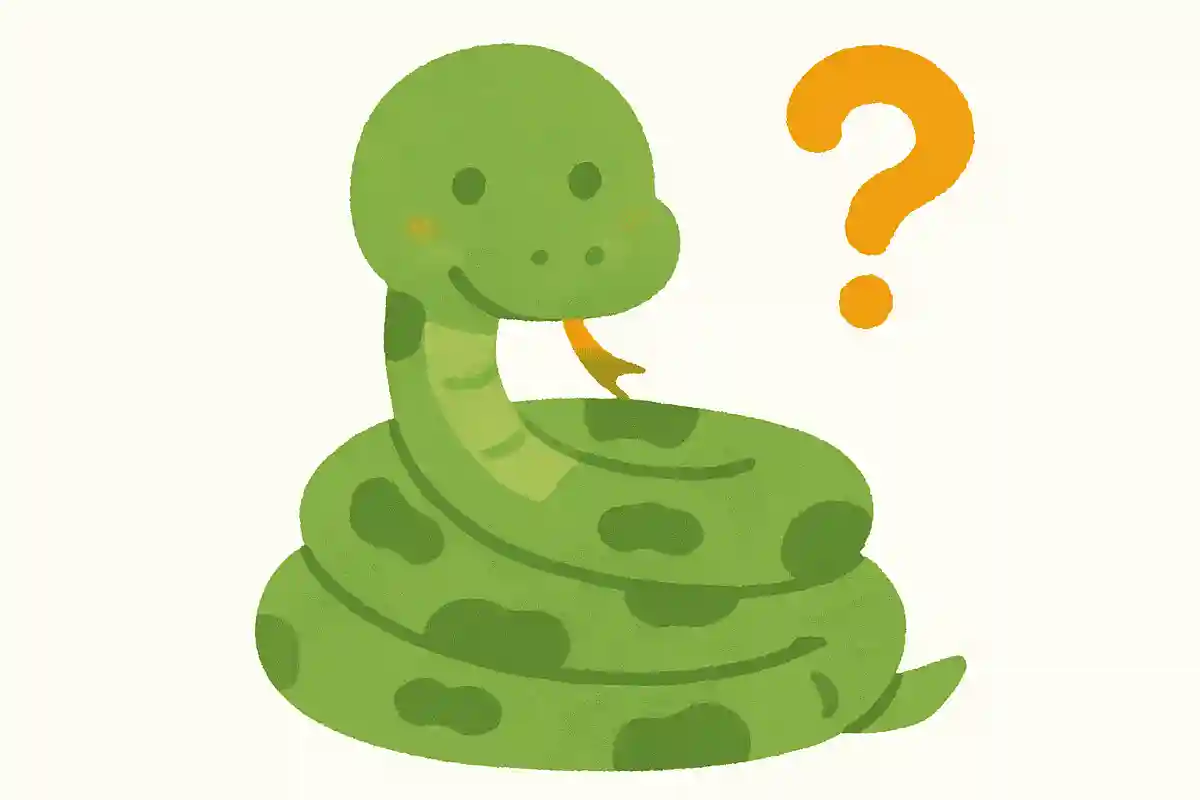
- Because its body is long, it coils itself to keep everything within its field of view.
- Because when you wrap it, it makes you excited and it's fun
- Because people say it looks cool when you wrap it
See the answer
Because its body is long, it coils itself to keep everything within its field of view.
Snakes are basically coiled up unless they’re moving. In that position, they can look around in all directions, so they can immediately attack if an enemy approaches. When their bodies are stretched out, they can’t see well behind them, which is said to be dangerous.
Why do snakes often flick their tongues in and out?
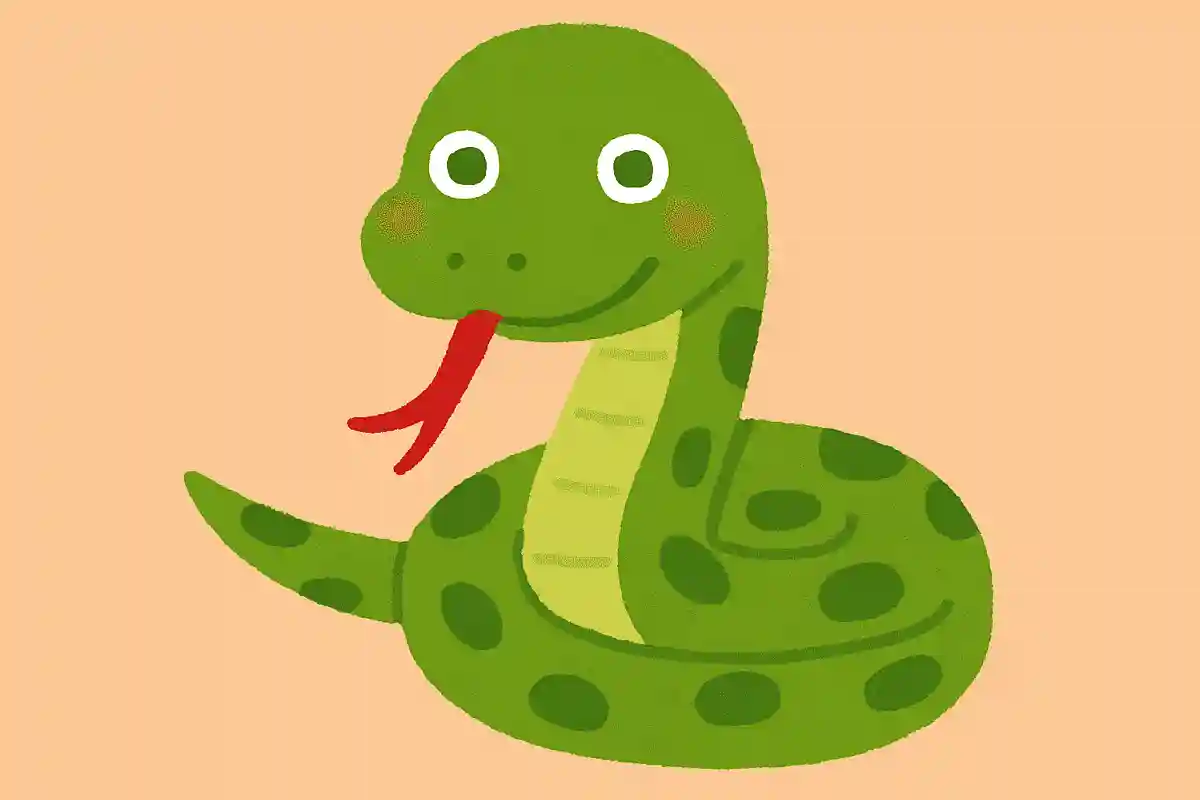
- because it’s sticking out its tongue to smell the surroundings
- Because (they are) washing (their) face
- Because I'm playing around when I have free time.
See the answer
because it’s sticking out its tongue to smell the surroundings
It’s said that when a snake sticks out its tongue and flicks it, it’s checking the surrounding smells to see if there’s any danger and whether prey is nearby. The extended tongue captures scent particles, and when the tongue is brought back into the mouth, those particles are delivered to an area in the roof of the mouth called the Jacobson’s organ (vomeronasal organ), which allows the snake to distinguish different odors.
Which of the following is correct as a characteristic of a snake’s body?
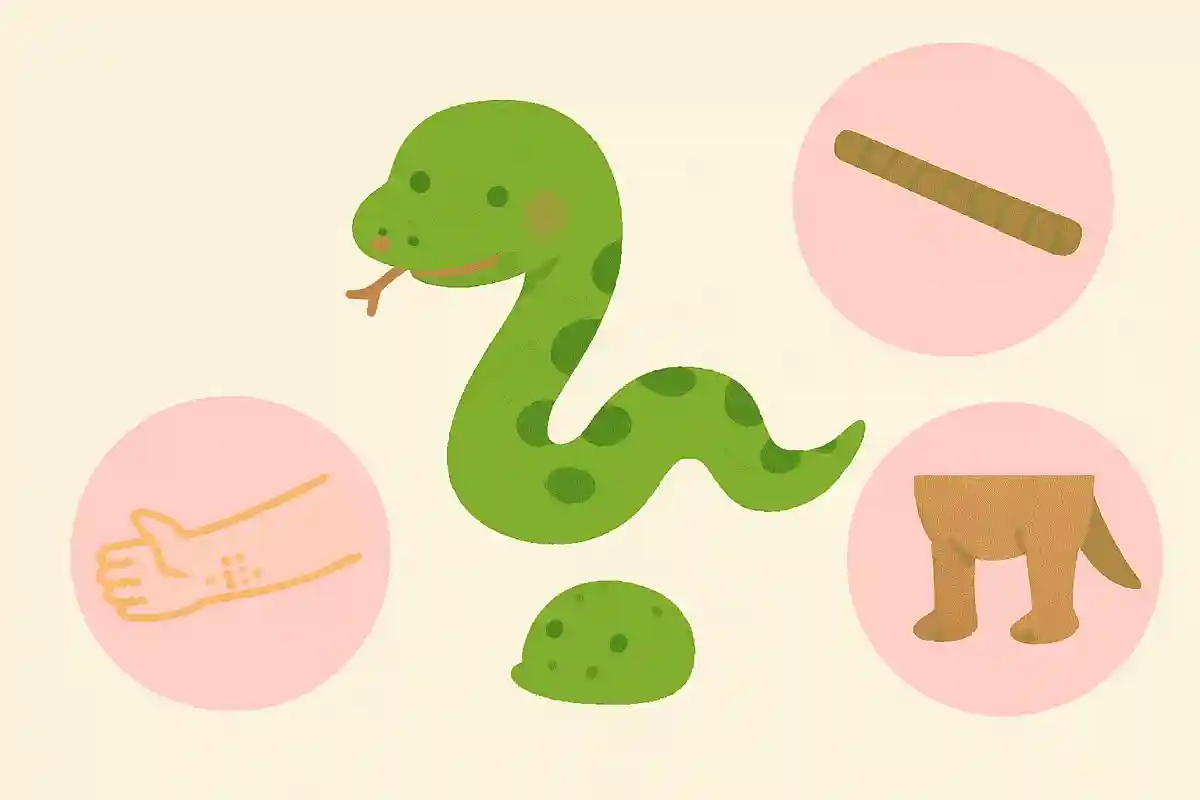
- The surface of my body is slimy.
- The surface of the body is not slimy.
- Its body surface is spiky.
See the answer
The surface of the body is not slimy.
People have long often mistaken snakes’ bodies for being slimy, but they actually aren’t at all. Since snakes are reptiles, their skin is covered in scales. By the way, snake scales feel cool to the touch and are dry!