

Fun facts quiz about Kiyomizu-dera: a three-choice quiz to learn its history and appeal

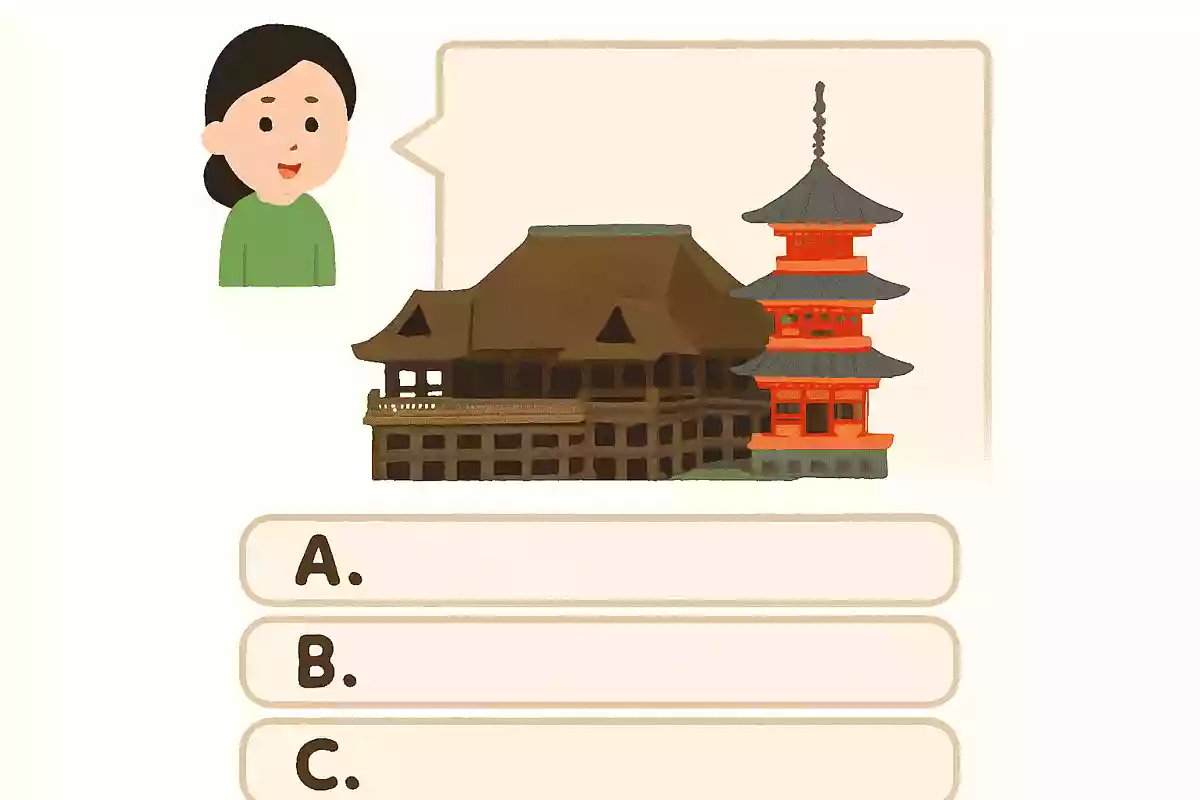
Kiyomizu-dera is one of the World Heritage Sites and is popular not only with Japanese visitors but also with tourists from overseas.
Spots like Kiyomizu-zaka and Sannen-zaka let you feel the history along the pilgrimage route.
In this article, we’ve gathered quizzes that will deepen your knowledge about Kiyomizu-dera.
We’ll present fun questions to help you learn about the temple grounds, which offer breathtaking scenery.
You can also check out explanations covering everything from the Main Hall and the entrance gates to episodes related to the principal image of worship.
Give these quizzes a try and experience the traditional culture and history embodied by Kiyomizu-dera.
- Quiz about Kinkaku-ji: tidbits to help you understand the Golden Pavilion
- [Easy] Quiz for Middle School Students
- Surprisingly unknown? Trivia Quiz [Multiple Choice: 3 Options]
- [Trivia] Quiz about Fushimi Inari Taisha
- [Trick Quiz] Quiz Questions That Excite Everyone from Kids to Adults
- [Trivia] A quiz of fun facts about Horyu-ji. Multiple-choice questions (three options) about this historic structure.
- Trivia quiz about Sanjusangendo: a collection of questions to deepen your knowledge
- [For Elementary School Students] 3-Choice Quiz to Deepen Knowledge of Living Things
- Trivia quiz about Ginkaku-ji: three multiple-choice questions to learn about Kyoto’s history
- Let’s take on the challenge! A multiple-choice history quiz for elementary school students. Review your history lessons.
- Tidbits Quiz about Tōdai-ji: Questions related to the Great Buddha of Nara, too!
- [General Questions] Knowledge and Quiz Questions about Famous Anime
- A quiz about the Great Buddha of Nara: fun facts to deepen your understanding of Japan’s iconic Great Buddha.
Kiyomizu-dera Trivia Quiz: 10 multiple-choice questions (1–10) to learn its history and charm
What is the name of the gate at the entrance of Kiyomizu-dera?
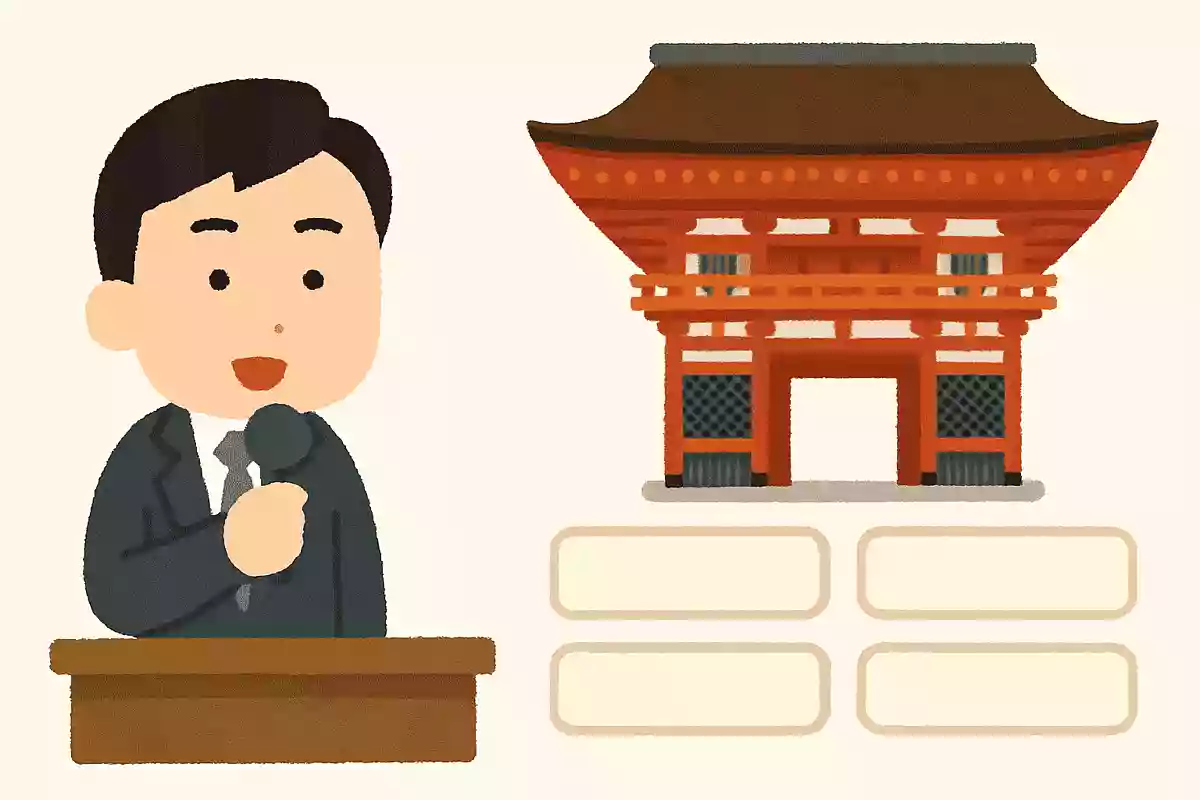
- Namdaemun
- Niōmon (Deva Kings Gate)
- Vajra Gate
See the answer
Niōmon (Deva Kings Gate)
The gate at the entrance to Kiyomizu-dera is called the Niomon (Deva Gate). This gate houses statues of the guardian deities and serves to protect the temple. Passing through the gate leads to the main hall and the famous stage, but for many visitors, this imposing Niomon is the first to appear.

When was Kiyomizu-dera registered as a UNESCO World Cultural Heritage site?

- 1987
- 1994
- the year 2001
See the answer
1994
Kiyomizu-dera was inscribed as a UNESCO World Cultural Heritage site in 1994, as part of the Historic Monuments of Ancient Kyoto along with other temples and shrines. Kiyomizu-dera is especially famous for its “Kiyomizu Stage” and is beloved by many visitors.
What is the construction of the roof of Kiyomizu-dera?
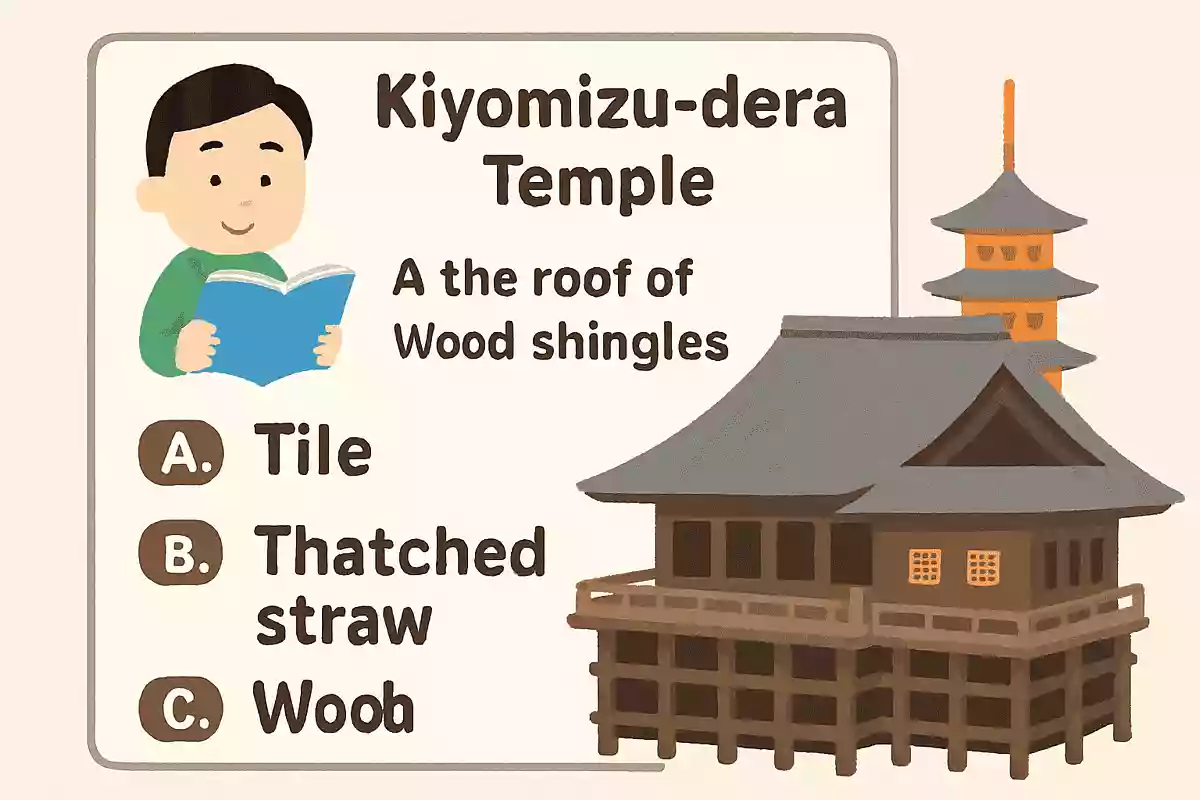
- gabled roof construction
- hip-and-gable roof construction
- hip-and-gable roof (irimoya-zukuri)
See the answer
hip-and-gable roof construction
The main hall of Kiyomizu-dera is designated as an Important Cultural Property, and its roof is built in an architectural style known as yotsumune (hip-and-gable). Unlike the gabled style, where the roof ridge runs in a straight line, the yotsumune style is characterized by the roof sloping down on all four sides.
Kiyomizu-dera Trivia Quiz: 3-Choice Questions (11–20) to Learn Its History and Charm
What is the height of the three-story pagoda at Kiyomizu-dera, one of the largest in Japan?
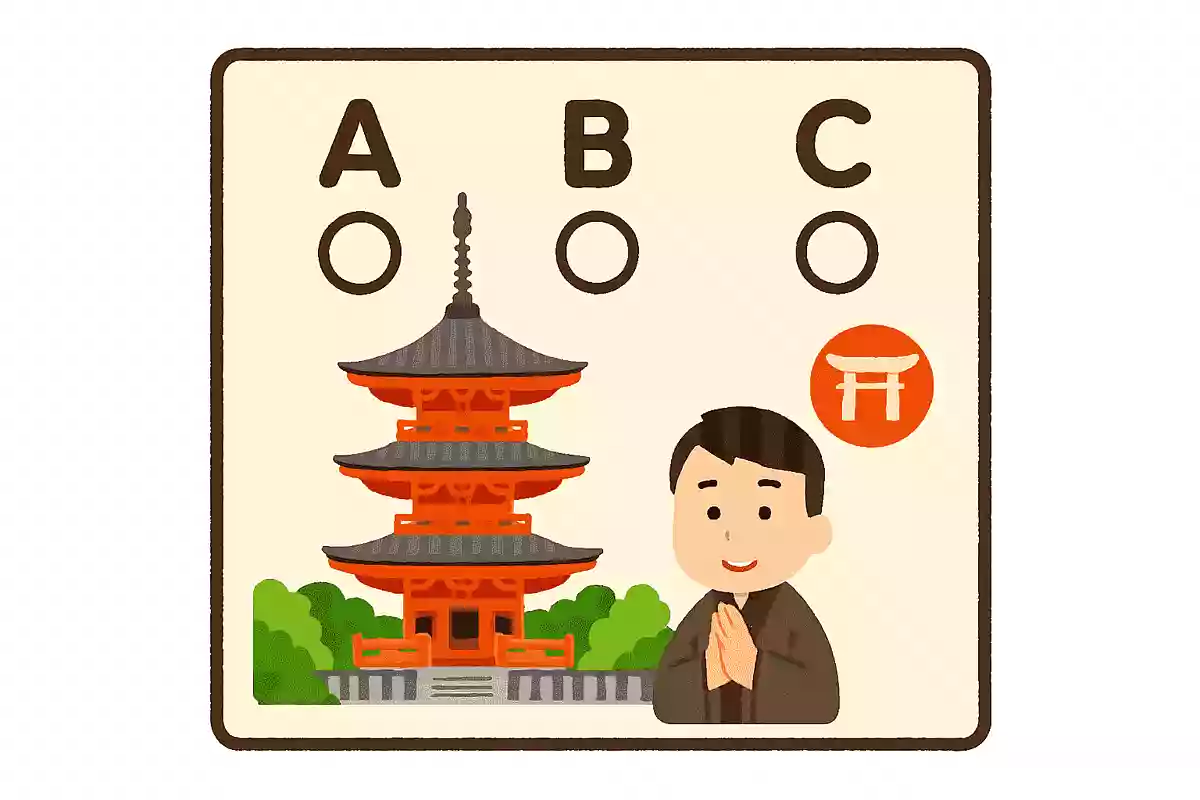
- about 20 meters
- about 30 meters
- about 40 meters
See the answer
about 30 meters
The three-storied pagoda at Kiyomizu-dera stands about 30 meters tall. It is an eye-catching landmark for visitors, and its majestic presence captivates many people. Beyond its height, its structural beauty and historical background also make the three-storied pagoda at Kiyomizu-dera a particularly valuable piece of architecture.
What is the principal object of worship at Kiyomizu-dera?

- Kṣitigarbha Bodhisattva
- Eleven-faced, Thousand-armed Avalokiteshvara Bodhisattva
- Maitreya Bodhisattva
See the answer
Eleven-faced, Thousand-armed Avalokiteshvara Bodhisattva
The principal object of worship at Kiyomizu-dera, the Eleven-Faced Thousand-Armed Avalokiteshvara, is known for its many hands, which symbolize the compassion that saves countless sentient beings. Along with the view from the Kiyomizu Stage, many worshippers purify their hearts before this image and offer their prayers and wishes.
What is the sect of Kiyomizu-dera?
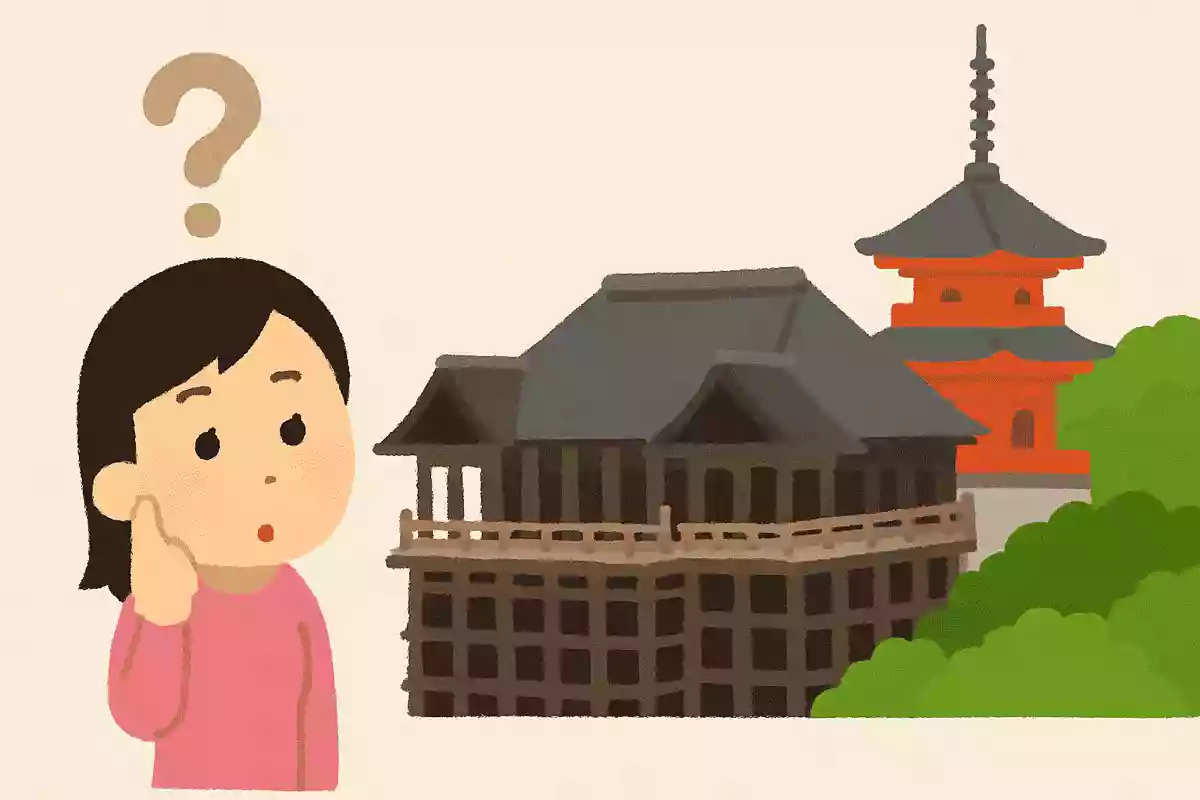
- Tendai Buddhism
- Shingon Buddhism
- Hokke Hōshō Sect
See the answer
Hokke Hōshō Sect
Kiyomizu-dera, located in Higashiyama Ward, Kyoto, is a celebrated scenic spot beloved by many people. The temple’s sect is the Kita Hossō school, and in practice it functions as an independent, non-affiliated temple. The mainstream Hossō school is a sect that places importance on scriptural doctrine, and Kiyomizu-dera exists as a northern branch that maintains its own distinct identity.
About how many square meters is the precinct of Kiyomizu-dera?
- approximately 50,000 square meters
- about 100,000 square meters
- approximately 130,000 square meters
See the answer
approximately 130,000 square meters
The precincts of Kiyomizu-dera cover about 130,000 square meters, making it one of the largest temples in Kyoto. As they walk through these spacious grounds, visitors can enjoy seasonal natural scenery and historic buildings.