

A quiz about the Great Buddha of Nara: fun facts to deepen your understanding of Japan’s iconic Great Buddha.

There are temples all across Japan, and some of them have large Buddha statues, or Daibutsu, built on their grounds.
Among these temple Buddhas, the Great Buddha of Nara is perhaps the most famous.
In this piece, we’ll introduce fun trivia about the Great Buddha of Nara—arguably a representative Daibutsu of Japan—in a quiz format.
By learning when this iconic Japanese statue was created and what wishes are embodied in it, you can not only deepen your understanding of the Great Buddha of Nara, but also spark an interest in other Daibutsu around the country.
Quiz about the Great Buddha of Nara: fun facts to deepen your understanding of Japan’s iconic Great Buddha (1–10)
What is the official name of the Great Buddha of Nara?
- Great Buddha of Kōfuku-ji
- Seated Statue of Vairocana (Buddha)
- Great Buddha of Tōdai-ji
See the answer
Seated Statue of Vairocana (Buddha)
The official name of the Great Buddha of Nara is the Seated Statue of Vairocana. This Great Buddha is enshrined in the Great Buddha Hall of Tōdai-ji, and Vairocana represents the cosmic Buddha in Buddhism. The name Vairocana carries the meaning of “to shine,” and he is regarded as the Buddha who illuminates all and bestows wisdom. The Great Buddha of Nara is also designated a National Treasure and is one of the representative masterpieces of Japanese Buddhist sculpture.

By whose vow was it built?
- Emperor Shōmu
- Emperor Kōken
- Fujiwara no Nakamaro
See the answer
Emperor Shōmu
The Great Buddha of Nara was constructed at the behest of Emperor Shomu. Established at Todai-ji under the principle of protecting the nation, this colossal statue was intended to link Buddhism with the country’s prosperity and stability. It stands as a symbolic presence of Heijo-kyo and holds great historical and cultural significance.
What kind of meaning does the pose have?
- Remove worldly desires and fears, and grant wishes.
- spread the teachings of Buddhism
- drive away evil spirits and other bad things
See the answer
Remove worldly desires and fears, and grant wishes.
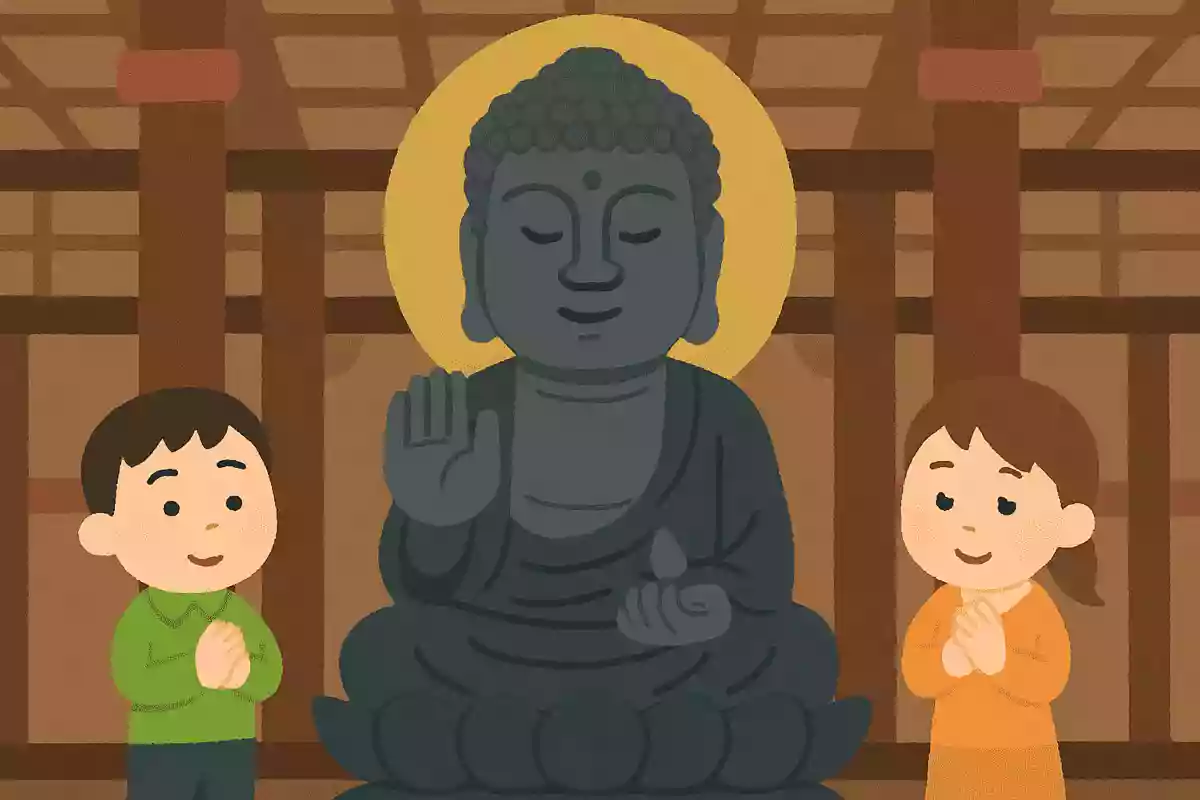
The Great Buddha of Nara forms the mudra called Abhaya (fear-dispelling), with his right hand raised and the palm facing forward. This signifies removing all fears and helping people overcome troubles and obstacles. His left hand forms the Varada (wish-granting) mudra, held flat with the palm facing upward, symbolizing the fulfillment of people’s wishes. By combining these two mudras, it is believed that the Great Buddha removes the visitors’ worldly desires and fears and grants their wishes.
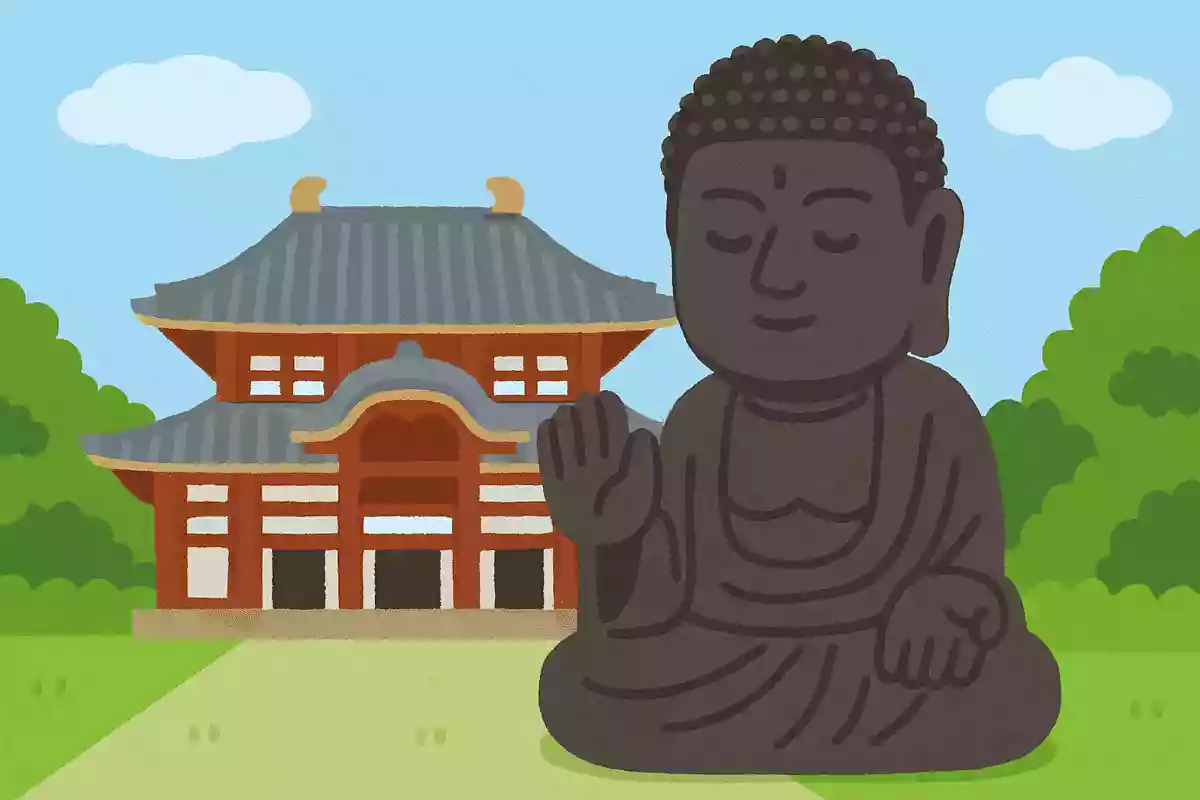
Tōdai-ji was destroyed by fire twice and has been rebuilt, including the Great Buddha. In which period was the current Great Buddha constructed?
- Kamakura period
- Muromachi period
- Edo period
See the answer
Edo period
Tōdai-ji suffered major destruction by fire twice in the past. The first conflagration occurred in 1180, and reconstruction began in 1185, near the end of the Heian period. In 1692, however, the Great Buddha Hall was again destroyed by fire. Reconstruction was then carried out in the Genroku era, in the early Edo period, and the current Great Buddha dates from that rebuilding.
What is the sect of Todai-ji?
- Tendai Buddhism
- Jōdo-shū (Pure Land sect)
- Kegon school (Huayan school)
See the answer
Kegon school (Huayan school)
Todai-ji belongs to the Kegon school. The Kegon school is one of the Buddhist sects that came from China, known for spreading teachings centered on the cosmic Buddhist philosophy of the Avatamsaka Sutra. Along with its revered Great Buddha, it still serves as the head temple of the Kegon school today.
How big is the Great Buddha of Nara currently?
- about 5 meters
- About 10 meters
- about 15 meters
See the answer
about 15 meters
The Great Buddha of Nara stands at about 15 meters tall. Its size is one of the attractions that draws many visitors from both Japan and abroad. It is said to have been around 16 meters when it was originally built, so it’s a bit sad that it became slightly smaller during reconstruction.
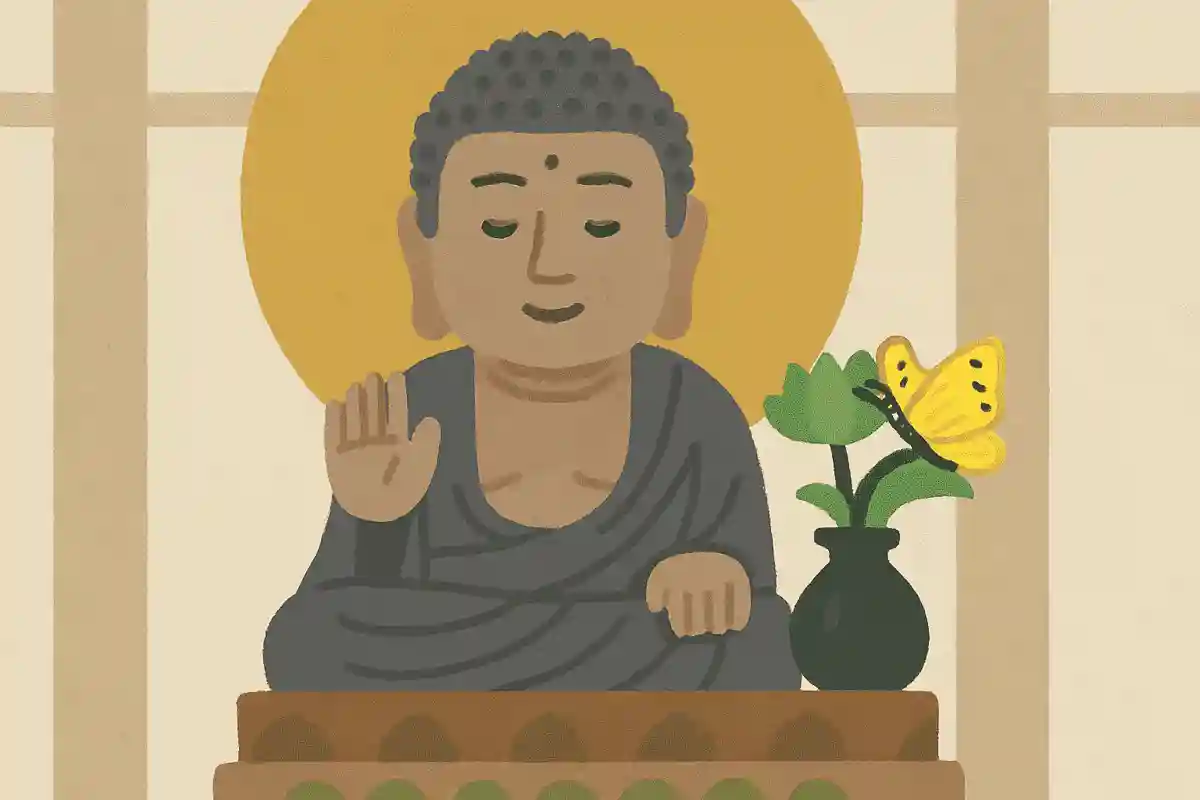
What is a feature of the butterfly perched on the vase at the Great Buddha’s feet that doesn’t actually exist?
- a human face
- Eight legs
- One pair of wings
See the answer
Eight legs
It focuses on the fact that having eight legs is not actually a real characteristic. Butterflies belong to the insect group, and typical insects have six legs, right? By intentionally giving it eight legs here, it serves the role of making it something out of the ordinary—something sacred.