

A quiz about the Great Buddha of Nara: fun facts to deepen your understanding of Japan’s iconic Great Buddha.

There are temples all across Japan, and some of them have large Buddha statues, or Daibutsu, built on their grounds.
Among these temple Buddhas, the Great Buddha of Nara is perhaps the most famous.
In this piece, we’ll introduce fun trivia about the Great Buddha of Nara—arguably a representative Daibutsu of Japan—in a quiz format.
By learning when this iconic Japanese statue was created and what wishes are embodied in it, you can not only deepen your understanding of the Great Buddha of Nara, but also spark an interest in other Daibutsu around the country.
- Tidbits Quiz about Tōdai-ji: Questions related to the Great Buddha of Nara, too!
- Quiz about Kinkaku-ji: tidbits to help you understand the Golden Pavilion
- [Trivia] A quiz of fun facts about Horyu-ji. Multiple-choice questions (three options) about this historic structure.
- Fun facts quiz about Kiyomizu-dera: a three-choice quiz to learn its history and appeal
- [Killing Time] A Collection of Fun Trivia Quizzes You'll Want to Share with Someone
- Trivia quiz about Sanjusangendo: a collection of questions to deepen your knowledge
- [History Quiz] General History Questions You Should Know
- [Interesting] Compilation of Trivia Quiz Questions
- Trivia quiz about Kegon Falls. Deepen your knowledge of Nikko’s tourist attractions!
- [Trivia] Quiz about Fushimi Inari Taisha
- Interesting trivia about the Statue of Liberty. Fun facts about a symbol representing America.
- A world heritage site Japan is proud of! Take on a quiz to dive deep into Nikkō Tōshō-gū!
- [For Seniors] Which Is Bigger? A Size Comparison Quiz That’s Sure to Get Everyone Excited
Quiz about the Great Buddha of Nara: Fun facts to deepen your understanding of Japan’s iconic Great Buddha (11–20)
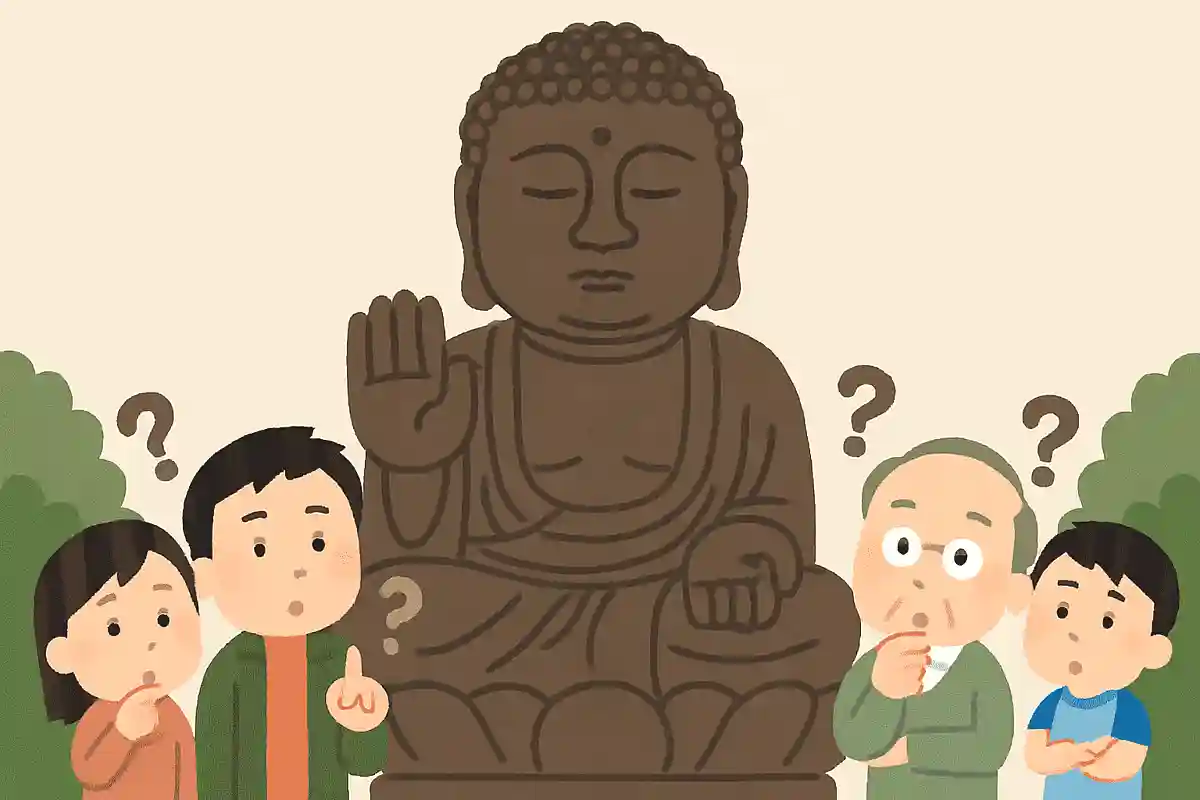
How many people are said to have been involved in making the Great Buddha?
- about 100,000 people
- about 1,000,000 people
- about 2.6 million people
See the answer
about 2.6 million people
It is said that the number of people involved with the Great Buddha of Nara reached as many as about 2.6 million. This includes not only the artisans directly engaged in carving and construction, but also those who provided and transported materials, as well as farmers who supplied food—people from a wide range of roles connected to the statue’s creation. The sheer amount of labor contributed by so many people also conveys the strength of the wishes invested in the project.

In conclusion
We introduced trivia about the Great Buddha of Nara—an iconic Japanese Buddhist statue designated as a National Treasure—in the form of a quiz. The questions range widely, from basic information such as when it was created and by whom, to the meanings behind the statue’s finer details. There are many Great Buddha statues across Japan, not just the one in Nara, so comparing their characteristics is also recommended. Through these Buddhist statues, which are objects of devotion, why not take an interest in what Japan was like at the time they were made?