

A quiz about the Great Buddha of Nara: fun facts to deepen your understanding of Japan’s iconic Great Buddha.

There are temples all across Japan, and some of them have large Buddha statues, or Daibutsu, built on their grounds.
Among these temple Buddhas, the Great Buddha of Nara is perhaps the most famous.
In this piece, we’ll introduce fun trivia about the Great Buddha of Nara—arguably a representative Daibutsu of Japan—in a quiz format.
By learning when this iconic Japanese statue was created and what wishes are embodied in it, you can not only deepen your understanding of the Great Buddha of Nara, but also spark an interest in other Daibutsu around the country.
- Tidbits Quiz about Tōdai-ji: Questions related to the Great Buddha of Nara, too!
- Quiz about Kinkaku-ji: tidbits to help you understand the Golden Pavilion
- [Trivia] A quiz of fun facts about Horyu-ji. Multiple-choice questions (three options) about this historic structure.
- Fun facts quiz about Kiyomizu-dera: a three-choice quiz to learn its history and appeal
- [Killing Time] A Collection of Fun Trivia Quizzes You'll Want to Share with Someone
- Trivia quiz about Sanjusangendo: a collection of questions to deepen your knowledge
- [History Quiz] General History Questions You Should Know
- [Interesting] Compilation of Trivia Quiz Questions
- Trivia quiz about Kegon Falls. Deepen your knowledge of Nikko’s tourist attractions!
- [Trivia] Quiz about Fushimi Inari Taisha
- Interesting trivia about the Statue of Liberty. Fun facts about a symbol representing America.
- A world heritage site Japan is proud of! Take on a quiz to dive deep into Nikkō Tōshō-gū!
- [For Seniors] Which Is Bigger? A Size Comparison Quiz That’s Sure to Get Everyone Excited
Quiz about the Great Buddha of Nara: fun facts to deepen your understanding of Japan’s iconic Great Buddha (1–10)
What is the name of the distinctive hairstyle?
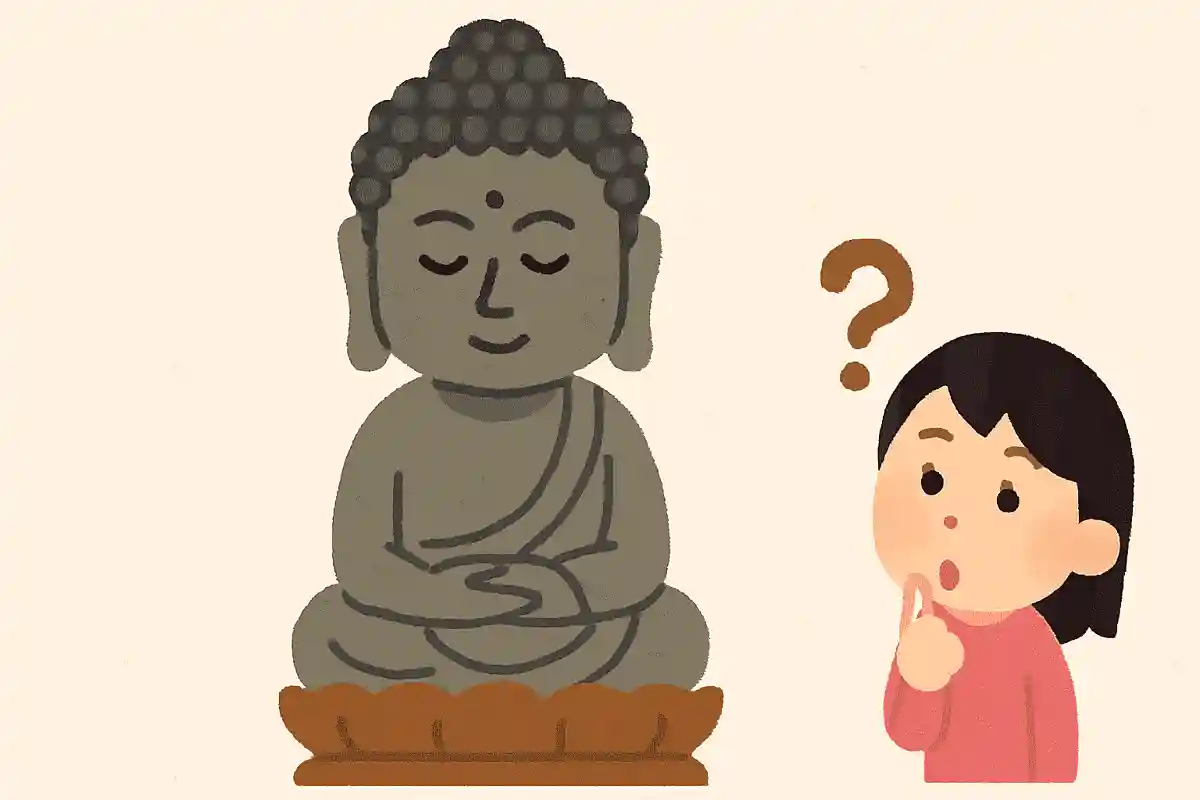
- spiral coils of hair (often referring to the curls on Buddhist statues' heads)
- ring
- Chrysanthemum blossom
See the answer
spiral coils of hair (often referring to the curls on Buddhist statues' heads)
At first glance, the Great Buddha of Nara’s hairstyle looks like many round protrusions, but this is called “rahatsu.” Rahatsu is one way of depicting a Buddha statue’s hair—spiral-shaped locks carved in lines. It is said that rahatsu represents the sanctity of the Buddha.

What is the unusual feature of the Great Buddha of Nara’s hand?
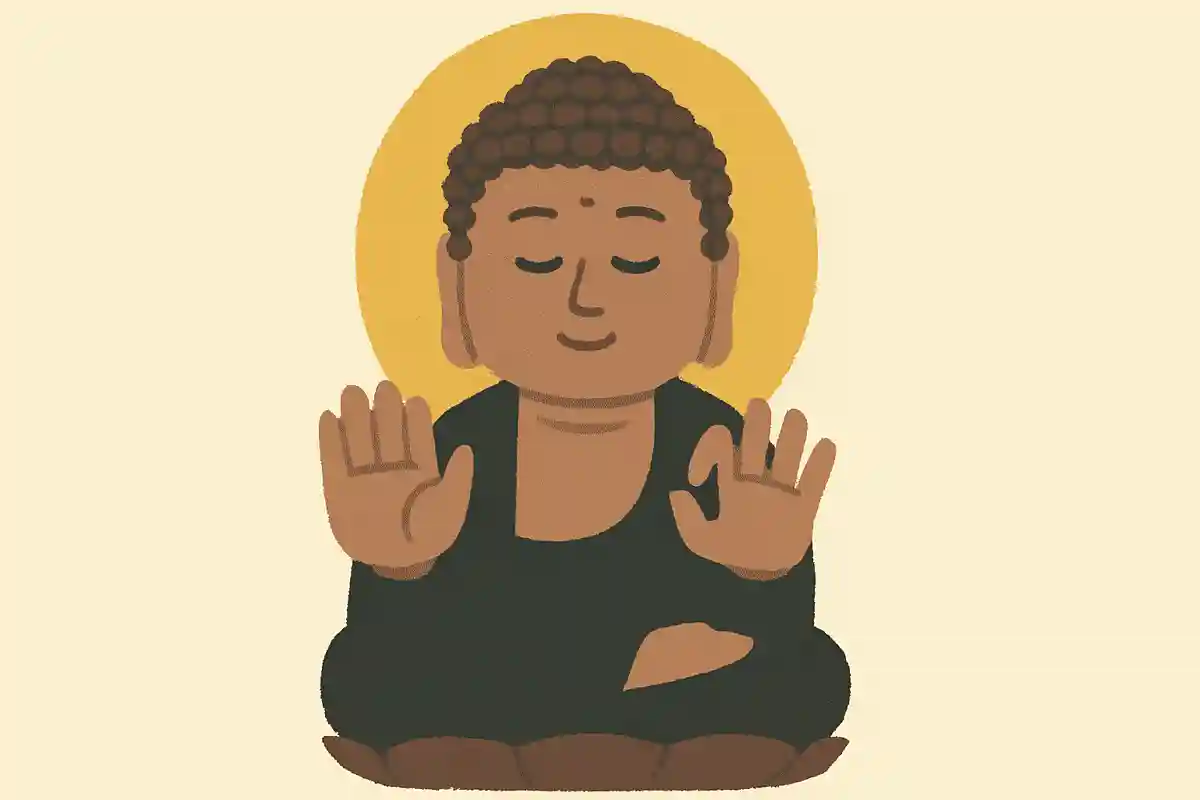
- It has webbed feet
- I have six fingers.
- The nails are gold.
See the answer
It has webbed feet
A distinctive feature of the Great Buddha of Nara is that it has webbed fingers. This webbing, which is not normally seen on human hands, is said to represent the Buddha’s compassionate vow to save all living beings. The webbing on the Buddha’s hand symbolizes that all life is connected like in the ocean, and that the Buddha’s teachings extend to every living being.
How much is it said to have cost to construct the Great Buddha of Nara?
- 300 million yen
- 15.6 billion yen
- 465.7 billion yen
See the answer
465.7 billion yen
The Great Buddha of Tōdai-ji, constructed during the Nara period, is said to be worth as much as 465.7 billion yen in today’s value. This was an enormous sum equivalent to about half of the national budget at the time, making it a state project into which the nation poured its strength. The economic ripple effect from the spending by those involved in its construction is also estimated at around 1.0246 trillion yen, figures that clearly convey how important it was to the country.
Quiz about the Great Buddha of Nara: Fun facts to deepen your understanding of Japan’s iconic Great Buddha (11–20)
In what year was the eye-opening memorial service, which is a soul-consecration ritual, held?

- Year 747
- the year 752
- the year 759
See the answer
the year 752
The Great Buddha of Nara, the seated statue of Vairocana, began construction in 743. After the work progressed, an eye-opening consecration ceremony was held in 752, during which the final touch—infusing the statue with a soul—was performed. Through this ceremony, the Vairocana Buddha is believed to come to embody the sacredness of a Buddha.
At which temple is the Great Buddha of Nara located?
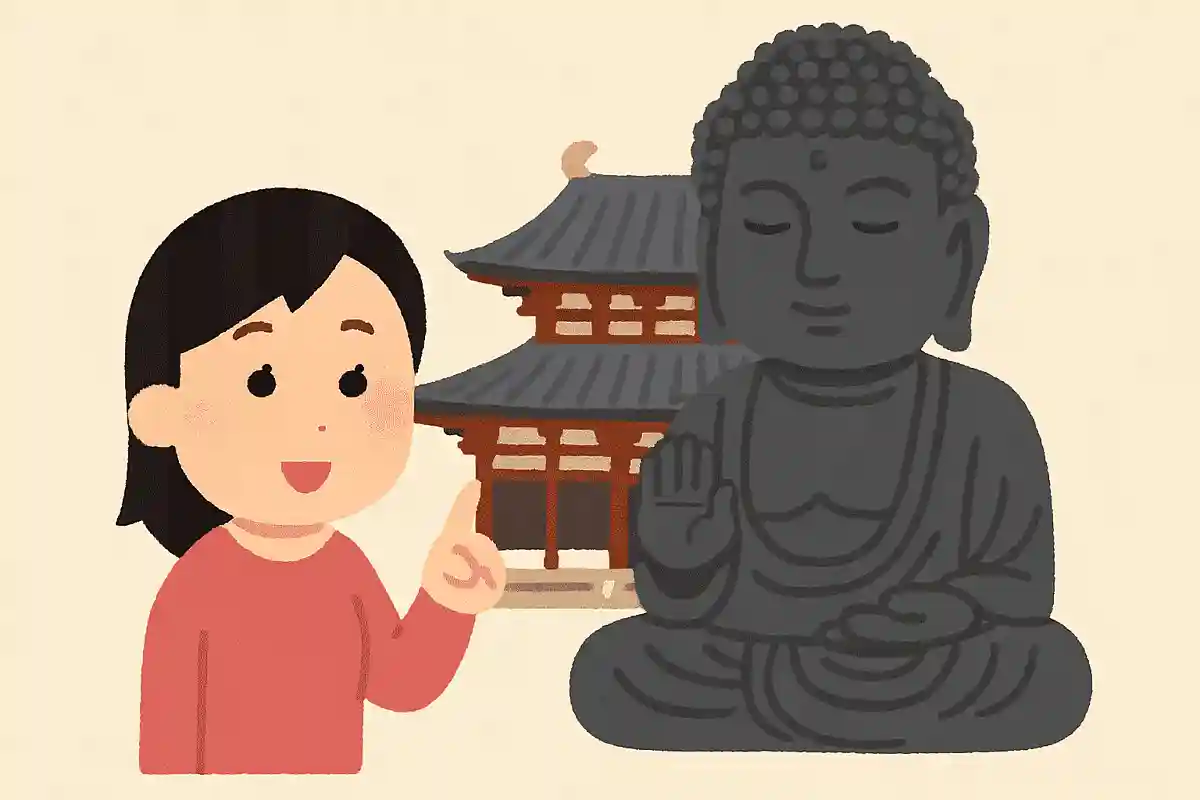
- Tōdai-ji (Todai-ji Temple)
- Kiyomizu-dera (Kiyomizu Temple)
- Kinkaku-ji (the Golden Pavilion)
See the answer
Tōdai-ji (Todai-ji Temple)
The Great Buddha of Nara is located at Tōdai-ji. Tōdai-ji is a temple centered around the Great Buddha Hall, which enshrines this bronze statue affectionately known as the Great Buddha, and it was founded in the Nara period. Historically, it was established when Nara was the capital of Japan as Heijō-kyō, with the aims of protecting the nation and promoting Buddhism. It is an important cultural property and is known in Japan as a highly renowned architectural monument.
What is the event related to the Great Buddha that starts at 7:00 a.m. on August 7?
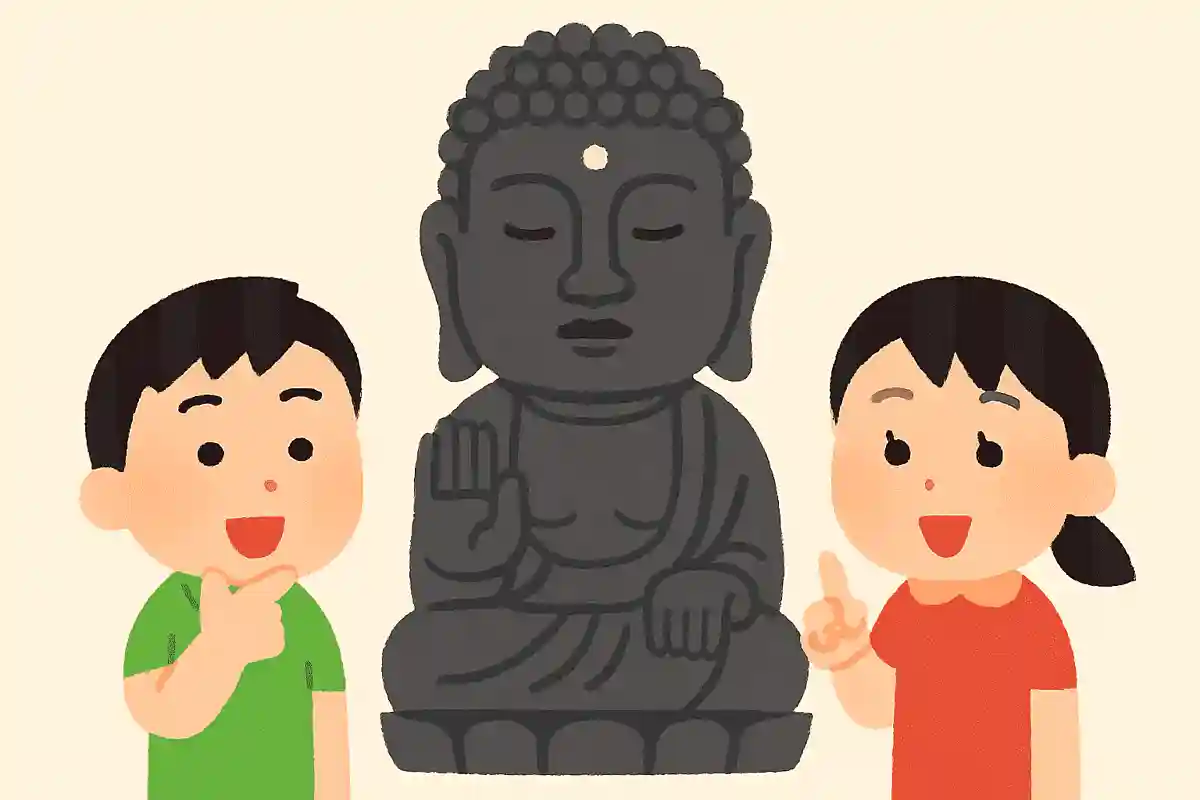
- Cleaning
- prayer
- Buddhist memorial service
See the answer
Cleaning
The annual cleaning of the Great Buddha of Nara takes place at 7 a.m. on August 7. Known as “Omi-nugui,” it’s a beloved summer tradition in which a group dressed in white gently removes dust from the statue. It’s noteworthy that they use feather dusters, reflecting the intention to avoid causing any damage to the body.
What animal is it that has about 1,200 individuals living around Todai-ji in Nara Park?
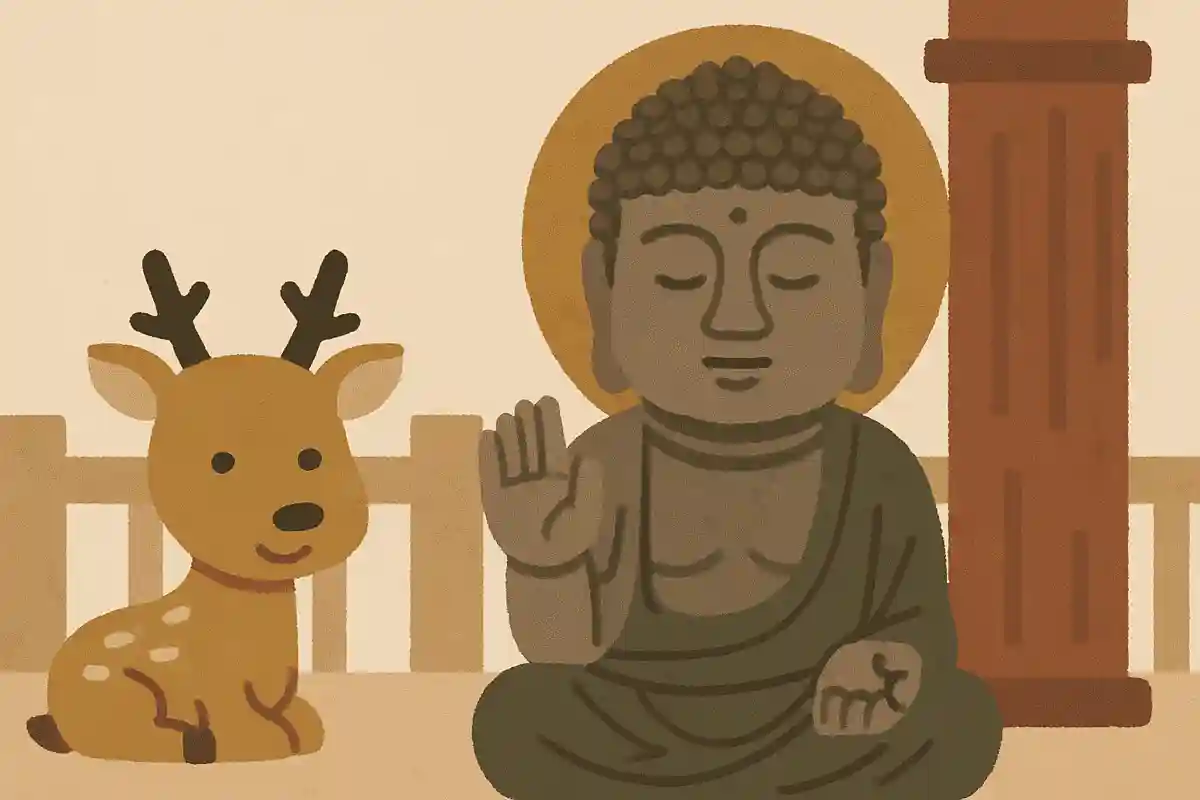
- whale
- monkey
- deer
See the answer
deer
About 1,200 deer live in Nara Park. The sight of feeding deer with special rice crackers, known as shika senbei, is a classic part of sightseeing in Nara. Beyond their cuteness, deer have long been revered as messengers of the gods and are designated as a National Natural Monument.