

[Elementary School] Quick and Easy! Indoor Recreational Activities Perfect for Lower Grades


We’ve gathered a bunch of fun recreational activities that will make lower elementary school kids want to get moving! From active indoor games that offer plenty of exercise to brain-teasing games you can enjoy while thinking, these ideas are perfect for rainy days and cold seasons.
Kids can naturally deepen their communication skills by competing with friends or working together as a team.
Preparation is simple, and you can start right away—so make recess at school or time at home even more rewarding!
- [Play Right Away!] Exciting Recreation Games Recommended for Elementary School Students
- Get the Fun Going! Easy Classroom Games You Can Play at School: Recreational Activities for the Whole Class
- Play ideas kids can enjoy from 1st to 6th grade [indoors & outdoors]
- [Children’s Club] Easy and fun indoor games. Exciting party games
- A collection of simple indoor recreational games
- Elementary School Fun Day a Big Hit! Indoor Game Idea Collection
- No worries even in the rain! Fun recreational activities you can do in the gym
- [Elementary School Rec] Recommended Games and Performances for a Fun Party
- A big hit at after-school childcare! A special feature on group games and activities you can play without any equipment
- Recommended for upper elementary grades! Exciting indoor recreation and games
- Indoor and outdoor activities that avoid crowding. Enjoyable for students from first to sixth grade.
- Fun Indoor Games for Elementary School Kids Without Any Equipment
- Games and activities everyone can enjoy together. A collection of fun play ideas.
Games that engage the five senses, physical abilities, and balance, enjoyable solo or in small groups (1–10)
Who did what, when, and where game
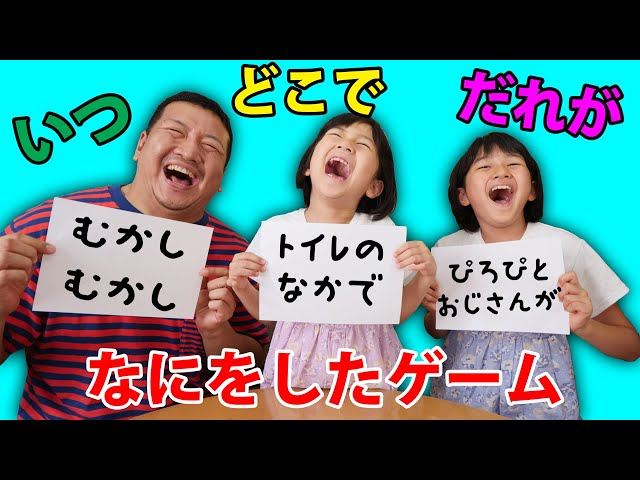
As the title suggests, this is a game where participants each think of “when,” “where,” “who,” and “what they did,” and then try to put them together into a single sentence.
Because everyone contributes whatever words they come up with, you often end up with sentences that don’t connect smoothly or with characters doing bizarre things—part of the fun is enjoying the moments when a hilarious story is born.
If you change the last item to “what” and “how,” or make the situation more detailed as more people join, the coherence of the sentence tends to break down even more, increasing the chances of getting laugh-out-loud answers.

circuit

It’s a circuit where you lay out lots of obstacles and mattresses to create a course and then go around the whole thing.
It’s like a floor-centered athletic activity where you jump over, run, and do forward rolls as you follow the course.
Splitting into teams and turning it into a timed trial would make it even more exciting.
It uses the whole body, so it’s a fun activity that also serves as great exercise—two birds with one stone.

Pudding Game

In a classroom, there’s a two-player game called the Pudding Game.
Push two desks together and place an eraser in the middle.
The two players stand facing each other across the desks.
The caller says one of: “yakisoba,” “karaage,” “onigiri,” or “pudding.” If they say “yakisoba,” raise your right hand and say “ya!” If they say “karaage,” raise your left hand and say “ka!” If they say “onigiri,” raise both hands and say “o!” And if they say “pudding,” grab the eraser in the middle.
Whoever grabs the eraser wins!

Treasure Hunt Game
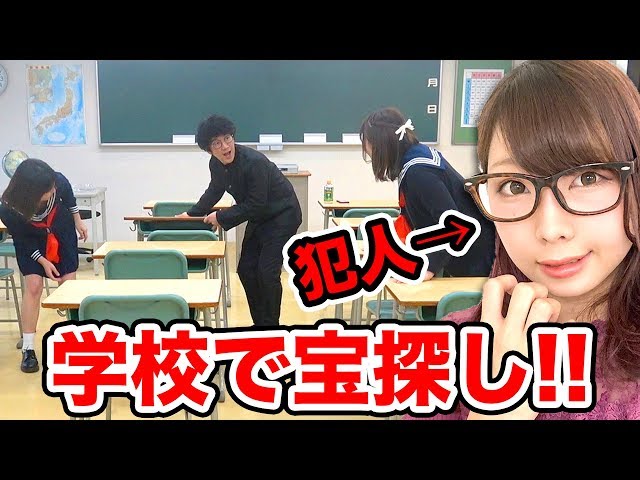
A game that can really liven things up indoors is the “Treasure Hunt.” In this game, you clear given challenges and solve puzzles to find the “treasure” hidden around the room.
There aren’t any strict rules, so you can set them however you like.
Because it’s such a flexible game, you rarely have trouble with things like the number of participants or choosing a location.
With this game, an ordinary classroom or your home can instantly turn into a theme park!

Finger Catch

It’s a game played around the cue “Catch.” Make a tube with your left hand, and with your right hand point your index finger downward and place it inside your partner’s tube.
At the call of “Catch,” your left-hand tube tries to grab your partner’s finger, while your right index finger tries to pull out of your partner’s tube.
In short, it’s a reflex game where, on the “Catch” cue, you try to avoid being caught while catching your partner.

Games that can be enjoyed individually or in small groups, focusing on the five senses, physical abilities, and balance (11–20)
Number Attack

This is a game called “Number Attack,” where you hit numbers stuck randomly on the wall in order from 1.
Just tapping the numbers in sequence would be too easy, right? So let’s try playing by tossing a balloon and keeping it from falling while you search for and hit the numbers.
It’s a game that gets you moving a lot and thinking a lot by both keeping the balloon up and finding the numbers.
Balloon lifting

When we talk about juggling, we mean the skill of keeping the ball from touching the ground using parts of the body other than the hands, like the feet or head.
It’s pretty hard to do with an actual soccer ball, isn’t it? But if you use a light, floaty balloon, juggling becomes much easier.
Competing individually to see who can get the most juggles is fun, but if you set rules that use a big balloon and have everyone take on the challenge together, it becomes a game a large group can enjoy.
It’s also a game where everyone can cooperate and build camaraderie.
Towel Balance Game

A game we hope parents and children will enjoy is the Towel Balance Game.
In this game, one person stands on one leg while the other throws a ball made from a towel at them to try to upset their balance.
All you need is a standard face towel that you likely already have at home.
Fold the towel in half lengthwise twice, then tie two knots to make a ball.
You’ll use this ball for the game.
When throwing the ball at your child, start by tossing it gently.
The Towel Balance Game is an easy way to develop balance even indoors.
PET bottle darts

It’s a simple game you can play with a plastic bottle and stick-shaped items like disposable chopsticks.
Prepare sticks that can fit into the bottle.
The rules are easy: drop a stick toward the bottle and see if it lands inside.
It doesn’t require much space, so it’s great for indoors.
You can also adjust the difficulty—such as how high you drop the stick from or what length of stick you use—so it’s easy to tailor the rules to different ages.
Ball arranging game

This is a game where everyone works together to line up balls and aim for bingo.
Because the number of balls is limited, you have to prevent the opposing team’s bingo while completing your own, making it a perfect game for building teamwork and broadening players’ awareness.
As you get used to it, you can adjust the difficulty and level of activity by increasing the number of bingos.