

[For Men] These Songs Will Make You a Better Singer! Tracks That Are Effective for Karaoke Practice


Have you ever found yourself getting better at singing without even noticing, just by belting it out at karaoke? In fact, the songs you choose for practice can make a big difference in how quickly you improve! Songs that help you build vocal fundamentals, songs with easy-to-catch pitches, songs that expand your range, and songs that train your sense of rhythm—each type has its own benefits for practice.
By the way, the reason I learned to hit high notes was simply because I kept singing the same song over and over without giving up! In this article, we introduce a wide range of tracks that are perfect as karaoke practice songs—ones that naturally boost your singing skills while you have fun.
If you’re thinking, “I want to sing better!” be sure to use this as a reference!
- [For Men] Mix Voice Practice Songs: Reference Tracks to Help You Hit High Notes More Easily
- Even karaoke beginners can relax! Easy-to-sing songs for men
- [Even If You're Tone-Deaf, It's Okay!] Easy-to-Sing Karaoke Songs and Practice Tracks
- Karaoke songs recommended for men with low voices or who are good at singing in a low register
- Songs that make it easy to score 100 at karaoke! Introducing foolproof tracks men can aim for
- Must-see for men: Songs that look cool if you can sing them at karaoke—numbers that women can’t help but be captivated by.
- Karaoke songs where even men with low voices can aim for high scores
- This is a sure hit! Hype songs men will want to sing as the first track at karaoke
- [For Men] This song is perfect for hyping up the crowd at karaoke!
- Songs Women Want Men to Sing: Popular Karaoke Picks Chosen by Girls
- Recommended karaoke songs for male vocalists with high voices
- [Enka] Songs That Are Easy to Sing Even for the Tone-Deaf [Male Singer Edition]
- For Men in Their 50s: No Worries If You’re Tone-Deaf! A Curated Selection of Easy-to-Sing Karaoke Songs
[For Men] These Songs Will Make You a Better Singer! Effective Tracks for Karaoke Practice (121–130)
The truthKamenashi Kazuya
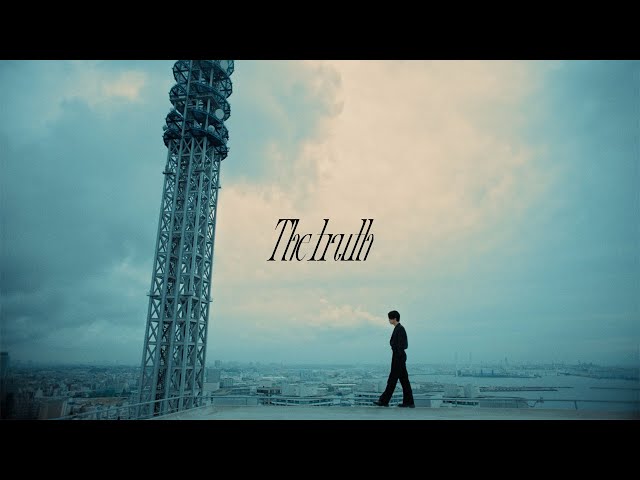
It’s a song released in August 2025, and amazingly, it’s their first solo track in about two years! Listening to it, the range centers around low-mid to high-mid, so it might feel a bit high for those not used to higher notes.
That said, the melody is simple with no particularly difficult parts, and the chorus repeats the same phrase, making it very easy to remember.
For singing style: deliver the verse (A section) in a spoken, unforced way without belting; in the pre-chorus (B section), there’s a spot that rises to D4—accenting that part will let the notes come out nicely! In the chorus, there’s a small leap from C4 to A4—hit that confidently as an accent! The range should be relatively comfortable for the average male singer, and with its rock feel, it should be really satisfying to sing.
It’s a passionate theme, so definitely give it a try!

Killer tune!Oizumi Yo

It’s a song that was released as a digital-only single on August 14, 2025, and since it was also produced as the CM song for “LIVE DAM WAO!,” its theme is karaoke—so it seems like it would really hype people up when you actually sing it at karaoke! Plus, it’s a fresh, up-tempo track, so I think it will look and sound great in a karaoke setting.
It’ll likely be easier to sing if you memorize the lyrics to some extent beforehand.
The chorus in particular has a lot of words and moves quickly.
That said, the lyrics rhyme like a rap, so once you lock into the groove, it should be easier to sing.
If you’re keeping time in 4/4, putting an accent on the first beat of the intro gives it a driving, forward-leaning feel that makes it easier to deliver.
Rather than trying to articulate every single word, let the lyrics ride the melody.
I recommend humming while you’re learning the song—try it in a relaxed state!
KusushikiMrs. GREEN APPLE

Mrs.
GREEN APPLE’s masterpiece “Kusushiki.” This song has been selected as the theme for the popular anime “The Apothecary Diaries,” and, along with the anime’s success, it has been drawing a great deal of public attention.
In terms of melody, it’s in the energetic major key that Mrs.
GREEN APPLE excels at, spanning from the mid-low to high vocal range.
Not only does it feature falsetto and mixed voice, but it also delivers a powerful presence throughout, so using this piece as a practice song will significantly boost your vocal skills.

HeavenMrs. GREEN APPLE

The hot-topic hit “Heaven” is Mrs.
GREEN APPLE’s latest release.
Unlike their usual clear and lively vibe, this track features an emotionally charged melody that really conveys a distinct world-building feel.
The vocal line is highly challenging: it employs a wide range of techniques including whisper voice, falsetto, and mixed voice, as well as moments where the voice is powerfully projected and others where it’s deliberately restrained.
It’s a song packed with the appeal of a high-register artist—definitely worth checking out.
[For Men] These Songs Will Make You a Better Singer! Effective Tracks for Karaoke Practice (131–140)
AliensKirinji

Kirinji’s classic “Aliens” is the biggest hit that propelled their name nationwide.
The song is famous for its wide vocal range.
In the original, the chorus is sung in falsetto, but it can also work to lower the key of the opening section and sing the chorus in a medium-high chest voice.
In any case, it demands both a broad range and a relaxed, effortless delivery.
It’s not an easy song to sing, but if you want to seriously level up your vocal skills, be sure to check it out.
Seeds of joyMrs. GREEN APPLE

This is a long-lost track that was first revealed as a secret track on the venue-exclusive mini-album “Introduction” on July 5, 2014, and was later officially included on the 10th anniversary best-of album “10” released on July 8, 2025! The melody line is gentle and sung with clear articulation, so even beginners should find it easy to match the pitch bar.
For the A and B sections, deliver your voice carefully as if you’re speaking, making sure your sound is firmly on the mic! The chorus kicks in at around the 3-minute mark, and the overall energy ramps up significantly.
There should be ample opportunities to breathe between phrases, so take a solid breath for each phrase and project your voice as you exhale.
If you tense up, you’ll end up chest-breathing instead of using your diaphragm and it’ll get uncomfortable, so stay calm and focus on relaxed breathing!
protagonistSUPER BEAVER

This is the song chosen as the 2025 theme for Fuji TV’s “Mezamashi TV,” and it’s the kind of track that flips your motivation switch on from the morning! SUPER BEAVER’s songs don’t really have the image of being “high” in pitch, and the vocal range of this song, “Shujinkou,” is mainly mid-range at D#3–G#4, so I think many men can sing it mostly in chest voice! Since there’s no intro, be careful not to miss the karaoke guide cue before the vocals come in.
Also, because it’s a band song, if you stay aware of the drums and move your body to the beat as you sing, it’s easier to keep rhythm, it locks in with the melody, and your voice will come out more easily! The opening is already the chorus, and for the choruses throughout the song, make sure to project the very first consonant without hesitation! For the long notes, keep your eye on the pitch bar all the way to the end!