

[For Men] These Songs Will Make You a Better Singer! Tracks That Are Effective for Karaoke Practice


Have you ever found yourself getting better at singing without even noticing, just by belting it out at karaoke? In fact, the songs you choose for practice can make a big difference in how quickly you improve! Songs that help you build vocal fundamentals, songs with easy-to-catch pitches, songs that expand your range, and songs that train your sense of rhythm—each type has its own benefits for practice.
By the way, the reason I learned to hit high notes was simply because I kept singing the same song over and over without giving up! In this article, we introduce a wide range of tracks that are perfect as karaoke practice songs—ones that naturally boost your singing skills while you have fun.
If you’re thinking, “I want to sing better!” be sure to use this as a reference!
- [For Men] Mix Voice Practice Songs: Reference Tracks to Help You Hit High Notes More Easily
- Even karaoke beginners can relax! Easy-to-sing songs for men
- [Even If You're Tone-Deaf, It's Okay!] Easy-to-Sing Karaoke Songs and Practice Tracks
- Karaoke songs recommended for men with low voices or who are good at singing in a low register
- Songs that make it easy to score 100 at karaoke! Introducing foolproof tracks men can aim for
- Must-see for men: Songs that look cool if you can sing them at karaoke—numbers that women can’t help but be captivated by.
- Karaoke songs where even men with low voices can aim for high scores
- This is a sure hit! Hype songs men will want to sing as the first track at karaoke
- [For Men] This song is perfect for hyping up the crowd at karaoke!
- Songs Women Want Men to Sing: Popular Karaoke Picks Chosen by Girls
- Recommended karaoke songs for male vocalists with high voices
- [Enka] Songs That Are Easy to Sing Even for the Tone-Deaf [Male Singer Edition]
- For Men in Their 50s: No Worries If You’re Tone-Deaf! A Curated Selection of Easy-to-Sing Karaoke Songs
[For Men] These Songs Will Make You a Better Singer! Effective Tracks for Karaoke Practice (131–140)
KobukuroIma, sakihokoru hanatachi yo

This is a song that was used as the theme for NHK’s Sochi Olympics in 2014.
Many of you are probably familiar with it.
Although it’s a song by Kobukuro, “Ima, Saki Hokoru Hanatachi yo” has a very clear vocal melody, making it easy to sing even solo.
As for how to feel the rhythm, taking it slowly and relaxed works well, but doubling the tempo also makes it easier to sing and is recommended.
The overall vocal range of the song is C3 to F#4, so most men should be able to sing it comfortably in chest voice.
Also, since it’s a ballad, creating contrast between the lower parts of the verses (A and B sections) and the lift in the chorus will enhance expressiveness and help boost your score.
Try to keep your facial muscles lifted so your pitch doesn’t drop while you sing!

fuse (detonating fuse)Tegoshi Yūya
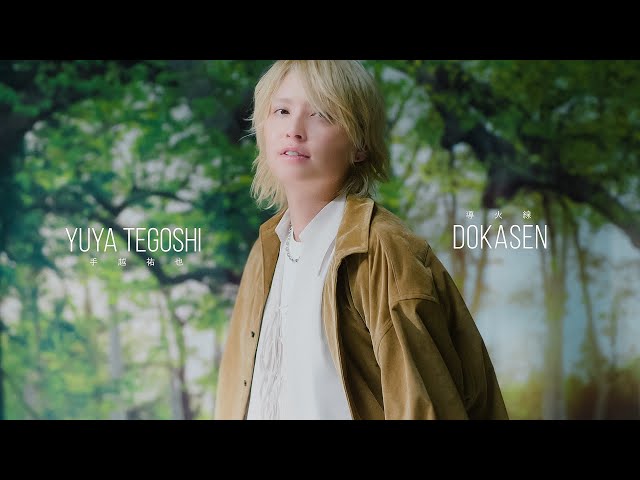
Dōkasen (Fuse) was released as a digital single on July 9, 2025.
Chita Henry, who worked on Vibration from Yuya Tegoshi’s first best-of album Yuya Tegoshi SINGLES BEST released on May 14, 2025, also wrote and composed Dōkasen.
The verses (A and B sections) are relatively calm and sit in a range that’s fine in chest voice, but the melody shoots up into a much higher range for the chorus, making it a great pick for those confident with high notes.
Most of the high notes are in falsetto—and a powerful falsetto at that—so you’ll want to really project them.
Before singing, take a deep breath, and aim your voice as if you’re launching it diagonally upward from your head with a crisp “swoosh!” Alternatively, imagine resonating the back part of your head as strongly as possible—one of these images may make it easier to hit the notes.
Try both and see which works better for you.
plazmaYonezu Kenshi

As the theme song for ‘Mobile Suit Gundam GQuuuuuuX -Beginning-‘, it’s a track where the synthetic machine-like sounds really stand out! Kenshi Yonezu handled everything himself—lyrics, composition, arrangement, production, and even the artwork—making it one of his most dedicated works of 2025.
The vocal range is C3 to C5, which I think is a comfortable height for men to sing mainly in chest voice without strain.
There are falsetto parts here and there, but they’re used in those signature “this is the moment!” spots typical of Yonezu, so make sure to align precisely with the pitch bar.
For the fast sections, avoid mumbling and pronounce the vowels clearly.
Also be careful not to over-enunciate.
Approach it like a tongue twister: articulate the initial consonants cleanly and focus on locking in with the rhythm.
Like the beginningRen
This is a solo song by REN from JO1, whose official music video was released on July 23, 2025.
Overall, it has a calm vibe, with many long high notes mainly in falsetto.
If you focus on matching the pitch bar and sing carefully, you should be able to score high! For songs with continuous falsetto, breath control and core stability are crucial—shift your mindset from “projecting your voice” to “letting the breath flow.” First, engage your lower abdomen to keep your body steady and lift your facial muscles.
Imagining the sound traveling straight upward from the top of your head will improve the falsetto tone and make pitching easier.
There are some low notes in the latter half, but keep the same singing approach.
If you suddenly change where you place your voice, it can turn into a throaty sound and make it harder to stay on pitch, so be careful.
It’s a relatively short, three-minute song, so definitely give it some practice!
Hero SyndromeSochic
This is a track released on July 2, 2025 by Sochic, a male singer-songwriter based in Tokyo.
It’s a mid- to up-tempo song with clear dynamics, so it should be relatively easy to score well on.
Highly recommended if you like upbeat songs and higher vocal ranges! The A and B sections sit in the mid range and feel settled, so be careful not to let the pitch drop too far into your throat.
You’ll generally want to focus on the vocal cords and the area between the eyebrows; try singing with the image of letting the voice come forward slowly from the vocal cords.
The chorus has many words and goes higher, so if you sing each phrase carefully, both pitch and rhythm will lock in more easily.
Project your voice powerfully as if sending it far from the vocal cords—you’ll find it feels great to sing.
If you touch the dip between your collarbones, you can feel the vibration and it’s easier to grasp, so keep that in mind.
countrysideTamaki Kōji

A gem of a masterpiece by Koji Tamaki that portrays the strength of living while confronting the weaknesses and conflicts hidden within the human heart.
It vividly depicts unvarnished scenes of life with rich emotion—the lonely soul kicking a stone, eyes lifted to the night sky in prayer, a back smeared with oil and silently enduring.
The melody gently teaches the importance of not overstraining yourself, but simply taking one step at a time and steadily doing what you can.
Released in July 1996, this song was used as the theme for the Fuji TV drama “Coach,” and became a major hit, reaching No.
2 on the Oricon charts.
It’s a song I wholeheartedly recommend to those who feel lost or anxious in everyday life, and to anyone searching for a way of living that feels true to themselves.
Don’t avert your eyes.DEEN

This is DEEN’s fifth single, released in June 1994.
It’s a song from the heyday of 1990s J-pop, when million-sellers were coming out one after another and karaoke demand was given even more weight as a condition for a hit.
As such, it’s ideal as material for karaoke.
The clear, easy-to-remember chorus melody also makes it excellent for vocal practice.
The fact that the singing style doesn’t have many quirks makes it a great choice for improving your singing.
