

Representative bands of the Nagoya-kei scene in 90s Visual Kei

Among visual kei, there’s a subgenre and scene known as “Nagoya-kei,” distinguished by its especially underground aesthetic and a large cult following.
Do you know this term?
Its origins are debated, but Kuroyume and Silver-Rose, who began their activities in the early 1990s, are regarded as the two leading pillars.
Back when the term “visual kei” itself was not yet in use, bands active in Nagoya’s indie scene gradually came to be called “Nagoya-kei.”
This article introduces the bands from the 1990s that were known as Nagoya-kei.
Whether you want to dig deeper into visual kei or learn about a crucial part of Japanese indie music history, take this opportunity to get to know the indispensable presence of Nagoya-kei.
- A collection of hit songs and classics that opened the door to 1990s Visual Kei
- Debut song of a 90s visual kei band
- A classic masterpiece of visual kei. A staple and popular song representing V-kei rock.
- [Neo-Visual Kei] A roundup of popular songs by V-kei bands from the 2000s
- The Aesthetics of Darkness: An Introduction to Gothic Rock — Notable Bands
- [BUCK-TICK Masterpieces] Popular Songs by the Legendary Band with an Overwhelming Presence
- Reunion wanted: the legendary band that disbanded to much regret
- Bands, artists, and singers from Nagasaki Prefecture
- [Heisei Retro] Hit Japanese songs that defined the 1990s. Recommended J-POP classics.
- Masterpieces and popular songs by DIR EN GREY
- Debut song of an 80s visual-kei band
- [90s Music] Shibuya-kei Classics: Recommended Popular Songs
- Kuroyume Popular Song Rankings [2026]
[1990s Visual Kei] Representative Bands of the Nagoya-kei Scene (11–20)
Heart to Heartsus4

SUS4 is known for featuring Kiyoharu from Kuroyume and Kaoru Mamiya from Of-J.
From a music history perspective, you could say they were, in a sense, the very beginning of the ’90s Nagoya-kei scene.
Considering that YOWMAY, the vocalist of Silver-Rose, said on Twitter something to the effect of “the true originator of Nagoya-kei is Mr.
Mamiya of SUS4,” it’s interesting to see that insiders hold that view.
Their activity spanned only briefly from around 1989 to 1990, and the only recordings left are demo tapes, including those distributed at the time.
Judging by what can be heard, they were playing a beat-rock sound reminiscent of early BUCK-TICK, and it’s striking that even at that stage, Mamiya’s talent as a guitarist and Kiyoharu’s instantly recognizable vocals were already fully formed.
Of course, actually obtaining the recordings is extremely difficult, but if you’re going to dig deep into Nagoya-kei, this is a band you should at least know about, if only as part of your knowledge base.

Black SunFANATIC◇CRISIS

If you first heard the name FANATIC◇CRISIS during the so-called visual kei boom—what might be called the post-1998 “visual kei bubble”—you might find it odd to hear them labeled as part of the “Nagoya-kei.” With their colorful, catchy sound that freely incorporated programmed elements and their fashionable look, they gained popularity as a “soft visual” act and were even grouped with SHAZNA, MALICE MIZER, and La’cryma Christi as one of the “Four Heavenly Kings of Visual Kei.” In fact, however, they had already been a dominant presence in the indie scene as a representative Nagoya-kei band.
If you weren’t aware that they formed in 1992 around vocalist Tsuya Ishizuki, who was just 15 at the time, together with guitarist Kazuya and bassist RYUJI as a trio, you might be surprised to learn how long they had been active—predating bands like LAPUTA and ROUAGE, which formed in 1993.
In 1994 guitarist Shun joined, and in 1995 Of-J’s Tetsu came aboard as their second drummer, completing the lineup that would remain until their breakup.
Based in the Chukyo region, they worked tirelessly and rose in popularity, becoming known as one of the leading bands occupying a key corner of the competitive Nagoya-kei scene of the time.
After making their major-label debut in 1997, they released songs that charted in the Oricon Top 10.
Especially from their major debut onward, much of their music was pop-leaning and made bold use of cutting-edge digital sounds, with little trace of the darkness typically associated with Nagoya-kei.
If you want to know them as a Nagoya-kei band, you should listen to their indie-era works.
On their 1994 mini-album Taiyō no Toriko, they unfold a dark sound directly descended from bands like Kuroyume and ROUAGE, while also introducing their signature programming and showcasing the commanding vocals of Ishizuki—still in his teens at the time.
Fin (Through the night…)TI+DEE

They’re a fairly niche band, but TI+DEE were active from quite an early stage as a ’90s Nagoya-kei act.
The lineup included Kyono, known for his work with Of-J and CLAUDIA, and MAXXX from Merry Go Round as the bassist at different times, plus AMOUR—the vocalist of MANICURE, a group known for later spawning members of DIE-ZW3E and Silver-Rose—on drums.
In other words, they embody a slice of Nagoya-kei history.
Although they disbanded without leaving many recordings, if you listen to their sole seven-track album, Fin., released in 1994, you’ll see they were exploring a sound distinct from the orthodox Nagoya-kei style.
While grounded in heavy metal, their guitar phrases and scales show a bent toward classical music, and the inclusion of majestic synths and piano lends a subtly theatrical feel.
The melodies lean more toward J-pop—indeed, kayōkyoku—aiming for a refined aestheticism that set them apart from the morbid, grotesque tendencies typical of Nagoya-kei.
It’s genuinely fascinating.
Considering that MALICE MIZER released their debut mini-album, memoire, the same year, it’s also interesting—albeit coincidental—to find contemporaneous sonic parallels.
Unfortunately, as is so often the case, the CD is out of print and hard to obtain.
If you’re determined to dive deep into Nagoya-kei, I recommend checking auctions and used record shops regularly.
DarlingCROW-SIS

There are many players from the ’90s Nagoya-kei scene who are still active today, but a band like CROW-SIS—running an official YouTube channel and doing variety-show-style projects—is relatively rare.
Formed in Nagoya in 1993, CROW-SIS even worked as roadies for ROUAGE and belonged to Noir, the agency that held an important place in the scene at the time—making them a 120% pure Nagoya-kei band.
As for recordings they left behind back then, there were a few demo tapes distributed at shows, appearances on compilation CDs, and only one CD release: CLOSE, put out in 1996 in a limited run of 2,000 copies.
If you’re interested, the relatively easier-to-find CLOSE is probably your best bet to look for.
It’s true that their playing and vocal abilities have their shortcomings, unfortunately, but for Nagoya-kei and visual kei aficionados, there are definitely tracks worth checking out—like Darling, introduced here—melodic, minor-key songs that follow the classic visual kei blueprint and are sure to tickle the heart.
Night’sShizuku…
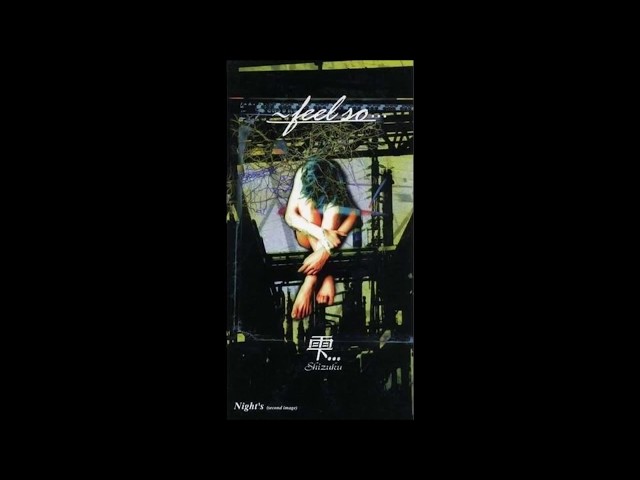
Shizuku… is a very rare type of band within the visual kei framework: while inheriting a Nagoya-kei sound, they later foregrounded an anti-war theme.
Formed in 1994 by members who had been active in a band called KIZ-ETU along with members of SILU:ET!, which featured ROUAGE’s RAYZI, they were active for about five years until their disbandment in 1999.
Despite the relatively short run, they left several releases, including major-label distribution, and their musicality seems to embody the deeper appeal of ’90s visual kei and Nagoya-kei.
As with groups like DIE-ZW3E, Nagoya-kei isn’t necessarily only about aestheticism or decadent darkness.
If you’re interested in Shizuku…, the first thing to pick up is their full-length album Yume o Wasureta Idenshi, released in 1997 through a major distributor.
Produced by NAO of LADIES ROOM, the band’s masculine, beefy, and aggressive ensemble—distinct from the more delicate strain of visual kei—is above a high standard, and the worldview shaped by lyrics with social messages still feels unique today.
If there’s a drawback, some listeners might find the vocalist’s narrow range or, in a sense, the characteristically visual-kei tendency toward melodies that never quite fully soar—for better or worse—a bit tough.
Overall, though, the songwriting is melodic, and for younger listeners who have only recently begun digging into Nagoya-kei, checking out their music early on seems like a solid choice.
The indie-era classic Tsuki ga Yami ni Kageru Toki… is also recommended!
You, whom I loved in solitudeWITH SEXY

Although they weren’t a Nagoya-kei band, WITH SEXY involved many members who had also been part of Vasalla, a highly skilled visual-kei band from Kyushu.
Members included KAIKI, the bassist who was in Silver-Rose and later left ROUAGE, as well as SIN from Syndrome and D.
Just looking at the roster feels like tracing a visual-kei family tree.
In terms of their position, they were a slightly younger generation than LAPUTA and ROUAGE, and after an energetic run that included releasing singles for five consecutive months in 1996, they unveiled their only album, Couleurs, in 1997.
RINNE and Kai (Kaii) — the same duo who paired up in Vasalla — shone as twin guitarists, and the album also features songs composed by KAIKI, making it feel like the culmination of their work.
The melodic guitars leveraging spatial effects, the urgent beats, and the tuneful vocals lean more toward the “white” side than the darkness associated with Nagoya-kei, making the music poppier and easier to listen to.
While it may lack a strikingly unique personality or world-building, it’s worth enjoying as a sound distinct from the Nagoya-kei styles of Kuroyume or LAPUTA.
In conclusion
Each band lumped together under the label “Nagoya-kei” has its own appeal, and those who have read this article have likely realized that the sounds they produce don’t necessarily point in the same direction. That said, what many bands considered Nagoya-kei do share is a distinctive sense of “darkness” and an underground atmosphere. Their rebellious spirit toward the mainstream music scene had a profound impact on the bands that followed.